All of technology,
in one system.
How it works inside, what to buy, what it is worth today, how to learn it and the proof: on any technology, checked and kept current. A team of hardware and software specialists, weeks of research in ten minutes of reading, five languages and not a single banner.
We read it all so you don't have to.Hundreds of sources per publicationwhat matters, in ten minutes
Buying guides
We compare the whole catalogue to recommend three
Before a line is written, the product group is studied: what matters, what does not, and what you are being sold as important. Then the whole category is gone through and hundreds of sources are cross-checked: each manufacturer's spec sheet, the labs and publications that have already measured it, video reviews and the fault that keeps coming up among people who use it every day.
No RMS figure in writing? The real power is between a half and a tenth.
The whole catalogue of the category is gone through, not the first six results.
Labs and published tests, specialist publications, the maker's spec sheet and real user reviews, aggregated.
Each with the reason it is there and who it is not for, and a rule you can use on your own next time.
And no two guides are alike. Each one is built with its own structure and with the tool that particular decision needs, written for that piece. There is no template. And every recommendation says in writing why it is there and who it is not for.
Not to get into a guide, not to come first, not for a single line. All we earn is a commission from the shop if you buy, and no product moves up a place for what it brings in.
The method
We read the small print so you don't have to
All that work always ends in the same thing: a rule you can check in ten seconds and use on your own next time, without us.
A purchase people are weighing up and a gap nobody has answered well. If there is none, the piece is not written.
Labs, published tests, the manufacturer's documentation and real-world use, aggregated.
What the spec sheet claims against what can be checked. That is where the rule comes from.
Every technical figure is followed by what you will be able to do with the product.
What we have not been able to check is said. And corrections are published with their date.
“50 hours of battery life” on a cheap pair of bone-conduction headphones.
The brand that leads that category sells both technologies separately in its own catalogue. Its bone-conduction models last 6 to 12 hours. Its air-conduction ones reach 28.
If bone-conduction headphones promise more than 15 hours, they are air-conduction.Proof: The public catalogue of the category's leading manufacturer.
“4K HDMI output” on the first line of a USB-C hub's listing.
Further down, the same manufacturer's spec sheet adds “4K at 30 Hz”. At 30 hertz the pointer drags across the screen and video stutters. For work you need 60.
If an HDMI port does not state the hertz, assume 30 Hz.Proof: The spec sheets of two products from our own selection.
“500 W of power” on a desktop speaker that fits in one hand.
That figure is peak power, an instantaneous value that does not describe what you hear. What you hear is RMS power, and when the manufacturer does not state it, it is usually between a half and a tenth.
If a wattage has no RMS in writing, the real figure is between a half and a tenth.Proof: The definition of both figures in the industry's technical documentation.
“RRP €399, today €149” on a robot vacuum.
That model navigates by gyroscope, which is the entry level: it cleans in a zigzag and does not save a map of the home. The ones that really sell for around 399 have lidar and a map.
A robot with gyroscope navigation and an RRP above €150 carries an inflated anchor price.Proof: Spec sheets compared within the same brand.
The work you save
Three things that cost anyone who buys well an afternoon, and that are already done here before you arrive.
The spec sheet, translated. We don't explain a graphics card's bus width: we tell you how many frames per second you will play at and at what resolution.
One tool per guide. When the decision needs a calculation or a comparison, it is written for that piece. No two are the same.
Behind it, a system. We track price and stock across dozens of retailers in Spain: which shop has it, what the alternatives are if the one you want is out of stock, and whether now is a good moment or it is worth waiting.
Prices
Which discounts are real, measured every day in Spain
In the EU, the law says the earlier price in a sale has to be the lowest of the previous 30 days. We measure it every day across 3,130,751 products from dozens of Spanish retailers: whether the discount holds up, which shop has it and whether now is a good moment or it is worth waiting.
of the discounts advertised in Spain really are at their 30-day low
It is the m8d Index figure, measured on the products whose price has moved at the retailers we track, retailer by retailer and with the data published. Reading of 1 October. Amazon is read every day and shown, but it does not enter the series: we say so in the headline.
Take-apart 3D models built by the m8d team that you can handle right on the page: the device turns, opens up and comes apart piece by piece. Each part has its explanation and its source, plus which ones are worth checking when you buy, which ones do not matter and why. Free, no account, and full screen to project in a classroom. The explanations are in Spanish.
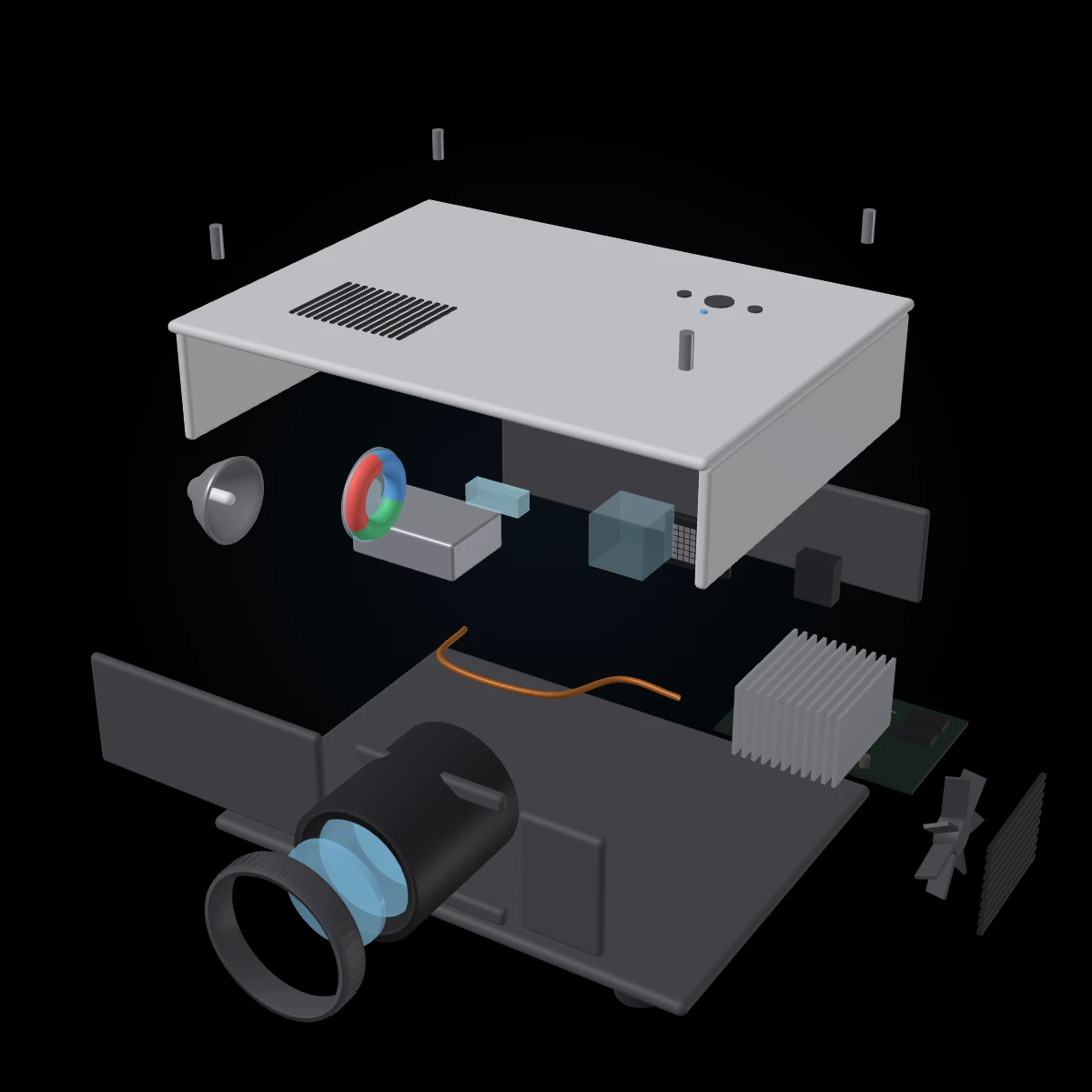 How a projector works87 parts explainedOpen it up in Spanish ›
 How a pellet stove works87 parts explainedOpen it up in Spanish ›
 How a robot vacuum works41 parts explainedOpen it up in Spanish ›
 How a smartwatch works40 parts explainedOpen it up in Spanish ›
 How noise cancelling works28 parts explainedOpen it up in Spanish ›
 How an air fryer works33 parts explainedOpen it up in Spanish ›
 How an AirTag works16 parts explainedOpen it up in Spanish ›
We don't only publish guides
Research with data nobody else has and complete courses that take you from zero to competent. For the press, for classrooms and for anyone who wants to understand. All free, no account, with the method up front.
Research with over a hundred sources and citable figures, each with its anchor, the Observatory of technology statistics in Spain and open data, so that a journalist or a teacher can check everything we say.
See the Lab in Spanish ›Each course condenses what you need to know and puts it in order to take you from zero to competent in the least time: reading a spec sheet, spotting a fake discount, working with artificial intelligence. With tests, and free.
Go to Learn in Spanish ›Wherever you come in from, the recommendation is your country's
We never just translate: there are translators for that. Each language is a market with its own research.
In France people search for vidéoprojecteur and in Germany for Beamer. That is why each guide is researched and written for its own country.
It is not only the language that changes: so do the brands sold there, the shops you buy them from, the law and the guarantee that cover you, and even the conclusion if a different model is the right one in that country. And when you go to buy, the product is offered in your country's shops, not ours.
Categories
All of technology: 109 buying guides in English, in 18 categories
Ordered by what you are going to buy, not by what suits us to show first. Each category with its own study, its criteria and its traps.
Some of the places that cite m8d
We are cited by international electronics and business publications, including two from Alibaba, technology media in Spain and Latin America, specialist blogs in three languages, shops and developer communities. Each mention carries its link.
See some of the citations in Spanish ›Latest published
Ten smartwatches compared against their own listings: the all-round pick, the budget champion, Wear OS and Apple, and what a claimed battery day means.
Read the guide › Most readBest GPU for local AI in 2026: seven graphics cards ranked by the VRAM that decides what you can runSeven graphics cards for running LLMs and Stable Diffusion locally, compared on declared VRAM, bus, TDP and ecosystem, with the arithmetic that says what fits.
Read the guide › Buying guideTails OS: what it is, whether it is legal in the UK, what it does not protect and which USB stick it needs
 Buying guideWhy are iPhones so expensive? The UK answer, with Apple's own margins, 20% VAT and the £100 rise of 2026
 Software and servicesnexos.ai: what it is, what it costs in the UK, how its credits work and when it costs less than two AI subscriptions
 Software and servicesBest free VPN UK 2026: which free plan has no data cap, whether VPNs are still legal in the UK and what renewal costs
 Software and servicesBest WordPress hosting UK 2026: which plan to choose by what it costs in year two, VAT included, not by the launch priceBuying guideHow much does it cost to make an iPhone in 2026? The teardown estimates, the memory surge and the UK price split
Your next decision, with the data in front of you.
No advertising. Affiliate links are declared on every page and never decide a verdict.
Behind it there is a technical team. Custom development, applied AI and automation for businesses.
See our services in Spanish ›