Best soundbar for dialogue 2026: eight compared by channel format, and the figure that says if the Atmos is real
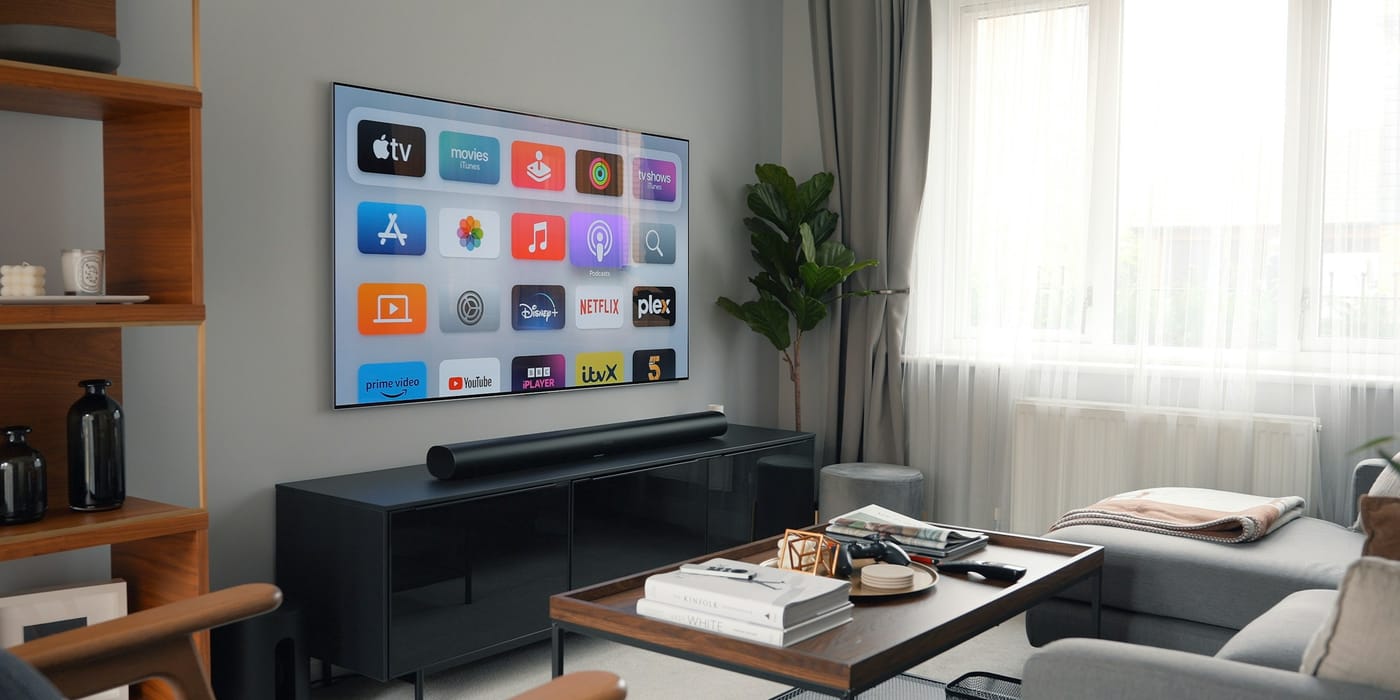
Eight soundbars compared by the only specification on the listing that tells you what will actually be in the room: the channel format. Which of them have a centre channel, which is the speaker that carries speech; why two bars both labelled 2.1 can arrive with completely different boxes; and the three free things worth trying before you spend anything at all.
This guide contains affiliate links. As an Amazon Associate, m8d.io earns from qualifying purchases, at no extra cost to you.
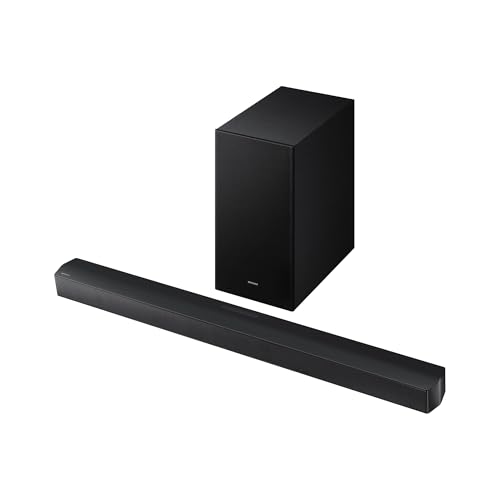
The best soundbar for dialogue is not the one with the biggest wattage on the box: it is the one with a centre channel, because the centre channel is the speaker that carries speech. Our pick is the Samsung HW-B650F, at 3.1 channels. And there is one check that decides more than anything else: if the format has no third figure, nothing in that bar is pointing at your ceiling, whatever the Atmos logo says.
The only sound in your evening that anyone regulates is the adverts
Almost nobody arrives at a guide like this looking for home cinema. They arrive because in a drama the music, the rain and the punches come through perfectly, and the moment somebody speaks the volume has to go up and then straight back down for the next break. It is not your ears and it is not your particular television.
Half of the reason is physical, and you can check it on your own set in ten seconds. The edge of a modern flat panel is a bit over a centimetre thick. A speaker does not fit in that, so the sound leaves the set backwards or downwards, bounces off the wall or the cabinet and reaches you second hand. The first thing lost that way is speech, because speech is the most delicate part of the mix. A soundbar is, above everything else, a speaker that finally points at you.
The other half is the part almost no one knows, and it explains why the remote gets so much use. UK advertising loudness is regulated. UK dialogue is not. The BCAP Code, which every Ofcom-licensed broadcaster has to follow, sets out at rule 4.7 that the loudness of advertising has to be, in the ASA's words, consistent and in line with that of the surrounding programming, so that a viewer is not made to reach for the volume at the start of a break.
Both halves of this come from the regulator and its own published pages, read on 1 September 2026. On the left, what the rule actually requires. On the right, the part of your evening it was never written to cover.
BCAP rule 4.7 governs sound levels in television advertising, and the ASA explains that it works on subjective loudness, an algorithm built on how people actually perceive sound rather than on peaks. The standard is that adverts are consistent and in line with the programming around them.
Nothing in that rule says anything about the relationship between a whispered line and a car chase inside the same programme. The ASA also notes that the broadcast industry adopted the EBU's R 128 loudness recommendation through the Digital Production Partnership, and that the Code does not mandate it.
The dynamic range of modern drama is a creative choice, and the only end of the chain you control is the speaker. That is the honest case for a soundbar: not that television is broken, but that the one adjustable part of it is on your side of the screen.
m8d rule: The break is measured against the programme. Nothing measures the speech inside the programme against the explosions inside the same programme. That gap is the one a soundbar closes.
Sources for the two claims above, so you can check them yourself: the ASA's guidance on sound levels in advertising, published on 4 January 2016, and its explanatory article of 13 April 2016 which states that rule 4.7 relies on subjective loudness and that R 128 was adopted by the industry rather than mandated by the Code. Both consulted on 1 September 2026.
What 2.1, 3.1 and 3.1.2 actually mean on a soundbar
The channel format is the one thing on the listing that genuinely tells you what will be in the room and what will come out of it. Every other figure on the box is either unregulated, unmeasurable or both. Two numbers, sometimes three, and each one counts a different thing: how many speakers face you, whether bass is separate, and whether anything points upwards.
A soundbar's channel format is written with two or three figures and each one counts something different: the speakers across the front, whether there is a dedicated bass driver, and whether anything is aimed at the ceiling. Tap each format and watch the living room change: what appears, and what disappears, with a real example from this guide.
2.1: Two speakers and a bass driver. Careful: the 1 does not say whether that driver is inside the bar or a separate box. The words "built-in" or "wireless" are what tell you. Example from this guide: Denon DHT-S218.
| Format | Front speakers | Bass | Behind the sofa | Aimed upwards |
|---|---|---|---|---|
| 2.0 | Left and right | No | No | No |
| 2.1 | Left and right | Inside the bar or separate | No | No |
| 3.1 | Left, centre and right | Separate box | No | No |
| 4.1 and 5.1 | Left, centre and right | Separate box | Yes, two | No |
| 3.1.2 | Left, centre and right | Separate box | No | Yes, two |
The drawing shows what each format declares, not any specific model. The examples are taken from the eight products in this guide. A bar with no third figure can still carry Dolby Atmos and sound good: what it does not have is a speaker aimed at the ceiling, so the height is calculated in software.
Dolby Atmos means sound with height: things that happen above your head. That needs a speaker aimed at the ceiling, and on a listing it is written as a third figure. The useful part is that manufacturers write it when they have it, so this is a check you can do yourself in ten seconds.
The TCL S45HE is sold as a "2.0 Soundbar, 100W, Dolby Atmos". The Denon DHT-S218 as "2.1 with Built-in Subwoofer and Dolby Atmos". Both have Atmos written on them and neither has a third figure.
In the same catalogue, Hisense titles its AX3120Q as 3.1.2, LG writes 3.1.1 and 5.1.1 on its own bars, and Samsung uses 3.1.2ch and 5.1.2ch. When there are speakers pointing at the ceiling, they say so. Nobody keeps that quiet.
With no third figure, height is calculated: the unit delays and filters the sound to fool your ear. It half works, and how well depends on the shape of your room. With a third figure, a speaker fires upwards and the sound genuinely comes back off the ceiling. Neither is wrong, but they do not cost the same.
m8d rule: If a soundbar's format has no third figure, nothing in it is pointing at your ceiling: the Dolby Atmos it advertises is simulated.
Why two 2.1 soundbars can arrive with completely different boxes
This is the confusion that causes more returns than anything else in the category, and you can see it in two bars on this very page that declare exactly the same format.
The Denon DHT-S218 declares 2.1 and the subwoofer is inside the bar. One piece arrives, one plug is used, and nothing needs a corner of the floor.
The Hisense HS2000 also declares 2.1, with the bass driver built into the bar, while its sibling the HS2100 declares the same 2.1 and the same 240 W and ships the bass in a separate box. Identical format, different delivery.
People who wanted one tidy bar end up with a cabinet to find a home for, and people who wanted proper bass end up with a driver sealed inside a slim bar. The format cannot tell you which: only the word next to it can. Look for "built-in", "integrated" or "wireless subwoofer" before you order.
m8d rule: The 1 in a 2.1 tells you there is a bass driver. It does not tell you where it is. Only the words "built-in" or "wireless" on the listing do that.
And it matters more than it sounds. A separate box is what you feel through the floor; a driver inside a bar is what you hear from the cabinet. If your room is small, or the television sits on a shelf in an alcove, one piece may genuinely be the better answer. That is a choice, though, and it should be one you made rather than one the listing made for you.
HDMI eARC, HDMI ARC or an optical cable: which one your television has
This is published by a manufacturer, and it decides whether Atmos ever reaches you. Samsung's own support pages state that Dolby Atmos works only through an HDMI connection and only when the television is connected using eARC. Not optical, and not an HDMI port that is ARC but not eARC. It costs nothing to walk over and read the label next to the HDMI sockets on the back of your set before you buy anything.
Be clear about what that does not mean. A bar without eARC does not sound bad. It still beats the speakers in the television by a wide margin, it still carries Dolby Digital, which is what broadcast television and most streaming actually send, and it still puts a speaker in front of you instead of behind the screen. What it will not do is deliver the specific thing the Atmos logo is selling.
One British wrinkle worth checking on the day: a lot of living rooms here have a Sky, Virgin or Freeview box in the chain, and that box changes where the bar goes. If the set-top box feeds the television and the television feeds the bar, everything depends on the television's ARC or eARC port. If the bar has an HDMI input and the box goes into the bar instead, the television's port matters less. Neither is wrong; just decide it before the cables are behind the unit.
Three things to try before you spend anything
A guide that only sells things is not much use, and two of the three fixes below are free. If one of them works, close the tab.
None of these three costs anything, and two of them are already switched on somewhere in your house. Try them in this order before you spend a penny on hardware.
Most televisions ship in a surround or cinema sound preset that widens the stereo image, and widening the image is exactly what pushes a centre-panned voice out to the sides. Look for a mode called speech, clear voice, dialogue or simply standard, and turn off anything called virtual, wide or 3D.
Ofcom requires UK broadcasters to provide access services, and under the Media Act the requirement is being extended to the major streaming services. Subtitles and audio description are not a workaround, they are a regulated part of the service, and for a lot of households they solve the problem entirely and immediately.
If the set is wall-mounted flush, or pushed back into an alcove, the sound that fires backwards has nowhere to go. Two or three centimetres of clearance behind the panel changes speech more than most people expect, and it costs nothing at all.
m8d rule: If your television's sound mode is set to a virtual surround preset, speech is being processed before it reaches you. Switching to the speech or standard mode is the single most common free fix.
If none of that helps, then the problem is genuinely the speaker and not the setting, and the rest of this guide is about which one to put under the television.
The eight soundbars, side by side
| Soundbar | Format | Bass | Speech | Real height | Who it is for | |
|---|---|---|---|---|---|---|
| Samsung HW-B650F view › | 3.1 | Separate box | Centre channel | No | Most living rooms | View › |
 Hisense AX3120Q view › Hisense AX3120Q view › | 3.1.2 | Separate box | Centre channel | Yes, two | Anyone who wants real Atmos | View › |
 LG S40TR view › LG S40TR view › | 4.1 | Separate box | No centre channel | No | Anyone who wants surround from behind | View › |
 Denon DHT-S218 view › Denon DHT-S218 view › | 2.1 | Inside the bar | No centre channel | No | One piece, no boxes | View › |
 Bose TV Speaker view › Bose TV Speaker view › | Not declared | None | Dialogue mode | No | Understanding the television, nothing more | View › |
 TCL S45HE view › TCL S45HE view › | 2.0 | None | No centre channel | No | Anyone who needs eARC cheaply | View › |
 LG S20A view › LG S20A view › | 2.0 | Inside the bar | No centre channel | No | A bedroom or a monitor | View › |
 Hisense HS2000 view › Hisense HS2000 view › | 2.1 | Inside the bar | No centre channel | No | Check the listing before you plan on it | View › |
The formats and features are the ones each manufacturer declares on its own listing, read on 1 September 2026. Where it says not declared, the brand does not publish that figure, which is not the same as not having it. Availability and model names differ between country stores.
The eight soundbars, one at a time
Samsung HW-B650F view ›
It is the first bar on this list with a centre channel, and the centre channel is the speaker that carries speech. If your problem is that you hear the music and the explosions and then miss the line, this is the step that changes it, and the watts are not. It is also the cheapest bar here with three front channels from a company that makes televisions as well, which is what gets the two devices talking to each other.
- The centre channel is literally one more speaker in the middle of the bar, dedicated to voices. Two-channel bars split speech between left and right, which is why it disappears the moment the score comes in.
- Because it is Samsung and the family carries Q-Symphony, if your TV is also a Samsung the two devices play together instead of one switching off. With any other TV it works just as well, without that extra.
- It declares DTS Virtual:X, which is simulated surround: there are no rear speakers and none pointing up. Fine for a Saturday night film, not the same thing as a real surround set.
- A centre channel dedicated to speech, which is the actual problem most people have
- A brand that also makes televisions, so the remote and the menus are shared
- Game mode is declared, useful if a console is plugged into the TV
- The surround is virtual: there are no rear speakers in the box
- No height speakers, so no Dolby Atmos with real height
Hisense AX3120Q view ›
It is the only bar here whose format has three figures, and the third one is the two speakers pointing at your ceiling. That is the difference between Dolby Atmos that genuinely bounces off the ceiling and Atmos that is calculated in software. It also puts the subwoofer in its own box, which is what makes the bass arrive at the sofa rather than staying in the cabinet.
- Read 3.1.2 like this: three speakers across the front, one subwoofer, two firing upwards. The last two are what make rain and helicopters happen above your head instead of in front of you.
- The subwoofer is a separate 6.5 inch box with no signal cable, but it does need its own plug socket. You need a corner for it.
- For the Atmos to arrive at all, the TV has to be connected over HDMI eARC. Optical will not carry it, and that condition is published by another manufacturer on this very list.
- Two real height speakers, not simulated ones
- Subwoofer in a separate box, which is where bass is actually felt
- It is the least you can spend here on a three-figure format
- Needs a TV with HDMI eARC to get the Atmos through
- The subwoofer takes floor space and needs its own mains socket
Denon DHT-S218 view ›
Denon has been making audio equipment for about a century and it does not sell numbers here: there is not a single watt figure on its listing. What it offers is one box, with the bass inside, for anyone who wants to fix the television without filling the room with cabinets. If the problem is that there is nowhere to put a subwoofer and you do not want cables across the floor, this is the answer on this list.
- The subwoofer sits inside the bar: no separate box to place and no second socket. That is the difference between one piece and three.
- It declares Dolby Atmos with a 2.1 format, which means no speakers pointing at the ceiling. The height is reconstructed in software, and that is not the same thing.
- It publishes no wattage on its listing, and neither does Bose. Companies that come from audio tend not to, and the reason is explained further down.
- One single piece, with no subwoofer to position
- A company that specialises in audio rather than in appliances
- Accepts Dolby Atmos, for when the TV and the streaming box send it
- No height speakers, despite Atmos on the box
- A built-in woofer does not reach where a separate box reaches
LG S40TR view ›
This is the one that puts the rear speakers in the box. Virtual surround pretends sound is coming from behind you; these actually are behind the sofa, and you notice within ten seconds of the first film. In exchange there are two more boxes to place and two more sockets to find, and that does not suit every room.
- Four front channels plus a subwoofer, with the rears included: this is what makes you feel inside the scene rather than in front of it.
- The rears connect wirelessly to the receiver but they still need mains power. Before you buy, look for a socket behind the sofa.
- The format is 4.1, with no third figure: there are no height speakers. The surround comes from behind you, not from above.
- Rear speakers included rather than sold separately
- Four channels plus a subwoofer without going near the premium end
- Controlled from the TV remote if the TV is also an LG
- Five pieces to place and three sockets to find
- No height speakers, so no Atmos with real height
One note that applies to the four below and to any other bar you look at. From here down, none of them has a centre channel. That does not make them bad, it makes them a different purchase: they are bought for size, for a connector, for simplicity or for a price, and not for making speech easier to follow. If dialogue is the reason you are reading this, the answer is above this line and not below it.
Bose TV Speaker view ›
It is the smallest bar here and the one that promises least: no channel count, no wattage, no Atmos. Its argument is that you understand what people are saying on the television, and that is all. For an ordinary living room, for an older relative in the house, or for a bedroom, it solves the exact problem that brings most people to this guide, with no boxes and no setting up.
- Bose declares neither a channel count nor a power figure on its listing. That is consistent with how the company sells, and it is a data point in itself.
- It is short and low, so it is one of the least likely to cover the bottom of the screen or the remote sensor.
- No subwoofer and no way to add one in the same package: if you want the room to shake, this is not it.
- A dialogue mode built for making speech intelligible
- Compact enough to fit where others do not
- The simplest installation on this list
- Publishes neither channels nor watts, so it cannot be compared on paper
- No subwoofer and no surround
TCL S45HE view ›
It is here for the connector: it is the cheapest bar on this list with HDMI eARC, which is the only route Dolby Atmos takes according to Samsung's own support pages. And it is here as an example of what we explain further up: its format is 2.0, meaning two speakers and nothing else, so the Atmos it advertises has no speaker pointing at the ceiling. It sounds good for what it is; it simply is not what the word Atmos suggests.
- eARC is not a small detail: it is the connection that carries high quality sound out of the television. Plenty of bars at this level only have ARC or optical.
- Format 2.0: no subwoofer and no centre channel. Bass is whatever two small speakers manage, and speech is split between them.
- It is one of the few at this level that states the specific connection in the title rather than just writing HDMI.
- HDMI eARC at the lowest point on this list
- A compact shape for mid-sized televisions
- Bluetooth 5.2, so it doubles as a speaker
- Advertises Dolby Atmos with two channels and no height speaker at all
- No subwoofer: the bass is whatever two small drivers can do
LG S20A view ›
The sensible floor of the category from a company that makes televisions. It is not pretending to be home cinema: it is for a bedroom set, a monitor or a second home, where the problem is not surround but getting some body into the sound. Below this level you are into the zone where a bar sounds much like the television it is sitting under.
- Twin built-in woofers means two bass drivers inside the bar, not a separate box. It is what you can ask for at this size.
- Genuinely compact: this is the candidate for a mid-sized television where a full-length bar would hang over the edges.
- Dolby Digital, which is what broadcast television and most streaming actually send. There is no Atmos, and at this level it does not need one.
- The lowest way in from a television maker
- Sized for mid-range televisions and monitors
- Bluetooth, so it plays music as well
- Two channels and integrated bass: do not expect surround
- No centre channel for speech
Hisense HS2000 view ›
This is the level at which the change starts to be worth making: almost any bar beats the speakers in a flat television, because those fire backwards or downwards. One thing to be careful about, and it is the reason this model is in the guide at all: its subwoofer is inside the bar, not a separate box, even though the 2.1 in the name reads exactly like the 2.1 of the ones that do include one.
- A 2.1 with a built-in subwoofer means one piece. Its sibling the HS2100 also declares 2.1 and the same 240 W, and that one does come with the bass box separately.
- The 240 W declared cannot be compared with another brand's 240 W: nobody is required to say how that figure is measured, which is why audio companies tend not to publish one.
- It has HDMI and optical. If your TV is a few years old and only has optical, it still works: what will not travel down that cable is Dolby Atmos, which this bar does not have anyway.
- The most reasonable way in from a name people recognise
- One single piece: plug it in, pair it, done
- Dolby Digital Plus, which is what most streaming services actually send
- The bass is inside the bar: do not expect a separate box
- No centre channel, so speech is still split between two speakers
Tell us what happens with your television and we will name one
A centre channel dedicated to speech, which is exactly what is missing when you hear everything except the words.
See it on Amazon ›We started from the soundbars listed in the Amazon Spain catalogue that m8d monitors, kept the ones that were in stock and that declared a channel format on the listing, and read them again on 1 September 2026. From that came eight bars covering different gaps: the centre channel, real height, rear surround, the single piece, the compact one and the entry level. Bars that publish no format, and bars advertising three-figure wattages without saying how they are measured, were left out.
Every figure in this guide carries its source and its date. What we do is set what each manufacturer declares against what can be checked, and say so when the two do not line up: the channel formats come from each product listing, the condition on Dolby Atmos comes from Samsung's technical support, and the advertising loudness rule comes from the ASA. Availability, variants and model names differ from one country's Amazon store to another, so the buttons take you to your own local store.
And one thing you will not find here: prices, or crossed-out prices. The catalogue we read is priced in another currency, so any figure printed here would be a figure you cannot pay. Several of these bars advertise a discount against a previous price, and we do not publish a discount we have not been able to verify.
Which soundbar should I buy for dialogue?›
The one with a centre channel. In this guide that is the Samsung HW-B650F at 3.1 channels, because the centre channel is a third speaker in the middle of the bar dedicated to speech, while a two-channel bar splits the voice between left and right and loses it under the score. If you want genuine surround instead, the LG S40TR includes the rear speakers in the box. And before you spend anything, check whether your television is running a virtual surround preset, because turning that off is the most common free fix.
What does 2.1 mean on a soundbar?›
The first number is the front speakers and the second is the bass channel. A 2.1 is two speakers plus a bass driver. What the number does not tell you is where that driver is: it can be inside the bar or in a separate box. The words built-in or integrated, as opposed to wireless subwoofer, are what tell you, and it is worth checking because it changes what arrives in the delivery.
What is the difference between a 3.1 and a 3.1.2 soundbar?›
The third figure is the speakers aimed at the ceiling. A 3.1 has three speakers across the front and a bass channel; a 3.1.2 adds two firing upwards, and those are the ones that make sound bounce off the ceiling and arrive above your head. Without that third figure, height is calculated in software rather than reproduced.
Do I need HDMI eARC for Dolby Atmos?›
According to Samsung's own support pages, yes: it publishes that Dolby Atmos works only through an HDMI connection and only when the television is connected using eARC. An optical cable will not carry it, and neither will an HDMI port that is ARC but not eARC. It is worth reading the label next to the HDMI sockets on your television before paying for a bar with Atmos on the box.
Are the watts on a soundbar worth anything?›
Not for comparing brands. There is no obligation to state how that figure is measured, so 240 W from one company and 240 W from another can be entirely different things. You can see it in the catalogue itself: some bars advertise 480 W while established audio brands publish no wattage at all on their listings. The channel format is a far more useful number.
Why do adverts sound louder than the programme?›
In the UK they are not supposed to. BCAP Code rule 4.7 requires the subjective loudness of advertising to be consistent and in line with the surrounding programming, and the ASA explains that the measurement is based on perceived loudness rather than peaks. What no rule covers is the range inside a programme itself, between a whispered line and an explosion two seconds later. That range is a creative choice, and the only part of the chain you can change is the speaker.
Will a soundbar help someone who is hard of hearing?›
Often, yes, and a centre channel or a dedicated dialogue mode is the feature that does it, because both put speech in its own place instead of spreading it across a stereo image. It is not a hearing aid and it is not a substitute for one. It is also worth using the subtitles and audio description that UK broadcasters are required to provide, which cost nothing and are already there.
If you take one idea away from this page, take this one: in this category the number being sold to you is the one that matters least. Wattages cannot be compared between brands, and Dolby Atmos appears written on bars that do not have a single speaker aimed at the ceiling. What decides the outcome is the channel format and which problem you actually have with your television.
With that settled, the Samsung HW-B650F is the one to buy for most living rooms, the Hisense AX3120Q if you want real height rather than simulated height, and the Denon DHT-S218 if there is nowhere in the room for a second box.
The claims and conditions behind this guide, with who publishes them and when they were read.
- Advertising Standards Authority and CAP, United KingdomSound levels in advertising, and the article explaining rule 4.7Guidance published 4 January 2016, with an explanatory article of 13 April 2016 stating that BCAP rule 4.7 relies on subjective loudness and that the industry's adoption of EBU R 128 is not mandated by the Code. Consulted 1 September 2026.
- Samsung, soundbar manufacturerSet up and manage Dolby Atmos on a Samsung soundbarStates in its own words that Dolby Atmos works only through an HDMI connection and only when connected to the television using eARC. Consulted 1 September 2026.
- Product listings from Hisense, LG, Samsung, TCL, Denon and BoseChannel formats declared by each manufacturerThe 3.1.2, 3.1.1 and 5.1.2 formats are written by the brands themselves when the unit has height speakers. Read on 1 September 2026.
- Ofcom, United KingdomAccess services on television and on demandSubtitling and audio description are regulated access services for UK broadcasters, with the requirement being extended to major on-demand services under the Media Act. Consulted 1 September 2026.
- Product listings in the Amazon catalogue m8d monitorsDeclared wattages across the categorySome bars declare 480 W while established audio brands publish no wattage at all. Read on 1 September 2026.
 Best budget projectorsThe other half of the same room: a projector's own speaker is its weakest part.
 Best Bluetooth speakersFor music rather than television: a different device and a different test.
 Best budget over-ear headphonesWhen the answer is not disturbing anybody else in the house.
 Best PS5 headsetsIf the console lives under that same television.
Comments
Be the firstNo sign-up: just a name. Every comment is reviewed before it is published.