Best Bluetooth speakers in 2026: ten compared on real watts, what an IP rating covers and the law on playing one outdoors
 m8d.ioUpdated on
This guide contains affiliate links. As an Amazon Associate, m8d.io earns from qualifying purchases, at no extra cost to you.
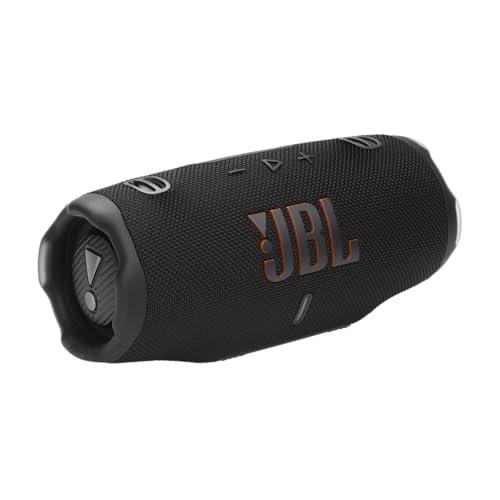
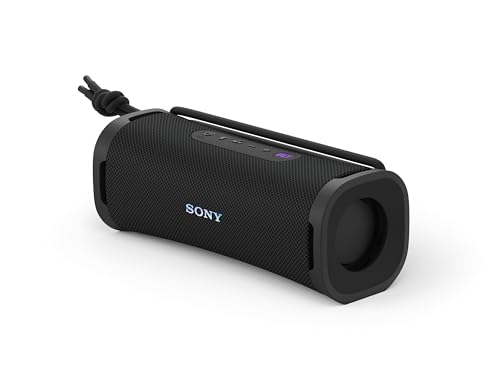
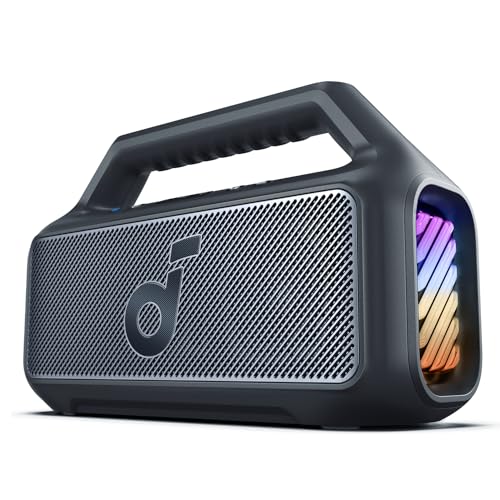
The best Bluetooth speaker in 2026 for most people is the JBL Charge 6: 45 W of stated RMS power, an IP68 rating, Auracast, and 24 hours of battery that turns a day out into one charge rather than two. The Sony ULT Field 1 is the compact one with real bass, and the Soundcore Boom 2 is the party speaker whose wattage is itemised instead of invented. And the rule that governs this whole category: if a listing does not write RMS next to the watts, the figure is not a power rating.
- For almost everyone: JBL Charge 6. IP68, 24 hours, and it charges your phone from its own battery.
- Bass in a small box: Sony ULT Field 1, whose bass button is a physical switch rather than an app setting.
- A garden or a party: Soundcore Boom 2: 80 W broken down as a 50 W woofer and two 15 W tweeters, which is what a figure you can add up looks like.
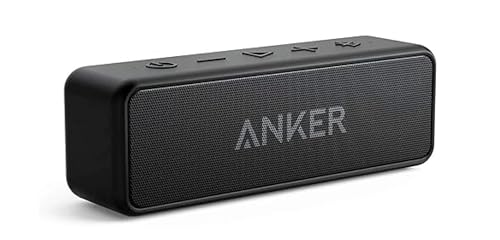 Cheap and long-lived: Soundcore Anker 2, 12 W RMS stated plainly, 20 hours and IPX7.
 Two things to know before ordering: a "1000 W" speaker does not exist, and IPX8 has no fixed depth in the standard. Sections one and two.
Watts that mean something: why the 1000 W speaker does not exist
There are three ways to count the watts on a Bluetooth speaker and only one of them is comparable: RMS, which is continuous power the thing can actually sustain. The other two, peak and PMPO, inflate the number by up to a factor of ten. It is not a scandal, it is a measurement convention that the cheap end of the market uses because nothing obliges it to use the other one.
If a listing does not write "RMS" next to the watts, assume the real figure is somewhere between half and a tenth of what is printed. Serious makers itemise it: the Boom 2 states its 80 W as a 50 W subwoofer plus two 15 W tweeters, which is an addition you can check. A pocket speaker claiming a thousand watts is not exaggerating, it is describing a different quantity: a battery that size cannot deliver that power for one second, let alone a set.
And the part that turns the rule into a decision. Doubling the watts does not double the loudness: it adds roughly three decibels, which is a noticeable step and not a transformation. What actually decides whether a speaker fills a garden is the size of the driver and the volume of the cabinet, which is why a chunky speaker with a stated 45 W outperforms a pocket one claiming five times that. Buy the box, not the number.
IPX7 is a defined test. IPX8 is whatever the maker decides.
Water ratings come from an international standard, IEC 60529, and reading them properly takes thirty seconds and saves a ruined speaker. The first digit is dust and the second is water. A 6 in the first position means sealed against dust. An X is not a zero: it means that digit was never certified.
IPX7 has a defined test behind it: thirty minutes at up to one metre. Every product carrying it passed the same examination, so IPX7 on one speaker means the same as IPX7 on another. IPX8 does not work that way. The standard defines it as immersion deeper than one metre under conditions specified by the manufacturer, which means an 8 is only as good as the depth and duration the maker is willing to publish next to it. A higher number is not automatically a better seal: it is a claim whose terms you have to go and read.
Two more things the number does not cover, and both apply to a British summer more than the marketing suggests. None of these ratings is a promise about salt water, because the tests are conducted in fresh water: rinse a speaker under the tap after a day at the coast. And an IPX7 rating says nothing about dust or sand, since that digit was not certified, which is exactly the wrong way round for a beach. For a beach you want the first digit to be a 6, which is what IP67 and IP68 give you and IPX7 does not.
The ten speakers, side by side
Every figure here is the one the manufacturer publishes, with our note on whether the power figure is a real rating or a marketing one, and what each speaker is actually for.
| Speaker | Power | Battery | Water and dust | Best for | |
|---|---|---|---|---|---|
| JBL Charge 6 | 45 W RMS | 24 h + 4 boost | IP68 | A whole day out, on one charge | View › |
| Sony ULT Field 1 | Not stated | 12 h | IP67 and rust resistant | Bass in something you can carry | View › |
| Soundcore Boom 2 | 80 W 50+15+15 | 24 h | IPX7, and it floats | A garden or a barbecue | View › |
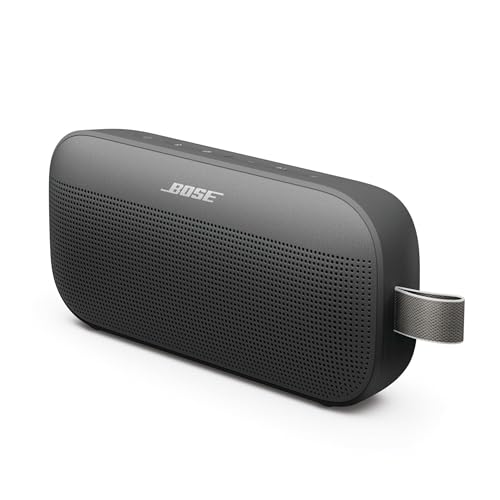
| Bose SoundLink Flex 2 | Not stated | 12 h | IP67 | Voices, detail, listening at home | View › |
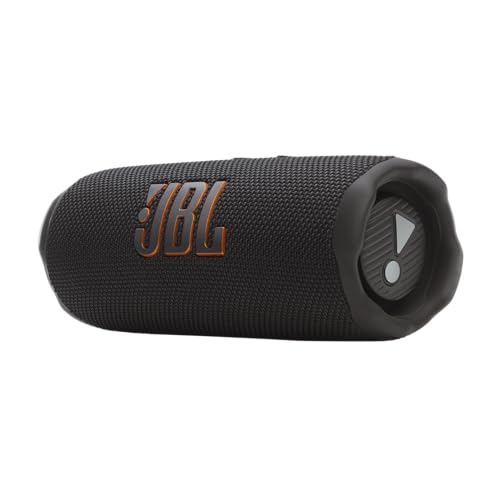 JBL Flip 7 JBL Flip 7 | 35 W RMS | 16 h (14 h + boost) | IP68 | The bottle-sized one most guides crown | View › |
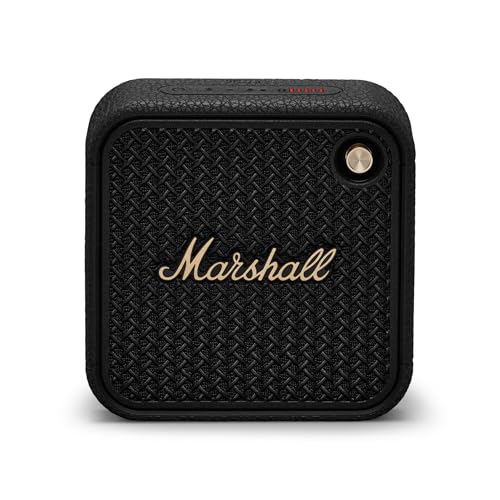 Marshall Willen II Marshall Willen II | ~10 W | 17 h+ | IP67 | The amplifier look, in a pocket | View › |
| Soundcore Anker 2 | 12 W RMS | 20 h+ | IPX7, dust not rated | The cheap one that keeps going | View › |
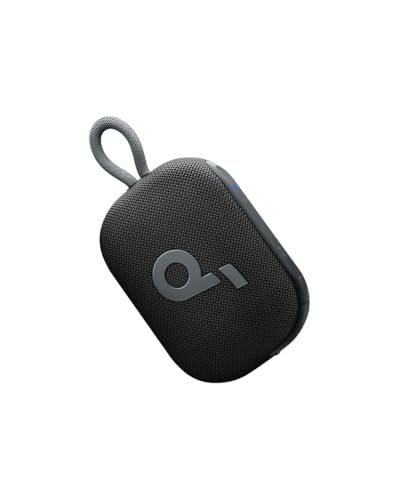 Select 4 Go Select 4 Go | 5 W RMS | 20 h | IP67 | Shower, bike, pocket | View › |
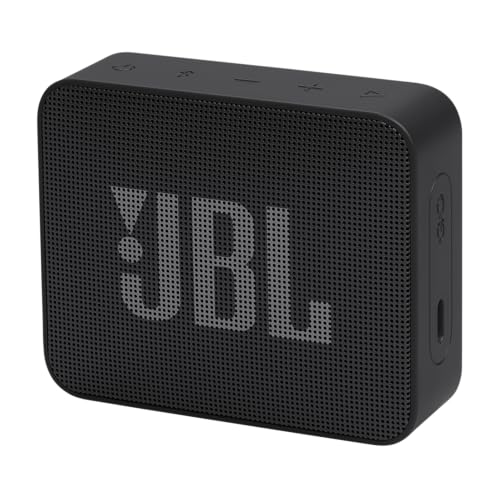 JBL GO Essential 2 JBL GO Essential 2 | ~4 W | 5 h | IP67 | A known name, at the smallest size | View › |
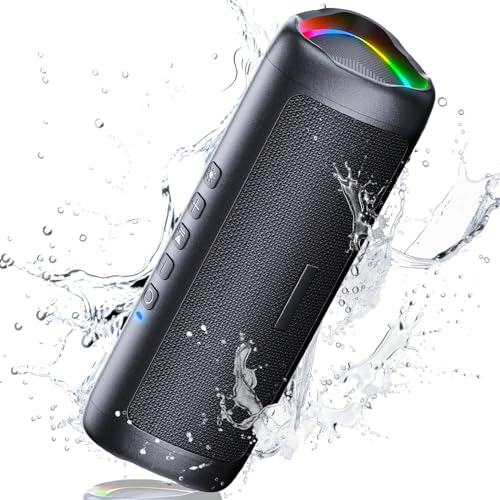 UOHHBOE LED UOHHBOE LED | "30 W" no RMS stated | 15 h | IPX5, not for a pool | A bedroom, with lights | View › |
Two rows worth pausing on. The JBL Flip 7 is the model most British buying guides put at the top, and on the specification it earns that: 35 W RMS, IP68 and a shape that fits a bag. Our recommendation goes to its larger sibling instead, on battery life and on how straightforward each of them is to get hold of in our catalogue reading. And the Sony and the Bose both decline to state a wattage at all, which in their case is a stylistic choice rather than a dodge: neither is competing on the number, and the next section explains why that is defensible.
Using one outdoors: what the law in England actually says
Nobody writing about party speakers mentions this, and it is the single most useful thing to know before you carry 80 watts into a garden, because almost everyone assumes the rule is a decibel limit and it is not.
There is one clear offence and it is about the street, not the volume. Government guidance on noise nuisance states that it is an offence to use loudspeakers for any purpose in the street at night, between 9pm and 8am. That is a time restriction, and it applies whether the speaker is at one watt or a hundred.
At night there is a defined level, and it is quieter than people expect. Between 11pm and 7am the guidance sets a permitted level in A-weighted decibels: 34 dBA where the underlying background noise is no more than 24 dBA, or 10 dBA above the background where the background is higher than that. Those are the government's published figures.
Outside those hours there is no maximum volume in law at all. What exists instead is statutory nuisance under Part III of the Environmental Protection Act 1990, and there is no definition of it in the legislation: it rests on decades of case law, and turns on whether the noise is an unreasonable and substantial interference with someone else's use of their home. Councils must investigate complaints that could be a statutory nuisance, and if they agree there is one they must serve an abatement notice requiring it to stop or be restricted. Guidance is also explicit that there is no legal right to absolute silence and that neighbours are expected to give and take.
What that means for the purchase, and it is not a scolding. The wattage is not the legal question; the hour and the persistence are. A powerful speaker used for an afternoon in a garden is nobody's statutory nuisance. The same speaker on a balcony every night for a fortnight is exactly what the Act was written about. So if the plan is a garden and daytime, buy the 80 watts and enjoy them. If the plan involves late evenings on a terrace with neighbours a few metres away, the constraint on your purchase is the clock rather than the specification, and a smaller speaker will serve you better than an argument will. We read the government guidance and the Act on 1 September 2026; we are not a legal service and this is not legal advice.
Battery figures are measured at half volume
Every hours figure in this category is quoted at a moderate level, around half. At the volume you will actually use outdoors, divide by two or three. And there is small print inside the small print: the Flip 7's listing headline says sixteen hours while its own specification says up to fourteen, because the extra two come from a mode that trims the bass to stretch the battery.
| Speaker | The box says | What the figure actually is | At high volume, roughly |
|---|---|---|---|
| JBL Charge 6 | 24 h + 4 | The longest here, and it will charge a phone from the same battery | 8 to 11 h |
| Soundcore Boom 2 | 24 h | With the LED lights off. Switched on, considerably less | 6 to 9 h |
| Marshall Willen II | 17 h+ | Straight: it is small and it moves little power | 7 to 9 h |
| JBL Flip 7 | 16 h | 14 h, plus 2 h of a mode that cuts the bass | 5 to 7 h |
| Sony ULT Field 1 | 12 h | Without the ULT bass button engaged, which you will engage | 4 to 6 h |
The quick rule: for a full day outdoors, look for 20 hours or more on the box. That is what leaves you a working speaker at nine in the evening without having planned around a socket. The right-hand column is our estimate from halving the maker's figure, and it is labelled as an estimate.
Which Bluetooth speaker for where you will actually use it
Five situations, five different answers. Tap yours and you get the model with the reason. It opens on the most common one: a whole day out of the house.
Each speaker was read on six criteria: the power figure and whether RMS is stated (a figure with no RMS and no breakdown is treated as unverified), battery with the small print attached, the IP rating read against IEC 60529 rather than against the marketing, codec and latency against the published Bluetooth specifications, size and what that means for the room it has to fill, and what the maker declines to state, which is often as informative as what it does.
Every figure here carries its source. The hours are the makers' figures and the high-volume column is arithmetic on them, labelled as such. Specifications come from each manufacturer's own material. Government guidance on noise nuisance and the Environmental Protection Act 1990 were read on gov.uk and legislation.gov.uk on 1 September 2026. Availability was read from the Amazon Spain catalogue on 1 September 2026: availability, model variants and delivery times differ by country, so what your local Amazon shows may not match this list. No manufacturer pays to appear here or to appear first.
The four that cover most of the cases

The larger sibling of the speaker most lists crown, and in this market the extra size buys the two things that matter outdoors: a stated 45 W RMS instead of 35, and twenty-four hours instead of fourteen. IP68 means the dust digit is certified as well as the water one, which is what a beach actually asks for. And the power bank function is not a gimmick on a long day: the speaker becomes the thing that keeps the phone playing.
The small one in Sony's ULT range punches above its size when you press the bass button, and the button being physical matters: it is one press rather than a menu. Sony does not publish a wattage for it, which we note in the table and do not hold against it, because the specification it does publish is the interesting one: rated against water, dust and corrosion, which is a coastal specification rather than a poolside one.
The only speaker in this comparison that states its power the way a hi-fi would: a dedicated subwoofer and two separate tweeter channels, added up in front of you. That is what makes its eighty watts a figure rather than a slogan. It fills a garden or a barbecue, floats if it goes in the water, and charges phones over USB while it plays.
If what you listen to is voices, jazz, folk or podcasts rather than dance music at full volume, this is the one that sounds grown up. It also works out how it has been placed, hanging, lying flat or standing up, and adjusts accordingly, which is a small thing that turns out to matter in a kitchen.
The other six, briefly
For video or games: the latency no list mentions
Bluetooth takes time to reach the speaker. With music that does not matter at all. With video and games it does, and the amount depends on the codec your phone and the speaker agree on, which for portable speakers is almost always the basic one.
| Codec | Typical latency | Who uses it | Video? | Games? |
|---|---|---|---|---|
| SBC (the baseline) | 170 to 270 ms | Every speaker on this page | Yes: streaming apps compensate on their own | No: the shot lands after you fire |
| AAC | 120 to 220 ms | iPhones with some speakers | Yes | No |
| aptX and aptX Low Latency | 40 to 120 ms | Mostly headphones and soundbars, rarely portables | Yes | Playable on Low Latency |
Translated into a decision: for films and streaming, any speaker on this page is fine, because the apps delay the picture to match the sound. For a console or a gaming PC, use a cable, or headphones with a 2.4 GHz dongle, which is the same argument that decides the connection in our PS5 headset guide. A Bluetooth speaker is the wrong tool for that job and no amount of specification changes it.
Pairing two speakers: Auracast, and what the makers actually say
The question people ask after buying their first one is whether a second will play alongside it, and the answer is changing, but more slowly than the marketing suggests.
What is true. Auracast is part of the Bluetooth LE Audio specification and it is designed for exactly this: one source broadcasting to many receivers. Both JBL speakers on this page carry it, and pairing them is a button on each. It also replaces the older brand-specific schemes that came before it, which is why an older JBL and a new one may refuse to talk to each other even though both are JBL.
What is not yet true. The standard is open, but the instructions are not. JBL's own guidance describes connecting its speakers to other Auracast-enabled JBL speakers, and says nothing about mixing brands. So in practice, today, plan a pair from one maker and one generation. If your intention is ever to own two, that decision is made at the first purchase, not the second.
The practical consequence for this page: the two JBL models are the ones that will grow into a pair, the Soundcore models pair with each other, and Sony's ULT range pairs within itself. What you cannot do is buy across brands and expect stereo.
Questions about Bluetooth speakers
If you buy one speaker, buy the JBL Charge 6: twenty-four hours, IP68 and 45 W that are stated as RMS. For bass in something you can carry, the Sony ULT Field 1. For a garden, the Soundcore Boom 2, whose eighty watts are itemised in front of you. And the rule that outlasts every model on this page: without RMS written down, the watts are not a specification.

Best budget over-ear headphones 2026
For you rather than for the room, with the one word that marks the noise cancelling tier.
Best bone conduction headphones 2026
When you want the music on your head and the traffic still in your ears.
Best PS5 headset 2026
The other place Bluetooth is the wrong answer, and Sony's own headset proves it.
Comments
Be the firstNo sign-up: just a name. Every comment is reviewed before it is published.