Best smartwatch 2026: ten compared by phone and battery, from the entry-level band to the Apple Watch
 m8d.ioUpdated on
This guide contains affiliate links. As an Amazon Associate, m8d.io earns from qualifying purchases, at no extra cost to you.
- For most people: the Amazfit Active 2. AMOLED screen, GPS with offline maps and a claimed 10 days, at mid-range money.
- The budget one that does not let you down: the Bip 6, with a screen just under two inches and 14 claimed days. Its head to head with the CMF Watch 3 Pro is inside.
- With an iPhone: the Apple Watch SE 3, knowing it charges every night. With Android and an appetite for apps: the Galaxy Watch7 or the Pixel Watch 4.
- Claimed battery runs from 18 hours to 24 days depending on the brand, and the unit is the trap: the battery section of this guide audits it listing by listing.
- The best value now comes from more than one place. Amazfit, Xiaomi, Huawei and CMF (Nothing) each own a bracket, and the top 10 puts them side by side.
Quick comparison: the 10 best smartwatches of 2026, with the battery each one claims
| Watch | Claimed battery | System | Who it is for | |
|---|---|---|---|---|
 Amazfit Active 2 (AMOLED, GPS) view › Amazfit Active 2 (AMOLED, GPS) view › | 10 days | Zepp OS | The balance for almost everyone | View › |
 Amazfit Bip 6 (14 days, GPS) view › Amazfit Bip 6 (14 days, GPS) view › | 14 days | Zepp OS | The budget bracket, solved | View › |
 CMF by Nothing Watch 3 Pro view › CMF by Nothing Watch 3 Pro view › | 13 days | own (CMF) | Budget with design | View › |
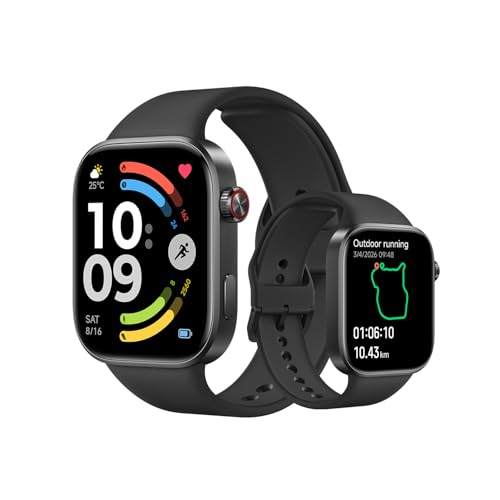 Xiaomi Redmi Watch 6 view › Xiaomi Redmi Watch 6 view › | 24 days | own (Xiaomi) | Forgetting the charger | View › |
 Xiaomi Smart Band 10 view › Xiaomi Smart Band 10 view › | 21 days | own (Xiaomi) | The entry-level band | View › |
 Huawei Watch GT 5 (46 mm) view › Huawei Watch GT 5 (46 mm) view › | around 2 weeks | HarmonyOS | Classic looks and battery | View › |
 Amazfit T-Rex 3 (48 mm) view › Amazfit T-Rex 3 (48 mm) view › | weeks (outdoor) | Zepp OS | Hills and expeditions | View › |
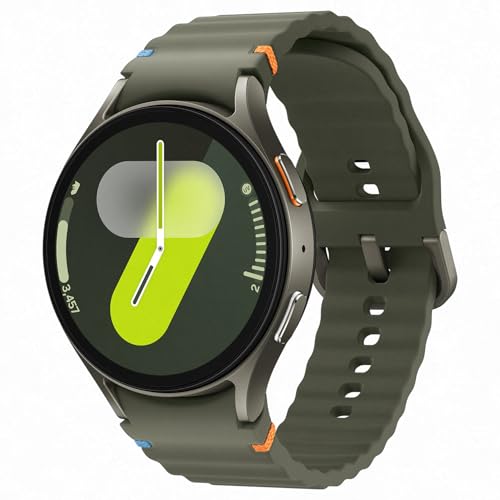 Samsung Galaxy Watch7 (44 mm) view › Samsung Galaxy Watch7 (44 mm) view › | around a day and a half | Wear OS | Android with every app | View › |
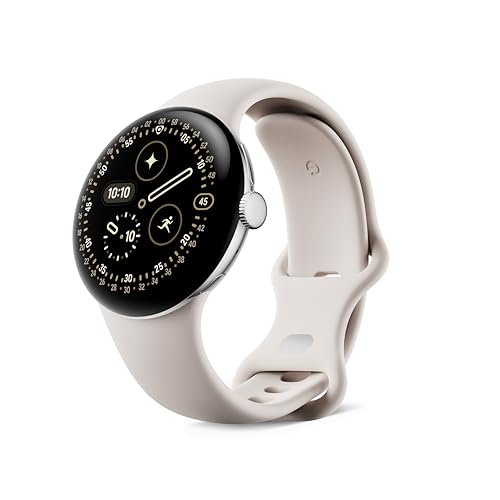 Google Pixel Watch 4 (41 mm) view › Google Pixel Watch 4 (41 mm) view › | a long day | Wear OS | Pure Google | View › |
 Apple Watch SE 3 (GPS, 40 mm) view › Apple Watch SE 3 (GPS, 40 mm) view › | 18 hours | watchOS | Anyone on iPhone | View › |
Battery is the figure each manufacturer states on its own product listing, read on 20 August 2026, and that is why the units do not match: the next section explains how to compare them. Use the buttons to check availability and current pricing in your local Amazon store.
Smartwatch battery life in 2026: from Apple's 18 hours to Xiaomi's 24 days, and the unit that misleads
The listings on this very page claim anything from 18 hours (Apple Watch SE 3 (GPS, 40 mm) view ›) to 24 days (Xiaomi Redmi Watch 6 view ›), and both figures are true. What changes is what they measure. Apple states hours of full, normal use. The brands quoting days measure with the screen off, without GPS and with readings spaced out: switch the always-on display on and the figure halves; add a GPS run every day and it halves again. A capable Wear OS watch like Samsung Galaxy Watch7 (44 mm) view › lives at a day and a half for exactly the same reason it can put Google Maps on your wrist.
No roundup in this category puts the two numbers next to each other, because side by side they look absurd. They are not: they are two different measurements wearing the same word. Apple publishes up to 18 hours of normal use and, on the same spec sheet, up to 32 hours in Low Power Mode, which is the plain way to say that the screen and the sensors are working all day. A watch quoting days is measuring the opposite scenario: display asleep, GPS off, heart rate sampled every few minutes. Neither brand is lying. What is missing from every listing is the sentence that lets you compare them, so here it is.
"Up to 24 days" against "up to 18 hours", printed with the same confidence and never with the conditions attached, so the two look like a fourteen-fold difference in the same measurement.
Apple's own spec sheet for the SE 3 states 18 hours of normal use and 32 hours in Low Power Mode, and lists an always-on display. The brands quoting weeks state their figure for typical use with the screen off. They are measuring two different watches doing two different jobs, and the numbers only become comparable once you say which mode you will actually run.
m8d rule: Halve the days a watch claims if you are going to run the always-on display, and halve them again if you train with GPS every day. If the number you are left with still fits your charging routine, that is your watch.
Every smartwatch reviewed in detail: the four big names and the budget head to head
Amazfit Active 2 (AMOLED, GPS) view ›
The exact point where the money works hardest in 2026: a bright AMOLED screen, GPS with offline maps, 10 claimed days of battery and more than 160 sport modes for less than half what the big names charge. Works with iPhone and Android without drama.
- Offline maps in this bracket were unthinkable a year ago: for running and hiking without a phone, that is the argument.
- The 10 claimed days are for normal use: with an always-on display and frequent GPS, count on half, and that applies right across this category.
- Quick replies and calls are smooth on Android; on iPhone, like every non-Apple watch, they come with limits.
- AMOLED and GPS with offline maps at mid-range money
- 10 days of battery claimed on the listing
- Works with both iPhone and Android
- Contactless payments depend on your country, your card network and your model
- The app catalogue does not compete with Apple or Wear OS
- With the always-on display running, halve the claimed battery
Amazfit Bip 6 (14 days, GPS) view ›
An AMOLED screen just under two inches, GPS with maps, Bluetooth calling and 14 claimed days, at the bottom of the price ladder: the budget champion of 2026. If this is your first proper smartwatch, start here.
- The 1.97-inch screen is among the largest at this price: the numbers are readable at a glance mid-run.
- The 14 claimed days assume restrained use: even halved, that is still double most of this list.
- Built-in GPS means the phone stays at home when you go for a run.
- A large, bright AMOLED screen at entry-level money
- GPS with maps and Bluetooth calling
- 14 days of battery claimed on the listing
- Materials to match the price: it is honest plastic
- No NFC payments
- One size only, at 46 mm, which is a lot of watch for a slim wrist
CMF by Nothing Watch 3 Pro view ›
Nothing's answer to the budget bracket: AMOLED, GPS, 13 claimed days and a design that does not look like an entry-level watch. Against the Bip 6 it loses on screen size and wins on looks: the budget head to head is between these two.
- The swappable bezel is its signature against the more sporty-looking Amazfits.
- The 13 claimed days put it shoulder to shoulder with the Bip 6 on battery.
- Its app is young: correct and improving, without the mileage of Zepp or Mi Fitness.
- Design well above its bracket
- AMOLED, GPS and 13 days claimed
- Entry-level price
- Smaller screen than the Bip 6
- A younger app with less mileage
- A young brand in wearables
Apple Watch SE 3 (GPS, 40 mm) view ›
If you carry an iPhone and want the full ecosystem (messages, payments, fall detection, apps), the SE 3 is the sensible door: it does around 90 per cent of what its expensive siblings do. The real bill is the battery. Apple claims 18 hours, and that is at once the most honest and the shortest figure on this list.
- It only works with an iPhone: on Android it will not even pair, and that belongs above the button, not below it.
- Apple's spec sheet for the SE 3 lists an Always-On Retina display and up to 32 hours in Low Power Mode. The previous SE generation had neither, which is why older roundups still get this wrong.
- The 18 claimed hours mean charging it every night: a different sport entirely from the two-week watches on this list.
- The full Apple ecosystem at the entry price
- Fall detection and emergency calling
- The most honest battery figure on the market, even if it is the shortest
- One day of battery: charging overnight is part of the deal
- iPhone only: it will not pair with an Android phone
- No multi-day option, even Low Power Mode is 32 hours by Apple's own figure
Samsung Galaxy Watch7 (44 mm) view ›
The serious Android watch: Wear OS with every Google app, top-tier health sensors and the tight integration with Galaxy phones. It pays for that power with a day and a half of battery, and anyone coming from an Amazfit will notice the change in both directions.
- With a Samsung phone it opens up fully: ECG and blood pressure run through the Samsung Health Monitor app and are available in the United Kingdom, but they are tied to that ecosystem.
- Wear OS means Google Maps, contactless payments and the real app catalogue on your wrist.
- Battery sits at about a day and a half in normal use: near-daily charging, as with every capable Wear OS watch.
- Full Wear OS: apps, Maps and payments
- Health sensors from the top tier
- Restrained price for what it does
- A day and a half of battery
- Its headline health features are at their best only with a Samsung phone
- It does not work with an iPhone
Huawei Watch GT 5 (46 mm) view ›
The one that looks like an actual watch: finishes above its price, serious sport metrics and a claimed two weeks of battery. Its toll is well known: with no Google on the watch, the apps are Huawei's and payments depend on its own wallet.
- The finish is its calling card: it passes for a normal watch at a work lunch.
- The Huawei Health app installs outside Google Play on Android without drama, but you need to know that going in.
- For training and sleep, its metrics sit among the better ones on this list.
- Premium finish at mid-range money
- Around two weeks of battery claimed on the listing
- Serious training and sleep metrics
- No Google: apps and payments are limited
- Its companion app is installed separately on Android
- No strong ecosystem outside Huawei
The other four of the top 10: the outdoor tank, the record battery, the band and pure Google
For hills and expeditions: dual-band reception across six satellite systems, offline maps and a build that takes knocks and weeks away from a charger. It is big and it knows it: on an office wrist there is watch spilling over every side.
View ›The highest battery claim on the list: 24 days. For anyone who wants to put a watch on and forget the charger for the best part of a month, with the Xiaomi ecosystem and a budget-bracket price.
View ›The way in. Steps, sleep, heart rate and notifications with a claimed 21 days of battery, at the lowest price on this list. It is not a watch and does not pretend to be: it is the cheapest honest answer to whether you will actually wear one.
View ›Wear OS as Google intends it: round, clean, with its own assistant and Fitbit's metrics inside. For anyone living on Android without a Samsung phone it is the most rounded experience, paying the long-day battery that every Wear OS watch charges.
View ›Wear OS against a maker's own system: the choice that really decides which smartwatch you should buy
A listing shows you sensors and screens, but daily life with the watch is decided by the system. It is a clean trade, and almost nobody frames it as one:
Real apps on your wrist: Google Maps guiding you, contactless payments, Spotify without the phone, the whole catalogue.
One to two days of battery and near-daily charging. That is physics, not a fault: running real apps costs power.
One to two weeks of battery, half the price, and training and sleep fully covered.
No real app catalogue, and payments that depend on your card network and your country. The watch keeps your phone company, it does not replace it.
m8d rule: If the watch is for APPS in your head, go Wear OS or Apple and accept charging it daily. If it is for DATA (training, sleep, notifications), a maker's own system gives you two weeks of battery for half the money.
Health and privacy: what a smartwatch actually measures, and where your data ends up
Two uncomfortable truths we hold to across this whole category. The first: heart rate, sleep and blood oxygen from a consumer watch are wellbeing guidance, not diagnosis. Features with a medical-sounding name (ECG, blood pressure) are only worth what their clearance is worth in your country, and they usually demand the maker's full ecosystem to work at all. The second: that data sits on the manufacturer's servers, and what each company does with it matters as much as the sensor. We go through it brand by brand in our piece on smartwatch health data and privacy.
Amazfit, Xiaomi, Huawei and CMF: what the value brands give you for half the money in 2026
Half of this top 10 comes from the Chinese value brands, and not as filler: Amazfit Active 2 (AMOLED, GPS) view › and Amazfit Bip 6 (14 days, GPS) view › (Amazfit), Xiaomi Redmi Watch 6 view › and Xiaomi Smart Band 10 view › (Xiaomi), Huawei Watch GT 5 (46 mm) view › (Huawei) and CMF by Nothing Watch 3 Pro view › (CMF, from Nothing) put an AMOLED screen, GPS and weeks of battery at prices the American brands do not go near. What they do not give you: an app catalogue, payments that work with any card, and, in Huawei's case, Google services at all. The sum: for training, sleep and notifications the value brands win almost every time; for living out of apps on your wrist, they are not in that league.
Every figure in this guide carries its source and its date. What we did: read the listing each manufacturer publishes in the Amazon Spain catalogue that m8d tracks (part of Amazon's shared European catalogue) on 20 August 2026, contrast those figures against each other, which is where the entire battery section comes from, and check the two market-specific claims in this piece against the manufacturers' own UK pages on 30 August 2026. Where a figure is not stated, the cell says so instead of being filled in. In this revision the Redmi Watch 5 Active from the previous version went out of stock and its successor takes the slot: said here, not hidden. Model availability varies by country, and so do payment and health features: the buttons take you to your local Amazon store so you can check yours.
What is the best value smartwatch in 2026?›
The Amazfit Active 2: AMOLED screen, GPS with offline maps and a claimed 10 days of battery at mid-range money, working with both iPhone and Android. If you want to spend as little as possible, the Bip 6 is the budget champion; if you carry an iPhone and want the ecosystem, the Apple Watch SE 3.
Which smartwatch measures health best?›
The high-end sensors live in the Galaxy Watch7, the Pixel Watch 4 (with Fitbit metrics) and the Apple Watch. Two caveats: features with a medical-sounding name often require the maker's full ecosystem and their clearance differs country by country, and everything a consumer watch measures is wellbeing guidance, not diagnosis. For what each brand does with your data, we have a separate analysis of smartwatch privacy.
How long does smartwatch battery really last?›
It depends on the unit each brand measures in. Apple states 18 hours of normal use and 32 hours in Low Power Mode. The brands running their own system state 10 to 24 days, measured with the display off and GPS used occasionally. The rule from this guide: halve the claimed days if you run the always-on display, and halve them again if you train with GPS every day.
Do they work with both iPhone and Android?›
The Amazfit, Xiaomi, CMF and Huawei watches work with both, with the fuller feature set on Android. The Apple Watch works only with iPhone. Wear OS watches like the Galaxy Watch7 and the Pixel Watch work only with Android. That is the first filter, before you look at a single spec: your phone decides half the purchase.
Can you pay with an Amazfit or a Xiaomi watch in the UK?›
Not the way you pay with an Apple, Pixel or Galaxy watch. Amazfit's UK page states that Zepp Pay runs through a Mastercard partnership, so cards on other networks will not load, and it names the Balance as the supported model rather than the Active 2 or the Bip 6 in this guide. Huawei and Xiaomi payment support in the UK is similarly partial. If tapping to pay matters to you, treat it as a filter and check the maker's own wallet page for your exact model and bank before buying.
Are the Chinese value brands like Amazfit or Xiaomi worth it?›
For training, sleep and notifications, almost always: AMOLED screens, GPS and weeks of battery at half what the American brands charge. What they do not give you is an app catalogue or payments that work with any card. Half our top 10 comes from these brands on merit, with the small print stated in each entry.
Wear OS or the maker's own system?›
Wear OS (Samsung, Google) gives you real apps, Maps and payments, and it costs battery: a long day. A maker's own system (Amazfit, Xiaomi, Huawei) gives you one to two weeks and covers training and notifications, with no real app catalogue. If the watch is for apps, Wear OS or Apple; if it is for data, an own system and stop worrying about the charger.
The figures in this piece come from the listings each manufacturer publishes, with the date they were consulted.
- AmazonAmazon product listingsSpecifications and claimed battery figures published by each manufacturer for the ten watches, read via API on 20 August 2026 from the Amazon Spain catalogue that m8d tracks daily, part of Amazon's shared European catalogue. The 10, 13, 14, 21 and 24 day figures appear in the listing titles themselves.
- Apple UKApple Watch SE technical specificationsUp to 18 hours of normal use, up to 32 hours in Low Power Mode, and an Always-On Retina display on the SE 3. Consulted on 30 August 2026: it is the other half of the unit contrast, and it is also why the note about the previous SE having no always-on display no longer applies.
- Amazfit UKZepp Pay support and coverageAmazfit's own UK page for its contactless payment system: a Mastercard partnership, availability listed across 31 countries including the United Kingdom, and the Amazfit Balance named as the supported watch. Consulted on 30 August 2026: it is the source of the payments note.
The conclusion of this top 10: your phone and your tolerance for a charger decide more than any spec sheet. With that sum done, Amazfit Active 2 (AMOLED, GPS) view › is the complete buy for most people, Amazfit Bip 6 (14 days, GPS) view › settles the budget bracket without feeling like a compromise, and Apple Watch SE 3 (GPS, 40 mm) view › is the right door if you live on an iPhone. And the house rule before you buy any of them: halve the claimed battery days for an always-on display, and check that the number you are left with fits your week.
Comments
Be the firstNo sign-up: just a name. Every comment is reviewed before it is published.