Best dash cam in the UK for 2026: the plate the police portal has to be able to read, and why the parking mode you paid for needs a cable you did not buy
 m8d.ioUpdated on
This guide contains affiliate links. As an Amazon Associate, m8d.io earns from qualifying purchases, at no extra cost to you.
The best dash cam for most drivers is the REDTIGER 4K with a STARVIS 2, because it is the cheapest one that says what sensor is inside it. The 70mai M310 Plus 4K is the balance, and the Garmin Dash Cam Mini 3 is the one you fit and forget. Before you choose, the two checks nobody does. First, the reason you are buying it at all: if you upload footage of dangerous driving to the national portal the police use, it has to be the original file, unedited and uncompressed, and the number plate has to be legible in that original, because it cannot be enhanced afterwards. Second, the parking mode half of them advertise does not work with what comes in the box, and the cable that makes it work is a modification your insurer needs to know about.

Names its sensor, uses a supercapacitor and comes with the 128 GB card fitted.
See it on Amazon ›Jump to what you came for: is it legal, and what the police accept · what your insurer needs to be told · what parking mode actually needs · why cheap 4K is not always 4K · how long it records before it overwrites · the seven compared, one by one · questions
Are dash cams legal in the UK, and what the police will actually accept
Yes, dash cams are legal in the UK, and that answer is the least useful part of this section. The useful part is what happens when you try to use the footage, because that is where the camera stops being a gadget and starts having a specification to meet.
Since 2018 every police force in Great Britain takes footage of dangerous driving through a single national portal, and its own guidance is explicit about the form the file has to take. It is worth reading before you choose a camera, because two of its requirements are product decisions in disguise.
The requirements below are published by the portal itself and by the offences the police investigate through it. None of it is our interpretation.
The number on the box is what the category sells. It is also the thing that has the least to do with whether a plate resolves, as the section further down shows with the catalogue counted.
Its guidance is blunt: "it will not be possible to enhance if the original recording has failed to capture the number". There is no forensic step that rescues an unreadable plate. Whatever the camera captured at the moment is what exists, which turns a marketing figure into a hard requirement.
The portal asks for a copy of the original file, unedited and uncompressed, and it accepts footage from any dash cam, action camera or phone from any manufacturer. That rules out anything that only lets you export a clip through its app with the app's own compression applied. Check that the camera lets you take the file straight off the card.
Most road traffic offences carry a six-month limit for prosecution, and some require the police to give notice within 14 days. So the loop window on your card is not an abstract number: if the incident was on Thursday and you find it on Monday, a 32 GB card recording two streams has already overwritten it. That is what the calculator further down is for. And the honest warning: any traffic violation of your own that is in the footage gets scrutinised too.
Legal here does not mean legal everywhere, and the two countries that matter most are the ones British drivers pass through. Austria effectively prohibits dash cam use under its privacy law, with reported penalties running into the tens of thousands of euros, and Luxembourg bans them outright in private vehicles. Portugal and Switzerland are also frequently listed as restricted. Reports of enforcement against foreign vehicles come from travel and motoring press rather than from the authorities directly, so treat the figures as indicative and the rule as real: take it off the windscreen and put it in the glovebox before you cross those borders.
m8d rule: Before you buy, ask two things of the camera and one of yourself. Can it give you the ORIGINAL file, unedited and uncompressed, straight off the card? Will a plate be legible in that original at the distance and in the light you actually drive in? And are you willing to sign that you would attend court, because the portal asks you to tick that before it will take the upload. If the answer to any of the three is no, the recording is for your own peace of mind and not for a prosecution, and that is a perfectly good reason to buy one.
This is not legal advice and does not pretend to be. What it is, is the requirement the camera has to meet stated before you pay rather than after: an original file you can get at, and a plate that resolves in that original. Everything else in this category is a preference.
The insurance question, and why hardwiring is a modification you have to declare
Two things get repeated about dash cams and insurance, and one of them has quietly stopped being true. Both change what you should buy, so they belong before the product cards rather than after.
Both points below come from what UK insurers and comparison services publish, read on 1 September 2026.
The line the category has been sold on for a decade, and it is now largely out of date. Advertised percentage discounts simply for owning a dash cam have become rare among the major UK insurers. A handful of specialist brokers still publish one, with Adrian Flux advertising up to 15% for an approved device, and most require it to be professionally hardwired to qualify. Treat a discount as a bonus you check for, not a reason to buy.
The value has moved from the premium to the claim. Footage that shows you were not at fault is what protects your no-claims discount in a non-fault claim, and that is worth considerably more over several years than any advertised percentage. It is also the argument for the buffered parking mode further down, because a knock in a car park with nobody around is the classic case where there is no other evidence at all.
The rule as published by UK comparison services: a simple plug-in dash cam does not need to be declared, but a hardwired one does, because it counts as a modification to the vehicle. Since parking mode only works hardwired, choosing parking mode and choosing to make a declaration are the same decision. And the other side of the same coin, said plainly: your own driving is in that footage too, and an insurer looking at a claim can look at all of it.
m8d rule: If you fit a plug-in camera to the 12 V socket, there is nothing to tell your insurer. The moment you hardwire it to the fuse box, which is the only way parking mode works, it counts as a modification and it has to be declared. Ring them before the fitter does it, not after, and do not expect a percentage off for having the camera: the value is in what the footage does to a claim, not in what the camera does to a quote.
Parking mode: the 24-hour surveillance needs a wiring kit bought separately
Twelve of the forty-five listings we counted promise surveillance with the car parked. It is the flagship feature of the category and the one people pay most for. And it has a physical condition that has nothing to do with the camera: with the engine off, the 12 V socket has no power. To keep the camera alive it has to be fed from somewhere else, and that somewhere else is a separate part, fitted to the fuse box, which is the declaration in the section above.
Three different official spec sheets, read on 27 August 2026, say exactly the same thing in three different ways.
"24-hour parking mode", "parking surveillance", "24-hour car security camera". The feature is in the headline. The kit is nowhere in the headline.
70mai, verbatim on its spec sheet: "the 70mai Hardwire Kit UP03 or the OBD-II wiring kit is required for parking surveillance mode". REDTIGER writes it into the product listing itself: "Parking Mode (Hardwire kit needed)". And VIOFO sells its HK6 kit as an accessory, sometimes bundled with the camera. None of them hides it. It simply is not in the headline the buyer reads.
m8d rule: If you are buying a dash cam for its parking mode, budget for the wiring kit and its fitting, or check that your car takes the OBD-II adapter. Without that, the feature you paid for switches off with the engine. And prefer a buffered parking mode: one that keeps the seconds BEFORE the impact, because the approach is the part that shows who did it.
Why a 4K dash cam at the entry level and one at four times the money print the same figure
Resolution is a setting on the file. The sensor is the physical part that collects the light, and it is the expensive one. That is why a camera can write 3840 by 2160 on its listing without there being anything behind it capable of resolving that much detail. Distinguishing the two takes no technical knowledge and about ten seconds: look at whether the listing says which sensor it uses. And now you know from the section above why that matters, because the plate has to resolve in the original. We did the whole count.
Everything below comes from the manufacturers' own official spec sheets, read on 27 August 2026 and linked in the sources at the foot.
"4K", "4K UHD", "2160P", and in some cases three simultaneous streams at 4K and 1080p at the very bottom of the market. Twenty-five of the forty-five listings carry the figure in the headline.
The only two that name their sensor use the same one, a Sony STARVIS 2 IMX678, and both sit in the upper half of the category. And a specialist brand's own catalogue puts a number on the jump: its 2K model with that sensor and its 4K model with that sensor are separated by more than an entire generic camera that advertises 4K costs.
m8d rule: If a listing says 4K and does not say which sensor produces it, treat the figure as a setting on the file and not as a promise about what you will be able to read at night. The check is to open the spec sheet and search for the word sensor: if it does not appear, you already have your answer, and you need to know nothing about photography to do it.
And the translation, which is what decides the purchase: what you want from a dash cam is not a figure, it is a readable plate, and now you know exactly who is going to try to read it. In daylight at close range almost anything on this page manages it. At night, in rain, or with the other car pulling away, it is the one with the sensor and the aperture that manages it, not the one with the biggest number printed on the box.
How long a dash cam records before it overwrites: the loop calculator
A dash cam records in a loop and overwrites the oldest footage when the card fills, so the answer depends on three things: how many streams it records at once, at what resolution, and what card is in it. With the 32 GB card that comes in many boxes and a camera recording 4K at the front and 1080p at the back it is a little over an hour; with a 128 GB card it goes past five. Change the two options and your own number comes out, with the division on show.
47 Mbps x 3,600 seconds / 8 / 1,000 = 21.2 GB per hour. Of the card's 32 GB we count 27, because the rest gets taken up by the files the camera locks when it detects an impact.
With 45 minutes of driving a day, that comes to 1.7 days before today writes over last week. If the knock happened on Thursday and you find it on Monday, that is the difference between having the video and not having it, and the police portal above has a six-month window to use it in.
Below four hours the margin is thin: anything that does not trip the impact sensor and that you do not lock by hand is overwritten the same day. That is exactly the case of the 32 GB card that comes in many boxes with a two or three channel camera recording 4K.

The megabits per second are the usual band for each resolution: every manufacturer sets its own and almost none publishes it on the sales listing, so the result is given in rounded hours. If your camera declares its own figures, change the number in the division above and the result is just as good. The 45 minutes a day is the reference used to turn the loop into days, and it is a reference rather than your driving.
What almost nobody factors in when buying: the card decides as much as the camera, and it is the part people economise on. If the knock was on Thursday and you find out on Monday, a short loop means the file no longer exists, and the portal in the first section has nothing to work with. That is why the high endurance card is on this page, and why the manufacturer that takes this most seriously, Garmin, publishes its list of recommended cards.
The seven compared, and then one by one
The best value dash cam of 2026 on this page's criteria is the REDTIGER 4K + 1080p dash cam with STARVIS 2 view ›, because it is the cheapest one you can check all the way through. To spend less, the balance is the 70mai M310 Plus 4K view ›; to forget about it, the Garmin Dash Cam Mini 3 view ›; and if the 4K has to be the real thing, the VIOFO A119M Pro 4K view ›.
| Product | Best for | Resolution it advertises | Sensor declared | Power | Parking | |
|---|---|---|---|---|---|---|
| REDTIGER 4K + 1080p dash cam with STARVIS 2 view › | The one you can check all through | 4K front plus 1080p rear | STARVIS 2 IMX678 | supercapacitor | 24 h, hardwire kit separate | View › |
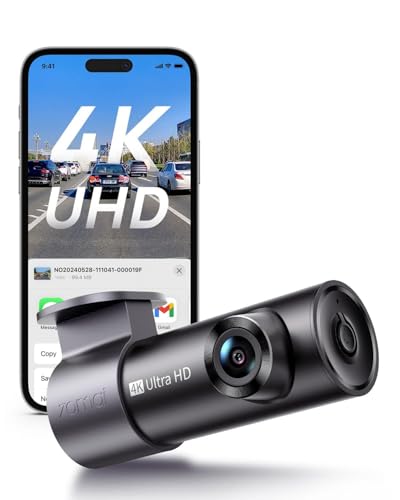 70mai M310 Plus 4K view › 70mai M310 Plus 4K view › | A real brand without overspending | 4K, 140 degrees, f/1.55 | not declared | not declared on the spec sheet | with the UP03 kit or an OBD-II cable | View › |
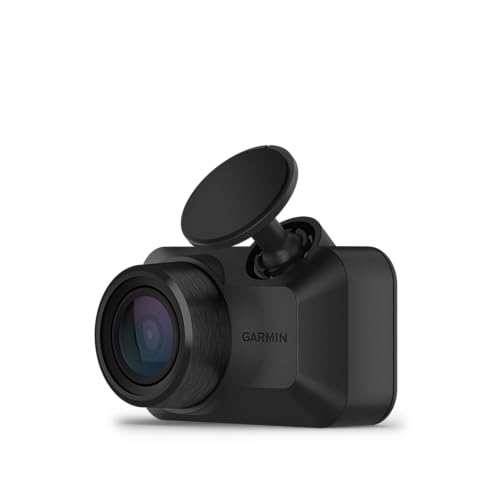 Garmin Dash Cam Mini 3 view › Garmin Dash Cam Mini 3 view › | Fitting it and forgetting it | 1080p at 140 degrees | not declared | not declared in the manual | yes, with a constant-power cable | View › |
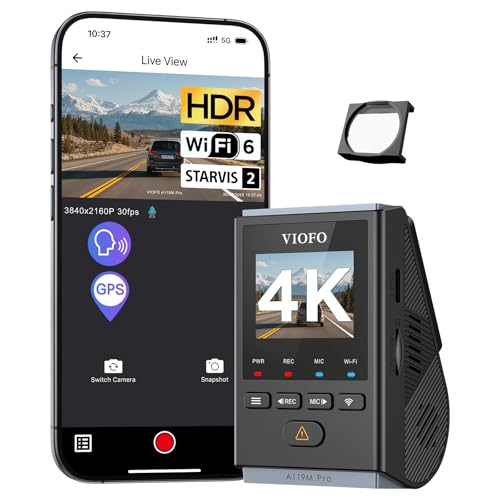 VIOFO A119M Pro 4K view › VIOFO A119M Pro 4K view › | The checkable 4K | 4K at 30 frames per second | STARVIS 2 IMX678 | supercapacitor | buffered, HK6 kit separate | View › |
 70mai M310 Plus 3K view › 70mai M310 Plus 3K view › | The step below in the same family | 1620p | not declared | not declared on the spec sheet | with the UP03 kit or an OBD-II cable | View › |
 WOLFANG 4K front and rear car camera view › WOLFANG 4K front and rear car camera view › | The entry level | 4K front and rear | not declared | not declared | advertised, without saying what it needs | View › |
| SanDisk High Endurance 128 GB view › | The video still being there on Monday | 128 GB, class 10 U3 V30 | not applicable | not applicable | multiplies the window by four | View › |
Sensors, resolutions and power type are as declared by each manufacturer on its own official spec sheet, read on 27 August 2026 and linked in the sources at the foot. "Not declared" means exactly that: the spec sheet does not say, not that the product lacks it. Model naming and availability vary by country.
REDTIGER 4K + 1080p dash cam with STARVIS 2 view ›
If the question is which one we would buy on this page's criteria, this. Not because it has the biggest number but because it is the cheapest one you can actually check: it names its sensor, it names how it is powered, and it includes the card the others sell you separately. The thing to know before you pay is that its 24-hour parking surveillance needs a hardwire kit that does not come with it, and the insurance section above explains why that is a decision and not just a purchase.
- It is the only one in the whole sweep, along with the VIOFO, that declares its sensor: STARVIS 2 IMX678 for the 4K front stream. What that means on a wet evening: the number plate ahead of you turns into a white smear, and the sensor decides whether that smear resolves into characters. The resolution figure does not.
- It uses a supercapacitor rather than a lithium battery, with a declared temperature range its listing puts at roughly twenty below to seventy. On a windscreen in a heatwave that is not a catalogue detail: it is the difference between a camera that still switches on in September and one that swelled in July.
- It ships with a 128 GB card and takes up to 512. With the calculator further down that is around five hours of loop recording front and rear, against the hour or so you get from the 32 GB card the others come with.
- Names its sensor by model: STARVIS 2 IMX678
- Declares a supercapacitor rather than a lithium battery
- Comes with the 128 GB card, which is where the saving on the others goes
- The 24-hour parking mode needs a hardwire kit, and its own listing says so
- Towards the top of its bracket: close to twice the middle of the category
Garmin Dash Cam Mini 3 view ›
The buy for anyone who wants to forget about it. Thirty grams behind the mirror, support from a brand that has been doing this for decades, and a manual that publishes the temperature range and the compatible cards. It is also, without meaning to be, the best proof of this guide's argument: if 4K were what decided this, Garmin would not be selling 1080p at this level. For parking surveillance, its own manual documents the constant-power cable, which is separate.
- It records 1080p at 140 degrees and 30 frames per second, and that is the brand's decision rather than a limitation it is hiding: at the same money it could advertise a bigger number and does not. Translated: they would rather the plate read than the figure impress.
- It is the only camera here whose maker publishes the list of memory cards it recommends, along with the supported range of 8 to 512 GB in class 10 or above, formatted FAT32. That a brand bothers to publish that tells you more than its resolution does.
- Its manual declares the operating temperature range, minus 20 to 60 degrees, which is one of the few figures that lets you judge whether a camera survives a windscreen in August. What that manual does not say is the sensor or how it is powered internally, and that gets said too.
- Publishes the list of memory cards it recommends, which almost nobody does
- Its manual declares an operating range of minus 20 to 60 degrees
- Thirty grams and three centimetres: it disappears behind the mirror
- Records 1080p, and some people will not go below 4K however good the argument
- Its manual does not declare the sensor or the internal power type
70mai M310 Plus 4K view ›
The balance on this page for anyone who does not want to overspend. It comes from a brand with a published spec sheet, an app and spare parts, and the rotating lens gives it a use nothing else here has: pointing it at the cabin when you need to. What it lacks is the one thing that separates a checkable 4K from an advertised one, which is saying what sensor produces it.
- This is where the number starts being backed by something: the official spec sheet declares 3840 by 2160, 140 degrees and an f/1.55 aperture, wider than the f/2.0 of the M310 before it. Translated: more light comes through the same hole, and at night you notice that before you notice any pixel count.
- What it does not say is the sensor. We checked its own spec sheet on 27 August 2026 and neither the make nor the model appears. That is not an accusation, it is what is there, and it is exactly the difference with the pick on this page.
- Its listing is one of the few that says plainly what parking surveillance needs: the 70mai UP03 hardwire kit or the OBD-II cable. That is the level of clarity you would want in all forty-five.
- Declares resolution, angle and an f/1.55 aperture on its own spec sheet
- A 360 degree rotating lens, so it also records inside the car
- A brand with support, an app and real spare parts
- Does not name its image sensor anywhere on its spec sheet
- Parking surveillance requires the UP03 kit or the OBD-II cable, bought separately
70mai M310 Plus 3K view ›
The sensible buy for anyone who does not want to think about this for more than ten minutes. A brand with a spec sheet and an app, more resolution than the case that actually matters needs, and a position right in the middle of the category. And placed next to its 4K sibling it is the cleanest proof on this page of what going up in resolution really costs.
- It is the same camera from the same brand one step down: 1620p instead of 3840 by 2160. That is why it is on this page more than for its own sake: inside a single catalogue it shows what the resolution jump costs, and the gap is small.
- That small gap is the figure worth carrying around this whole category. When somebody sells three 4K streams for less than that single step costs, the arithmetic does not add up, and you do not have to distrust anyone to see it.
- For what most people actually need, which is having the moment of the impact recorded with the other car's plate in it, 1620p at close range is plenty. Resolution starts deciding when the car is far away, when it is dark, or when it is moving fast.
- Same brand, same family and same app as the 4K
- 1620p is more than enough to read a plate at close range
- One of the few clean ways to see what the resolution jump costs
- It does not name its sensor either
- Same condition for parking surveillance: the kit is separate
VIOFO A119M Pro 4K view ›
If 4K is non-negotiable and you want it to be the real thing, this is the one that proves it on its own spec sheet. It is the top of this page and it only looks forwards, so it is not for everyone. It is here mainly because it sets the bar: this brand's catalogue is the yardstick for judging whether a 4K at a fraction of the money can possibly be what it says.
- It declares STARVIS 2 IMX678 and real 4K at 30 frames per second. It is the same sensor the pick on this page uses, and here it goes into the front stream alone rather than being shared, which is why it sits where it sits and why this brand's catalogue is the best price reference there is for what a checkable 4K is worth.
- Its parking mode is buffered: it keeps fifteen seconds BEFORE the impact and thirty after. Translated: the part you actually want, the car approaching, is not lost while the sensor decides that something has happened. For the police portal in the section above, that is the difference between a clip that shows the manoeuvre and one that shows the aftermath.
- Supercapacitor, with a declared range its listing puts at roughly fifteen below to sixty-five. And WiFi 6, which in practice means getting a 4K clip off the camera stops being a wait.
- STARVIS 2 IMX678 sensor declared, with 4K at 30 frames per second
- Buffered parking mode: it keeps the seconds BEFORE the impact
- Supercapacitor and WiFi 6, so pulling the video off is not a five-minute chore
- Front only: a rear view means a second camera
- The hardwire kit for parking mode is separate
The entry point with nothing added. It does the basic job, which is that a video exists, and at this level that is already far more than nothing. What you buy in exchange is a listing that is silent on two things we do know about the others: what sensor is inside and how it is powered. If the car sleeps on the street and summer gets hot, that silence is information.
View ›It is not a camera, but it is the purchase that saves the video most often. If you take any of the cameras above and its box contains a 32 GB card, this is the difference between having Thursday's file and finding out on Monday that it was overwritten. It is the accessory this guide declares as what it is: an accessory, not a camera.
View ›Questions about dash cams and car cameras
Are dash cams legal in the UK?›
Yes. Using one is legal here, and the practical constraints are about how it is fitted and what you do with the footage rather than about owning it: it must not obstruct your view of the road, and if you upload footage of dangerous driving to the national portal the police use, it has to be the original file, unedited and uncompressed, with the number plate legible in that original. The portal's own guidance says it will not be possible to enhance the recording if the original failed to capture the number.
Do I have to tell my insurer I have a dash cam?›
It depends how it is fitted. A simple plug-in camera running off the 12 V socket does not need to be declared. A hardwired one does, because it counts as a modification to the vehicle. Since parking mode only works hardwired, choosing parking mode and choosing to declare a modification are the same decision, and the call to the insurer goes before the fitting rather than after it.
Does a dash cam reduce your car insurance?›
Much less than it used to. Advertised percentage discounts simply for having a dash cam have become rare among the major UK insurers, though some specialist brokers still publish one, with Adrian Flux advertising up to 15% for an approved device and most requiring professional hardwiring. The real value has moved to the claim: footage that shows you were not at fault is what protects your no-claims discount, and over several years that is worth more than any advertised percentage.
Can I use my dash cam abroad?›
Not everywhere. Austria effectively prohibits dash cam use under its privacy law and Luxembourg bans them in private vehicles; Portugal and Switzerland are also commonly listed as restricted. Reports of enforcement against foreign cars come from travel and motoring press rather than from the authorities directly, so treat the reported penalties as indicative, but treat the rule as real and take the camera off the windscreen before crossing those borders.
How long does a dash cam record for?›
It depends on three things and none of them is the brand: how many streams it records at once, at what resolution, and what card is in it. The sum is megabits per second times 3,600, divided by 8 and by 1,000, which gives gigabytes per hour. With the 32 GB card that comes in many boxes and a camera recording 4K at the front and 1080p at the back, the loop lasts a little over an hour. With a 128 GB card it goes past five. The calculator on this page does it with the division on show.
Is a 4K dash cam better than a 2K one?›
Decide on the sensor before the figure. A 2K camera with a declared sensor reads a plate at night better than a 4K that will not say what it uses, because resolution is a setting on the file and the sensor is the part that collects the light. The proof is in the specialist brands' own catalogues: their 2K model with a declared sensor costs more than many cameras that advertise 4K. For the most common case, a knock at close range, 1080p or 1620p already does the job.
Does parking mode work without installing anything?›
No. With the engine off the 12 V socket has no power, so the camera has to be fed from somewhere else. The manufacturers say so themselves: 70mai asks for its UP03 hardwire kit or an OBD-II cable, REDTIGER writes hardwire kit needed into the listing, and VIOFO sells its own as an accessory. Budget for the kit and its fitting, and remember that hardwiring is the modification your insurer needs to know about.
What is the difference between a dash cam with a capacitor and one with a battery?›
A capacitor tolerates heat and charge cycles far better than a lithium battery, and a dash cam lives on a windscreen that reaches temperatures no battery enjoys. That is why the brands that use one declare it: on this page REDTIGER and VIOFO do, each with its own published temperature range. A battery gives slightly more runtime with no power connected, but it is the part that fails first.
Do I need a special memory card for a dash cam?›
Yes, and it is the commonest mistake. A dash cam rewrites the same card every day, and a phone card is not built for that: it fails sooner and sometimes fails silently, so you find out on the day you need the video. High endurance cards exist precisely for continuous recording. Garmin publishes its list of recommended cards, and REDTIGER recommends high endurance cards up to 512 GB.
What is a dash cam and what is it for?›
It is a camera mounted on the windscreen or dashboard that records in a loop while you drive: when the card fills, it overwrites the oldest footage. Its job is that a video exists of the moment of an incident, with the plate and the manoeuvre of whoever caused it. When a sensor detects an impact it locks that file so the loop does not take it. Everything else, the resolution, the WiFi, the GPS, is secondary to that.
Which dash cam should I buy?›
On this page's criteria, the one you can verify: the one that says what sensor it uses, how it is powered and what it needs for parking mode. Of the seven here, the cheapest that does all three is the REDTIGER with the STARVIS 2. If the budget is lower, the 70mai M310 Plus has a published spec sheet and a brand behind it. And if you want one that never asks you to think about it again, the Garmin Dash Cam Mini 3.
m8d pick, the one that says what is inside itREDTIGER 4K + 1080p dash cam with STARVIS 2See it on Amazon ›The ones that hold up the specific claims on this page, with the date they were read.
- Nextbase, which operates the portal used by UK police forcesNational Dash Cam Safety Portal: the original unedited and uncompressed file, the plate that cannot be enhanced afterwards, and the offences the police investigate through itRead on 1 September 2026. The wording about the number plate is quoted as published. The six-month prosecution limit and the 14-day notice requirement are general road traffic law and are given as context, not as portal rules.
- Uswitch, car insurance and dash camsWhether a dash cam has to be declared to an insurer, and whether it earns a discountRead on 1 September 2026. The distinction between plug-in and hardwired, the modification point, and the no-claims discount argument come from here. The Adrian Flux figure of up to 15% is that broker's own published offer.
- Travel and motoring press, secondary sourcesCountries where a dash cam is restricted or prohibitedRead on 1 September 2026. Declared deliberately as a secondary source: the prohibitions in Austria and Luxembourg are widely and consistently reported, but we have not verified the penalty figures against the national authorities, so they are given as reported rather than as established.
- 70maiOfficial spec sheet of the 70mai M310 Plus 4K3840x2160, 140 degrees, f/1.55 aperture, and the wording about the UP03 kit or the OBD-II cable for parking surveillance. No sensor declared. Read on 27 August 2026.
- 70maiOfficial spec sheet of the 70mai M310 Plus 3K1620p, same family and same app. No sensor declared. Read on 27 August 2026.
- Each manufacturer's own listing and manualSensor, power type and parking requirements of the rest of the lineupRead on 27 August 2026. Where a spec sheet does not declare something, this guide records that it does not declare it rather than estimating it.
- Our own sweep of the Amazon catalogue m8d tracksThe count of 45 listingsEight searches in the family, 45 distinct listings, read on 27 August 2026, counting what each declares in its headline. The catalogue counted was the Spanish one; model mixes differ by country.
Comments
Be the firstNo sign-up: just a name. Every comment is reviewed before it is published.