Best 4G security cameras with no WiFi in 2026: eight with a SIM card, and the British SIM trap nobody warns you about
 m8d.ioUpdated on

This guide contains affiliate links. As an Amazon Associate, m8d.io earns from qualifying purchases, at no extra cost to you.

The best security cameras that work without WiFi are the ones with a 4G SIM card: they use mobile coverage instead of a router, which is what an allotment, a paddock, a building site or a caravan needs. Our pick is the COOAU G1 Pro-FT for its 355 degree pan, solar panel and 2K sensor. Before you buy, work out the data, because in this category the camera is the cheap part, and read the section on which SIM to use, because an ordinary British pay as you go SIM in a camera disconnects itself.
- "No WiFi" means three different things and only one of them lets you see the camera from anywhere. Explained immediately below.
- The camera is the small part of the spend. Over a few years the data and the memory card add up to more than the unit.
- A 500 MB a month SIM does not do it. TP-Link, which makes cameras, publishes between 2 and 3.5 GB a month for a 2K camera pushing to the cloud.
- An ordinary UK pay as you go SIM will disconnect itself. O2 requires a chargeable action at least once every six months and EE deactivates after six months of no chargeable use. A camera does almost nothing chargeable.
- UK 3G is switched off. Anything you buy has to work on 4G rather than falling back, and 2G is scheduled to follow before the decade is out.
- If the camera pans, mask what is not yours. Six of these eight pan, and the published UK guidance points straight at systems with privacy filters.
The three different things sold as a camera without WiFi
Searching for a security camera without WiFi returns three products that do not do the same job and do not cost the same to keep running. Choosing wrongly here is the expensive mistake in this category, because it is not discovered until the camera is already up a post at the far end of a field.
The three phrases are used interchangeably in product listings and in the headlines of the pages competing for this search. They are not the same, and the difference turns up on a bill every month.
It uses mobile coverage instead of a router. This is the only one that lets you watch from anywhere and get alerts on your phone. In exchange it needs a SIM with data, and that is a recurring cost. It is what all eight cameras here have.
It connects to nothing: it records to its card and that is all. Nothing to pay, ever, but seeing anything means walking to the camera and taking the card out. It documents what happened rather than telling you while it happens.
Some listings sell the ability to join your phone's hotspot as working without WiFi. That is WiFi, with your phone acting as the router, and it only works while you are standing there. For watching a plot when you are not there it is no use at all.
Almost always means no cloud subscription from the manufacturer, not no data plan. It is true and misleading at the same time: you save the brand's subscription and carry on paying a mobile operator. The tool below does the part of the sum that matters.
m8d rule: The rule: when a camera advertises itself as needing no WiFi, ask two questions before paying. How much mobile data does it need a month, and what memory card does it take? Those two together usually cost more than the camera.
How much mobile data does a 4G security camera actually use?
A 4G camera needs a SIM with data and a memory card that can stand being written to continuously. This works out the first of those: how many gigabytes a month your setup will get through, and what size of allowance to buy so it does not run out. The figures come from TP-Link, a camera manufacturer, published on its own blog. Default example: one 2K camera on a normal amount of passing traffic uses about 3.5 GB a month and wants a 5 GB allowance.

The per-camera consumption comes from the TP-Link blog, which publishes between 2 and 3.5 GB a month for a 2K camera uploading to the cloud, between 4.6 and 6.7 GB for a 4K one, and recommends an allowance of 10 to 15 GB for two or three cameras. Consulted on 11 August 2026. We take the top of each band on purpose: running short on data means the camera stops alerting you on exactly the day it matters.
The clearest example of what we mean. The same shops that sell these cameras sell SIM cards advertised specifically for alarms and security cameras with 500 MB a month. TP-Link, which manufactures cameras, publishes that a 2K camera uploading to the cloud gets through between 2 and 3.5 GB a month and recommends buying 10 to 15 GB for two or three cameras. That SIM is between four and seven times short for a single one.
Which SIM to put in a security camera in the UK, and the trap in the obvious answer
This is the section that does not travel from anywhere else, because a SIM is the most local thing in the whole purchase. Three British specifics decide it, and none of them is on the camera's box.
One: an ordinary pay as you go SIM will disconnect itself. UK operators reclaim PAYG numbers for inactivity. O2's terms require a chargeable action at least once every six months, and state that without one the phone is disconnected, any remaining credit is lost, and reconnection means a new number. EE deactivates a PAYG SIM after six months without chargeable use, with a grace period in which you can call and reactivate it. A camera that quietly uses data from a bundle is doing almost nothing chargeable, so the SIM you put in in March can be dead by the autumn, and nothing will tell you.
Two: the fix is a data or machine to machine SIM. These are sold for cameras, alarms, trackers and routers, and long validity without top-ups is the entire product rather than an edge case. Many of them are multi-network roaming SIMs, which hop between the UK operators and pick whichever has signal where the camera is. On a plot at the end of a lane, that single feature is worth more than any specification on this page, because a camera with no bars is a paperweight.
Three: it has to be 4G, not a fallback. UK 3G has been switched off across the networks, and the mobile operators have agreed with government to retire 2G as well, with the announced dates falling at the end of this decade. A camera that quietly leans on older technology when 4G is weak has an expiry date. Every camera here declares 4G; check it on anything you buy elsewhere.
And the boring step that saves the whole purchase: before you buy the SIM, stand where the camera will go and look at the bars on your own phone, on that network, at that spot. Coverage maps are drawn for a village. A camera goes on one post.
The eight cameras with a SIM card, compared
| Camera | Where it goes | Resolution | Pan | Power | What it is best at | |
|---|---|---|---|---|---|---|
| COOAU G1 Pro-FT 4G solar view › | Outdoor | 2K, 3 MP | 355 and 90 degrees | Solar and battery | The general recommendation | View › |
 Tzziel RBX-S94, 10400 mAh view › Tzziel RBX-S94, 10400 mAh view › | Outdoor | 2K | Motorised | Solar 6 W, 10400 mAh | A north-facing post in winter | View › |
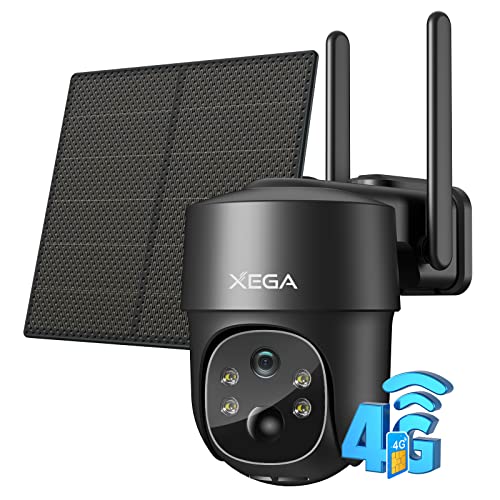 Xega XG-02 4G LTE solar view › Xega XG-02 4G LTE solar view › | Outdoor | Not declared | Motorised | Solar | The lowest outlay | View › |
 Tical CB174S, continuous recording view › Tical CB174S, continuous recording view › | Outdoor | 2.5K | Not declared | Solar and battery | Recording continuously | View › |
 SEHMUA RBX-S73, twin pack view › SEHMUA RBX-S73, twin pack view › | Outdoor, 2 units | Not declared | Not declared | Solar | Covering two spots | View › |
 NUASI RBX-S30 indoor view › NUASI RBX-S30 indoor view › | Indoor | 2K | Not declared | Battery | A closed building with no line | View › |
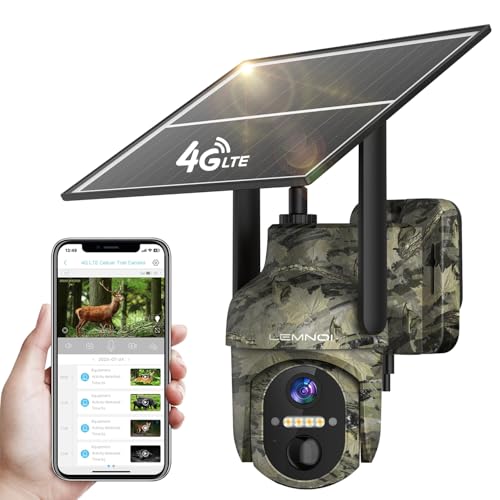 LEMNOI S72 with the SIM fitted view › LEMNOI S72 with the SIM fitted view › | Outdoor | 2K | Not declared | Solar and battery | Arriving ready to hang | View › |
 SHANNA eSIM with data included view › SHANNA eSIM with data included view › | Outdoor | 2K | Not declared | Solar and battery | An eSIM rather than a card | View › |
The characteristics are the ones each manufacturer declares in its own listing, read on 31 August 2026. Where it says not declared, the listing does not say, and that is information too: in this category silence usually means the figure does not flatter. Availability and model names vary by country.
Which one, by where you are putting it
355 degrees of pan and a solar panel: it covers a lot of ground with no cable and no router.
See it on Amazon ›The eight, one by one
COOAU G1 Pro-FT 4G solar view ›
It gathers everything you need without paying for anything you do not: 4G with its own SIM, a solar panel so it stays where you put it, a battery for the grey weeks and a motorised 355 degree pan. Its listing declares 2K at 3 megapixels, which is the resolution where the data bill is still manageable. The next camera that does the same costs a good deal more and adds nothing you would notice on a post.
- The 355 degrees of pan is the real difference between covering a corner and covering a whole yard with one unit, and it is what people miss most when they buy the cheap one.
- Being 2K rather than 4K keeps consumption in the low band TP-Link publishes, and that decides what you pay a mobile operator every month for years.
- The solar panel only keeps up if it genuinely sees sun for several hours. Under an eave facing north in a British winter you will still be taking it down to charge.
- Motorised 355 degree pan, the most complete here at this level
- Solar panel and battery included, with no mains cable
- 2K is the resolution that keeps the monthly data down
- One camera covers a yard that would otherwise need two
- The SIM and the memory card are bought separately
- Because it pans, the published guidance points you at setting a privacy zone
Tzziel RBX-S94, 10400 mAh view ›
It is the only camera here that publishes both of the figures that decide whether a solar camera survives a British winter: 10400 mAh of battery and a 6 W panel. Most of this category declares neither. That is why this is the one we would put on a north-facing post, on a shaded fence line, or anywhere in the north where December sun does not arrive often enough to recharge anything.
- Publishing the battery capacity and the panel wattage sets it apart on its own: almost no listing in this category gives both numbers.
- A 6 W panel is around twice what the entry level cameras carry, and that is exactly the margin that matters between November and February.
- At the same resolution, more battery also means you can raise the detection sensitivity without running the charge down.
- The two figures that matter, battery and panel, are actually declared
- 10400 mAh is the largest capacity in this comparison
- 2K with a motorised pan, the same base as our main pick
- A 6 W panel is roughly double what the cheapest cameras carry
- Costs meaningfully more than the main pick for a difference that only shows on a bad site
- The SIM and the card are bought separately, as with the whole category
Xega XG-02 4G LTE solar view ›
The sensible floor of the category: 4G with a SIM, motorised and solar, for less than the memory card you are going to put in it. Do not expect the sharpness or the battery stamina of the two above, but for watching a lock-up, a tool store or a job that has stopped, it does exactly the work. Below this you are into cameras that do not even declare a resolution.
- It costs less than the recommended memory card, which is the clearest way to understand how displaced the cost is in this category.
- For a spot with no passing traffic the modest resolution does not matter: what matters is that it alerts you, and it identifies somebody up close well enough.
- It is the natural candidate for buying two and covering two points for what a mid-range camera costs. Remember that is two SIMs as well as two cameras.
- The lowest outlay here with 4G, SIM, solar and a motorised head
- A sensible choice for doubling up and covering two spots
- Small enough not to advertise itself on a post
- Its listing does not declare the exact resolution, unlike the two above
- The battery and the panel are the tightest in the comparison
Tical CB174S, continuous recording view ›
Almost every battery camera only records when it detects movement, because recording without stopping eats the charge. This one declares continuous recording and it is the only one here that does. It is what you want if you need the whole stretch rather than fragments, with one large warning: continuous recording over 4G multiplies the data, so here the memory card stops being optional.
- Continuous recording and a 4G connection sit badly together: TP-Link itself recommends scheduling recording rather than running all day, to avoid the data climbing.
- The sensible way to use it is continuous recording onto the card with only the alerts going over 4G, which is also the cheapest way to run any camera on this page.
- It is the highest resolution here, at 2.5K, and that pushes consumption up as well if you upload.
- The only one declaring continuous round the clock recording
- 2.5K, the highest resolution in this comparison
- Solar panel and SIM slot, like the rest
- Recording locally is also what keeps the data bill down
- Continuous recording over 4G multiplies data consumption if you also upload
- It obliges you to buy a card built for continuous writing
SEHMUA RBX-S73, twin pack view ›
Almost nobody watches a single point: it is the gate and something else, the entrance and the shed. This pack works out cheaper per camera than the least expensive single unit here. The catch, and it is the catch with every twin pack, is that if one fails you have half a system and one seller to argue with about both.
- Per unit it comes out below the cheapest single camera on this list.
- Two cameras means two SIMs and two allowances. That is the most common mistake made when buying a pack, and the tool above lets you set the count to two and see it.
- The listing declares solar panels and wire free operation on both units, with no mains cable on either.
- The lowest cost per camera in the whole comparison
- Two points covered in one purchase and one app
- A solar panel on both units
- Two cameras means two data allowances, not one, which is the arithmetic people get wrong
- Its listing gives less technical detail than the ones above
NUASI RBX-S30 indoor view ›
Almost all of this category is outdoor, because indoors is assumed to have WiFi. This is the exception and it has a very specific use: a second home shut up for the winter, a unit with no line, or a flat where the tenant has left and taken the router with them. In a house with working broadband there is no reason to pay a mobile operator, and what you want there is something else entirely.
- Its purpose is not the everyday home, it is the place with no line and no prospect of one.
- Being indoors it carries no solar panel, so it lives off its battery or a socket.
- If there is WiFi at the site, an ordinary WiFi camera does the same job with no monthly bill at all.
- The only indoor camera in this comparison
- 2K over a SIM, with no dependence on a router
- It solves the closed second home and the empty unit
- No solar panel, so it depends on its battery or a socket
- Pointless in a house that already has WiFi
LEMNOI S72 with the SIM fitted view ›
It comes with the SIM already fitted, which removes the step where most of these purchases stall: opening the box and discovering you need to go and buy a card and register it. It is the one to give to somebody who does not want to arrange anything. What it comes with is the card, not a lifetime of data, so the sum in the tool above applies to it just the same once the first period is over.
- The fitted SIM removes the step where a gift or a present most often stalls, particularly if the person hanging it is not the person who bought it.
- Read what the included SIM actually covers and for how long: after that period the data question comes back exactly as it does for every other camera here.
- Its listing declares 2K with night vision, the same base as our main pick.
- SIM card fitted at the factory
- Works as soon as it is hung, with nothing to arrange
- 2K with declared night vision
- An included card is not the same as free data for ever
- Availability is patchier than the cameras above it in this list
SHANNA eSIM with data included view ›
It is the only one here that attacks the underlying problem rather than the price of the box: an integrated eSIM with data the maker says is included, so there is no card to buy and no plan to arrange. If that promise holds exactly as written it becomes the cheapest to run once the first year is past. It is also the one whose small print needs reading hardest, which is why it does not lead this list. We were unable to verify independently what data limit or resolution limit sits behind the claim, and that is precisely the question to ask before paying.
- It is the direct answer to the complaint the whole category attracts: the unit costs more and there is no monthly bill.
- We have not been able to verify independently what data or resolution limit that promise carries, and that is exactly what to ask before paying.
- The eSIM cuts both ways: nothing to install, and no way to change network if the coverage on your plot turns out to be poor. On a rural site that is a real consideration, and it is the reason a multi-network physical SIM often wins there.
- Integrated eSIM: no card to buy and nothing to register
- The manufacturer declares the data as included
- Solar panel and battery, like the rest of the list
- We could not verify the included data claim independently
- With an eSIM you cannot switch operator if coverage at your spot is poor, and with a physical SIM you simply try another network
- Availability is the most erratic of the eight
The second thing you have to buy, and it is not the SIM
A 4G camera with no SIM does not connect, and with no memory card it saves nothing. Neither is included, apart from the LEMNOI, which ships with its SIM fitted. This is the part of the purchase the trade guides skip, and it is the part that decides whether the camera ends up working or in a drawer.
The card matters more here than it does on a WiFi camera, for a reason specific to this category: recording to the card is also how you keep the data bill down. With local recording the video stays in the camera and only the alerts travel, which is the difference between an allowance you can live with and one you cannot.
SanDisk High Endurance 128 GB view ›
An ordinary phone card is not made to be rewritten around the clock, and a security camera does exactly that. The proof is not an opinion of ours: SanDisk sells a separate range, called High Endurance, whose description says in as many words that it is for video monitoring. That the manufacturer needs a different product line for this use is the answer to whether any card will do.
- It costs roughly what several of the cameras here cost, which is the clearest way to see where the real spending in this category sits.
- The V30 rating guarantees a sustained minimum write speed, which is what continuous recording needs, rather than the headline peak speed.
- With local recording the camera barely uses data: the card is also how you bring the mobile bill down.
- A range built specifically for video monitoring
- V30: sustained write speed, which is what continuous recording actually needs
- Recording locally also cuts what the camera sends over mobile data
- It costs about as much as some of the cameras on this page
- 128 GB is rewritten in a loop: it is not a permanent archive
Why any memory card will not do. A security camera rewrites its card around the clock. A phone microSD is not built for that. The proof is not ours: SanDisk keeps a separate range, called High Endurance, whose own description says it is for video monitoring. That a manufacturer needs a different product line for this use answers the question better than any opinion could.
Where a camera on a plot is allowed to look
Six of the eight cameras here pan, and that puts them squarely inside a specific obligation. The official guidance on domestic CCTV published on GOV.UK, updated on 21 May 2026, is unambiguous about where the line falls: "If your CCTV system captures images of people outside the boundary of your private domestic property, for example, from neighbours' homes or gardens, shared spaces, or from public areas, then the GDPR and the DPA will apply to you."
A camera that turns through 355 degrees will, at some point in its sweep, be looking at a lane, a footpath or the next plot along. The same guidance points at the answer as a purchasing criterion, asking whether the camera's range will include "my neighbours' property, gardens, pavements or other areas" and suggesting "systems that can reduce intrusion, such as those which have privacy filters". In practice that is five minutes in the app drawing a privacy zone over what is not yours, and almost nobody does it. It is also the first thing a neighbour asks about.
Two more from the same document that cost nothing. It asks you to be transparent, naming both informing your neighbours and putting up a notice that recording takes place. And it asks whether the system needs to record audio at all, which on a paddock or a building site it almost never does.
And one type we do not recommend, although it turns up in these searches. Hidden and spy-type cameras appear in the results for cameras without WiFi and are deliberately outside this guide: filming somebody without their knowledge sits under a very different set of rules from a visible security camera, and a security camera is installed precisely so that it can be seen.
We started from the full catalogue of 4G cameras with a SIM slot available on the Amazon catalogue we track, and kept the ones that were in stock on 31 August 2026 and declared at least a resolution or a battery capacity in their listing. That leaves eight covering different gaps: outdoor, indoor, a twin pack, a large battery, continuous recording and the floor of the category.
Every figure in this guide carries its source and its date. What we do is contrast what each maker declares against what can be checked in independent sources, and say so when the two do not agree. The data figures come from the TP-Link blog, a camera manufacturer; the legal obligations from the guidance published on GOV.UK; the network conditions from the operators' own published terms and from the UK regulator. Availability varies by country: a model in stock here may be listed differently, or not at all, where you are.
How do security cameras work without internet?›
Two ways. The ones with a 4G SIM use mobile coverage instead of a router, exactly like a phone, which is why they let you watch and get alerts even where no broadband has ever been connected. The local-recording ones connect to nothing: they save video to a memory card and you have to walk to the camera to see it.
Which security camera works with no internet at all?›
Any of the eight here, because all of them take a 4G SIM. Our general pick is the COOAU G1 Pro-FT for its 355 degree pan, solar panel and 2K sensor. If the spot has poor winter sun, the Tzziel is the one that declares both the battery capacity and the panel wattage, which are the two figures that decide whether it survives December.
What kind of SIM does a security camera need in the UK?›
A data SIM with enough gigabytes, and one that will not be disconnected for inactivity. That last part is the British catch: O2 requires a chargeable action at least once every six months or the number is disconnected and the credit lost, and EE deactivates after six months of no chargeable use. Use a data or machine to machine SIM sold for cameras and alarms, ideally a multi-network one that hops between operators, and check it is a 4G service because UK 3G has been switched off.
How much data does a 4G security camera use a month?›
TP-Link publishes between 2 and 3.5 GB a month for a 2K camera uploading to the cloud, between 4.6 and 6.7 GB for a 4K one, and recommends an allowance of 10 to 15 GB for two or three cameras. The tool on this page works out your own figure from the number of cameras, how busy the spot is and whether you upload or record to the card. Recording to the card is what keeps the number down, because then only the alerts travel.
Can I use a camera with no WiFi and no SIM?›
Yes, if you are content with local recording. The camera saves video to its memory card and sends nothing anywhere, so there is no fee of any kind. The trade is that you get no alerts and cannot watch anything live: it tells you what happened, not that it is happening.
Do these cameras have rechargeable batteries?›
All of them run on battery, and every outdoor one here comes with a solar panel to keep it topped up. The one that declares the most capacity is the Tzziel RBX-S94, at 10400 mAh with a 6 W panel, which are the two numbers that decide whether a camera gets through a British winter on a badly oriented post.
Do I need a memory card if the camera has 4G?›
In practice yes, for two reasons. Recording locally is what stops you losing the footage if the mobile signal drops, and it is also how you keep the data down, because then only the alerts travel. It has to be a card built for continuous recording: SanDisk keeps a separate High Endurance range precisely because a phone microSD is not made to be rewritten around the clock.
Is it legal to put a camera on a plot or an allotment in the UK?›
Yes, with responsibilities attached, and panning cameras attract them faster than fixed ones. The guidance published on GOV.UK, updated 21 May 2026, says that if the system captures images of people outside the boundary of your private domestic property, including shared spaces or public areas, the GDPR and the Data Protection Act apply to you. Six of these eight pan, so set a privacy zone over the lane and the neighbouring plot, put up a notice, and leave the microphone off.
If you take one idea away from this page, make it this one: in this category the device is the cheap part. Choosing well is not finding the cheapest camera, it is deciding how many gigabytes you are going to pay for every month for the next few years, which SIM will still be connected by then, and what memory card you are going to put in it.
With that settled, COOAU G1 Pro-FT 4G solar view › is the one we would buy for most situations, Tzziel RBX-S94, 10400 mAh view › is the one for a shaded or north-facing post where the panel has to work harder, and Xega XG-02 4G LTE solar view › is the answer when the spot does not justify spending more.
The figures behind this guide, with who publishes them and when they were read.
- TP-Link, a security camera manufacturerHow much data a 4G camera uses and what allowance it needsBetween 2 and 3.5 GB a month for a 2K camera uploading to the cloud, between 4.6 and 6.7 GB for a 4K one, with a recommended allowance of 10 to 15 GB for two or three cameras. Consulted on 11 August 2026. The figures are about the technology rather than about any one country.
- GOV.UKGuidance on the use of domestic CCTVThe boundary test that decides when the GDPR and the Data Protection Act apply to a domestic camera, the suggestion to choose systems with privacy filters, the transparency advice on notices and neighbours, and the question of whether audio is needed at all. Updated 21 May 2026, read 31 August 2026.
- UK mobile operatorsPay as you go terms on inactivityO2 requires a chargeable action at least once every six months, failing which the number is disconnected, remaining credit is lost and reconnection means a new number; EE deactivates a PAYG SIM after six months without chargeable use, with a grace period to reactivate. Read 31 August 2026.
- House of Commons LibrarySwitching off 2G and 3G in the UKThe UK 3G networks have been switched off, and government and the mobile operators agreed to retire 2G and 3G, with the announced 2G dates falling at the end of this decade. This is why a camera bought now has to work on 4G rather than fall back. Read 31 August 2026.
- SanDiskHigh Endurance range for video monitoringThe existence of a separate card line for continuous recording is the proof that an ordinary microSD is not built for this use.
- Amazon catalogueProduct listings for the eight cameras and the memory cardResolution, pan, battery capacity, panel wattage and what is included, as declared by each maker, read 31 August 2026. Availability and model names vary by country.
 Outdoor security camerasIf there is broadband at the site, these cost less to run.
 Home CCTV with no subscriptionFor a house that is lived in, and what the law asks of you.
 Burglar alarms with no monthly feeWhat makes a noise at the time, and who turns up.
 Smart locks for a UK front doorThe door itself, and what your insurer asks for.
Comments
Be the firstNo sign-up: just a name. Every comment is reviewed before it is published.