Best smart locks for a UK front door in 2026: what fits a uPVC euro cylinder, and what your insurer asks for
 m8d.ioUpdated on
This guide contains affiliate links. As an Amazon Associate, m8d.io earns from qualifying purchases, at no extra cost to you.

The best smart locks of 2026 for a British front door are the Nuki Smart Lock Pro (it fits over the euro cylinder you already have), the Yale Linus L2 Lite for value and the Aqara U200 if you want a fingerprint. None of them charges a monthly fee. But before the brand, one question decides everything: what your home insurance policy says your front door must have, because a smart lock changes how the door opens and does not change what the policy is looking at.
The question that comes before the brand: what does your policy say the door must have?
Almost every British home insurance policy carries a minimum security clause, and it is written in the language of lock standards rather than the language of smart home devices. Two of them cover nearly every front door in the country, and which one applies to you is decided by what the door is made of.
Lock snapping is the attack these ratings exist for. A euro cylinder that projects past the handle can be snapped, and the two published standards are simply certifications that a cylinder has been tested against exactly that. This matters here for one reason, and it is the sentence this whole guide turns on.
A retrofit smart lock turns your cylinder. It does not upgrade it. Nuki, Yale Linus and the rest of the retrofit family mount on the inside, over the thumbturn, and keep your existing cylinder and your existing key. That is their great virtue: nothing mechanical changes, so nothing about your policy changes either. It is also their limit: if the cylinder was not three-star before you fitted the smart lock, it is not three-star afterwards.
You can check this in ten seconds without any tools. Read the maker's own description of a retrofit lock: every one of them says it fits over your existing cylinder and that your key still works. A device that leaves the cylinder in place cannot have changed what the cylinder resists.
The practical consequence is that a smart lock and an anti-snap cylinder are two separate purchases that solve two separate problems, and the order matters. Get the cylinder right first, then automate it. A three-star cylinder is a small job for a locksmith or a confident DIYer, and a retrofit smart lock sits on top of whatever is there afterwards.
And the one that runs the other way: a lock that replaces the cylinder, like the Aqara U200 or a full fingerprint handle, changes the mechanical part of the door. That is not a reason to avoid it. It is a reason to check the replacement against your policy wording before you fit it, and to keep the paperwork. Fitting something that does not meet an insurer's stated minimum is the kind of detail that surfaces at claim time rather than at purchase time.
How we judged them. From a security starting point rather than a smart home one. In order: (1) whether it preserves or matches the mechanical resistance your door already has, which in Britain means the cylinder rating your insurer cares about; (2) where your data is held and how it is encrypted, local against cloud; (3) whether it depends on a monthly fee or a server that could be switched off; (4) real compatibility with a euro cylinder multipoint, which is what most British front doors have; and (5) whether you always have a way in if the battery dies.
How we know: the standards come from BSI and from the Master Locksmiths Association, the product detail from each maker's own listing, read 31 August 2026. No manufacturer supplies us with hardware.
The seven compared
| Model | Type | Your cylinder | Ways in | Connection | Monthly fee |
|---|---|---|---|---|---|
| Nuki Smart Lock Pro | Retrofit | Keeps it | App, fob, code* | WiFi + Matter | None |
| Aqara U200 | Replaces the cylinder | Swaps it, adjustable one included | Fingerprint, app, code | Matter over Thread + Apple | None |
| Yale Linus L2 Lite | Retrofit | Keeps it | App, code* | Matter, bridge sold separately | None |
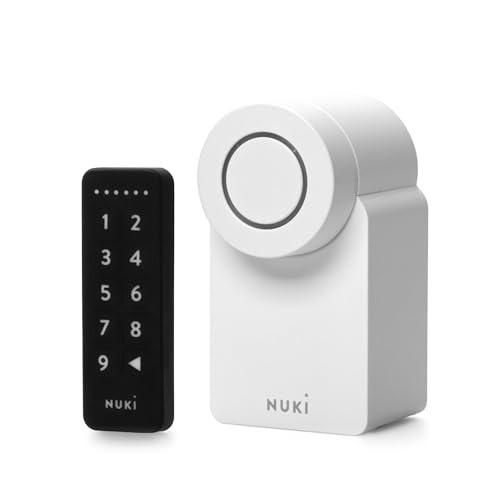 Nuki Smart Lock Go Nuki Smart Lock Go | Retrofit | Keeps it | App, code (keypad) | Bluetooth + Matter | None |
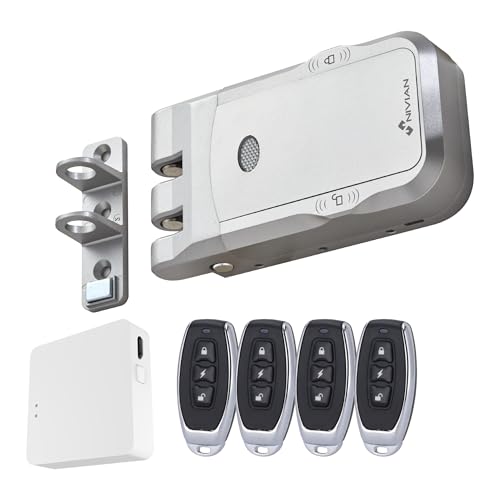
| Nivian SMARTBOLT | Concealed bolt | Adds a bolt | App, RF remote | WiFi | None |
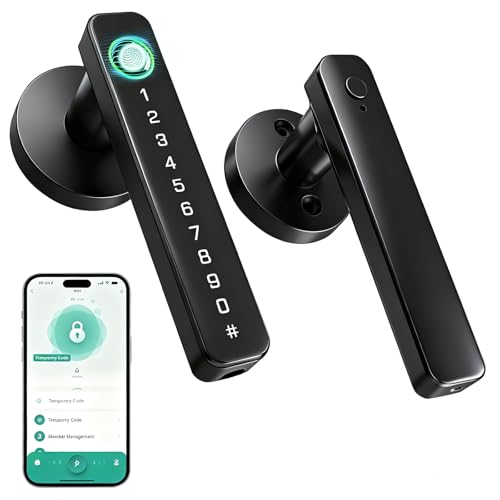 HUAJUN 5 in 1 HUAJUN 5 in 1 | Full replacement | Replaces everything | Fingerprint, code, card, key | App over Bluetooth | None |
 DOORIZ DOORIZ | Concealed bolt | Adds a bolt | RF remote only, no app | Radio frequency | None |
* Code or fingerprint entry on the Nuki and the Yale needs their keypad accessory, which is bought separately. Specifications from each maker's own listing, read 31 August 2026. Availability and model names vary by country.
Can a smart lock be hacked?
The right question is not whether it can be hacked. It is whether hacking it is easier than the alternatives, and on a British front door the alternatives are a snappable cylinder and a single-glazed side panel. Bluetooth relay attacks are real and have been demonstrated in laboratory conditions: an attacker relays the signal between your phone and the lock. They need physical proximity and equipment. They are not a remote attack at scale.
What the serious manufacturers do about it: end-to-end encryption, Nuki publishes AES-256, and mounting the motor on the inside of the door so there is nothing to attack from the street. The genuinely weak link, as usual, is the account rather than the lock: a reused password, no two-factor sign-in, or an app from a maker who does not say where the data goes.
Model by model
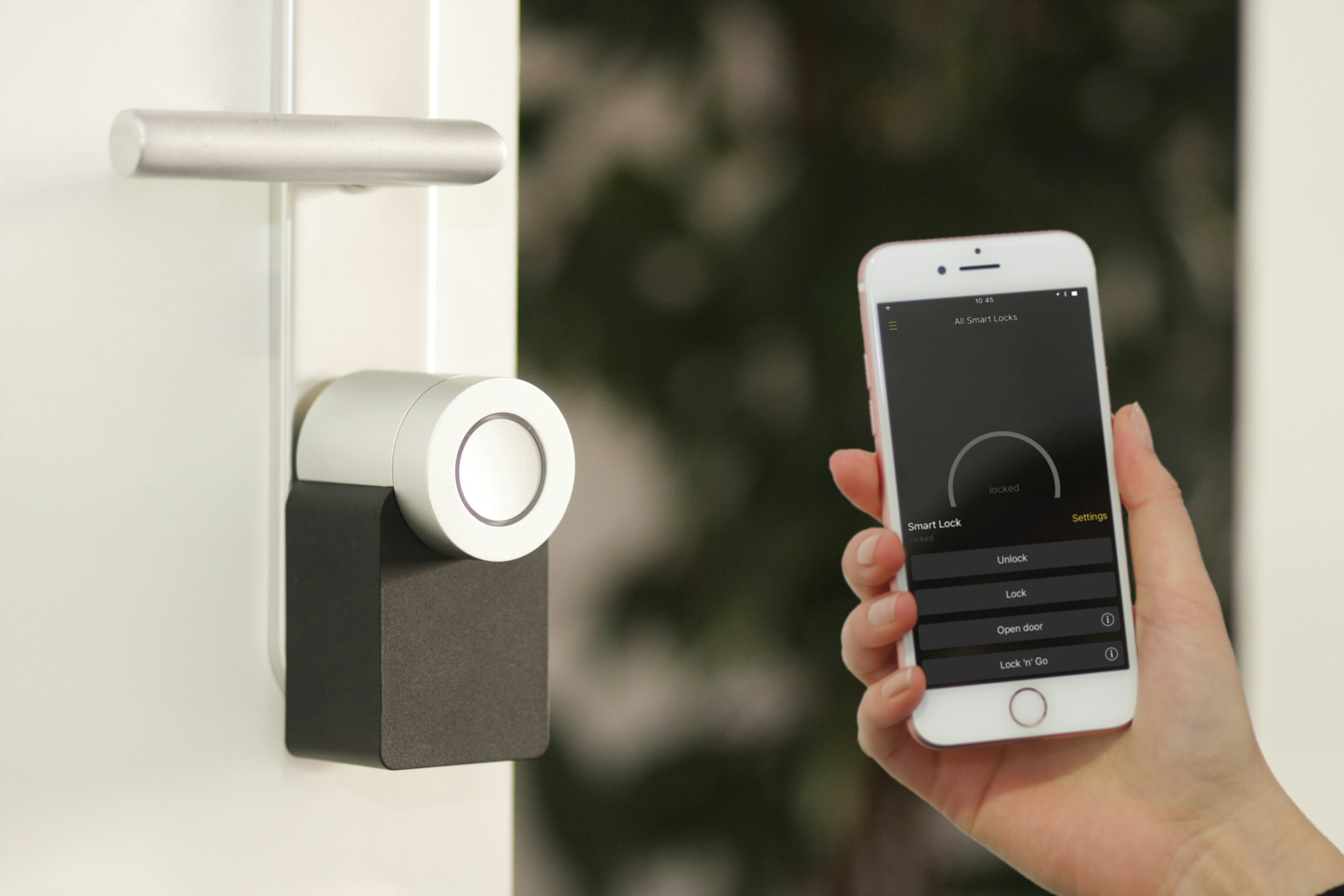
It is the European reference for a reason: it clamps on the inside over your existing thumbturn, so the cylinder your insurer's clause is written about stays exactly where it is, your key still works, and if you ever take the Nuki off, the door goes back to what it was. WiFi and Matter are built into the Pro, so no separate bridge, and it can unlock as you arrive.
- Keeps the cylinder your policy is written about
- WiFi and Matter with no monthly fee
- AES-256, and the motor sits on the inside of the door
- The most expensive here
- Code and fingerprint only with the extra keypad
- It automates your cylinder, it does not upgrade it
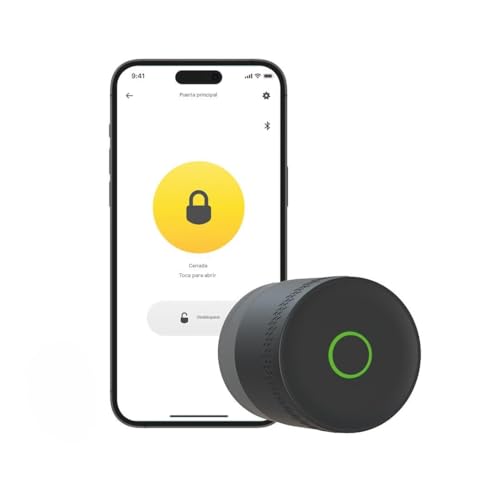
Yale has been making locks for more than a century, and in this country that is not marketing, it is the word people use instead of the word lock. The Linus L2 Lite is retrofit, which means it keeps your cylinder, it goes on yourself, and it speaks Matter. The Lite saves money by leaving out an accessory or two: the WiFi bridge is separate if you want to open the door from the other side of the country, and there is no fingerprint reader built in.
- A brand a British insurer, and a British locksmith, recognises
- Retrofit and Matter
- Straightforward to fit yourself
- The Lite needs the bridge for remote access
- No integrated fingerprint reader
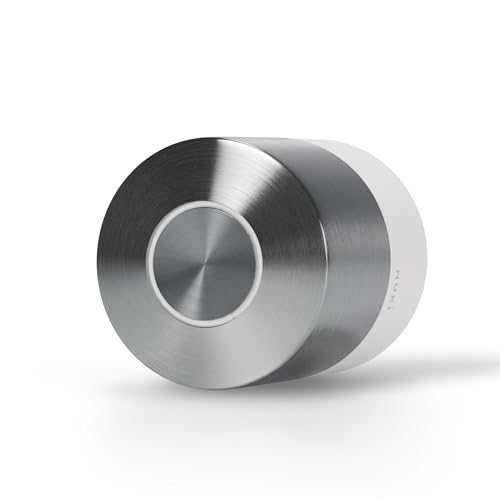
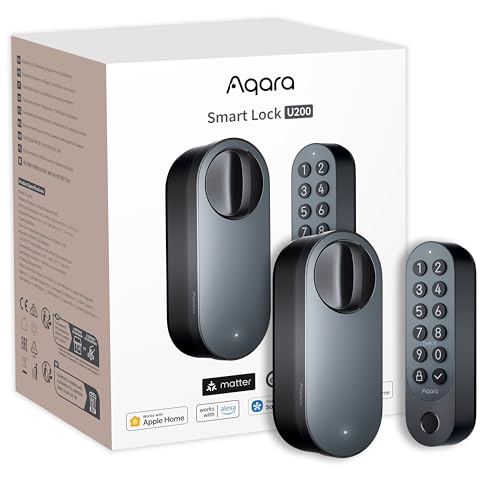
It adds what the retrofit locks do not have: a fingerprint reader, a keypad and Apple Home Key, so an iPhone or an Apple Watch held near the door opens it, with Matter over Thread for a response that is close to instant. It replaces the cylinder rather than keeping it, and it includes an adjustable euro cylinder, which solves most of the fitting problem on a uPVC door.
- Fingerprint, Apple Home Key and Matter over Thread
- Adjustable euro cylinder included
- The most features of anything here
- Replaces the cylinder, so the policy check is on you
- You need the Aqara app to get everything out of it
A property that stands empty: the concealed deadbolt
This is where the Spanish version of this guide has a section that does not travel, and it is worth saying why rather than quietly dropping it. In Spain, the reason people buy a concealed bolt is squatting, and there is a whole product category built around that fear. In Britain the fear is different and quieter: a house between tenants, a place inherited and not yet sold, a holiday let out of season, a barn or an outbuilding at the end of a track. The device is the same. The reason is not.
A concealed smart deadbolt is fitted on the inside of the door and throws a bolt into the frame. Nothing shows on the outside, so there is nothing to pick, snap or drill from the street: either you have the remote or the app, or the door does not move. It is added to your existing lock, not instead of it, and that distinction is the important one.
A concealed bolt is an addition, not a substitute for the lock your policy names. Insurers write their minimum security clauses in terms of BS 3621 mortice deadlocks and multipoint systems with a rated cylinder. A hidden bolt is not one of those, and fitting one does not satisfy a clause that asks for one. It buys time and it removes the visible target. Treat it as a second barrier on a door that already meets the standard, and it is a genuinely good idea for an empty property. Treat it as a replacement and you have swapped a documented lock for an undocumented one.
Two versions exist and the difference is only whether you want an app. The Nivian SMARTBOLT adds WiFi and phone alerts, which is what you want when the property is an hour away. The DOORIZ works from a radio remote and nothing else, with no app, no account and no internet, which is exactly right for a building that has no broadband and never will.
The other options, by situation
Also worth knowing, without a link because it sits outside this selection: if you live entirely inside Apple Home or SmartThings, the tedee GO2 is another solid retrofit and overlaps with the Nuki Pro rather than adding anything to the list.
Head to head
| What your insurer sees | ||
| Type | ||
| Keeps your cylinder | ||
| Fingerprint | ||
| Best for |
What happens when the battery runs out?
The classic fear, and it is the one that almost never happens. These locks warn you weeks ahead, and on a retrofit model your ordinary key still works throughout, because the cylinder is untouched and the motor simply sits on the thumbturn. Replacement models normally carry an emergency route: a hidden key barrel, or contacts on the outside that take a power bank long enough to open the door once.
If your front door still has an old rim night latch and no euro cylinder, none of these fits without changing the lock first, and that is a locksmith job rather than a Saturday. If you rent and cannot alter the door, choose a reversible retrofit, keep the original parts in a drawer and put them back when you leave. And if the whole point is a property standing empty, a lock on its own is not a plan: pair it with a concealed bolt, tell the insurer it is unoccupied, because most policies restrict cover after a set number of consecutive empty days, and check what that clause says before the property is empty rather than after.
Retrofit if you have a uPVC or composite door and want to leave the cylinder your policy names exactly as it is. Fingerprint if you want to stop carrying a phone, and check the replacement cylinder against the policy wording. Concealed bolt as a second barrier on a property that stands empty. None of them charges a monthly fee, and none of them makes a snappable cylinder any less snappable: that is a separate part, and it is the one to buy first.
Sources. What are BS 3621 locks, Master Locksmiths Association: the definition of the standard, that it is a BSI standard for thief-resistant locks, that these locks are usually found on wooden and timber doors, that a mortice lock needs at least five levers to conform, and that you identify one by the kitemark and standard number on the faceplate. Read 31 August 2026.
TS007 and Sold Secure SS312 Diamond: the two published cylinder ratings British insurers name for euro cylinder doors, and the reason both exist, which is resistance to cylinder snapping. Three-star can be reached by the cylinder alone or by a one-star cylinder with two-star security door furniture.
Manufacturer documentation for all seven products, from each maker's own listing on the Amazon catalogue we track, read 31 August 2026: fitting type, whether the cylinder is kept or replaced, connectivity, entry methods and encryption.
What we could not verify, said here rather than buried: insurance minimum security clauses are written per policy and per insurer. We have not read yours, nobody has, and no guide can tell you what it says. What we can tell you is which of these devices changes the cylinder and which leaves it alone, and that is the fact your clause turns on.
Questions

Comments
Be the firstNo sign-up: just a name. Every comment is reviewed before it is published.