Best outdoor security cameras with no subscription in 2026: eight compared, and whether solar survives a British winter
 m8d.ioUpdated on
This guide contains affiliate links. As an Amazon Associate, m8d.io earns from qualifying purchases, at no extra cost to you.

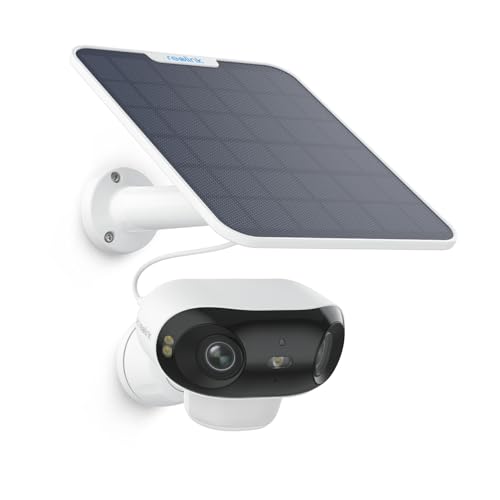
The best outdoor security camera with no subscription in 2026 is the Reolink Argus 4 Pro, because 180 degrees of 4K covers an entire terraced frontage from one mounting point and the footage stays on a card or your own network drive. For most homes the sensible buy is the Tapo C425, and for a narrow side return the Tapo C410 Kit. All three record locally with nothing to pay monthly. Two British details decide more than the specification does: whether a solar panel can keep up through our winter, and where the camera is allowed to look.
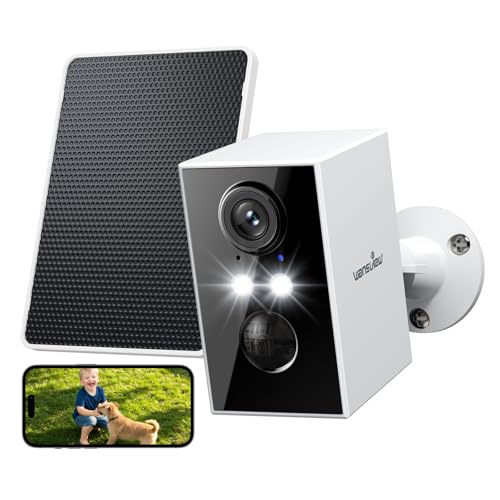
The specification that matters in Britain: will the solar panel keep up in December?
Almost every outdoor camera sold today is battery powered with a solar panel, and almost every listing shows it on a sunlit wall. The makers are straight about what the panel needs: a few hours of direct sunlight a day to hold the charge. That assumption is where a British installation quietly fails, and it fails in February rather than in June, which is exactly when you want the camera working.
Here is the number worth holding on to, and it is not ours. The Met Office recorded 70.8 hours of sunshine in East Anglia across the whole of December 2025, and described that as 130% of the long-term average: a sunnier than usual December, in one of the sunniest regions of the country. Spread over thirty-one days, that is a little over two hours a day. Now take away the days the camera is in the shade of a fence, a hedge or the house next door, and take away every wall that does not face somewhere between south-east and south-west.
South-facing wall with clear sky: buy solar and forget it. North-facing wall, under an overhang, or in the shade of the neighbouring house: buy battery life instead, and plan to bring it down and charge it. You can check this in ten seconds without any equipment: stand where the camera will go at midday and look at whether the sun is on you.
That single decision reshuffles this whole list. On a bright front elevation the Tapo C425 and its large battery are ideal. Under a shaded side return, the answer is a camera built around battery life rather than around a panel, which is what the eufyCam 2C is for. And on a wall with a socket nearby, the whole argument disappears.
The other three things an outdoor camera is decided on: weather sealing (IP65 handles rain, IP66 and IP67 give margin on an exposed elevation with no porch), resolution (2K to recognise a person, 4K if you want to read a number plate down a driveway) and, the one that costs the most over time, where the video is stored: a card in the camera with nothing to pay, or a plan.
Each camera is scored on five things: picture and night vision, how it stays charged (battery capacity and whether a panel is realistic where you live), connection, weather sealing, and the axis almost nobody covers: privacy and how dependent it is on a plan, meaning where the footage physically ends up.
How we know: specifications come from each maker's own listing, read on 31 August 2026; the sunshine figures come from the Met Office; the legal section quotes the published guidance rather than paraphrasing it. No manufacturer supplies us with hardware.
The eight compared
| Camera | Resolution | Power | Connection | Storage | Records with no plan | |
|---|---|---|---|---|---|---|
| Reolink Argus 4 Pro |
4K | Battery, solar optional | WiFi 6 | Card or NAS | Yes | See it › |
| Tapo C425 |
2K | Battery + solar | WiFi | microSD | Yes | See it › |
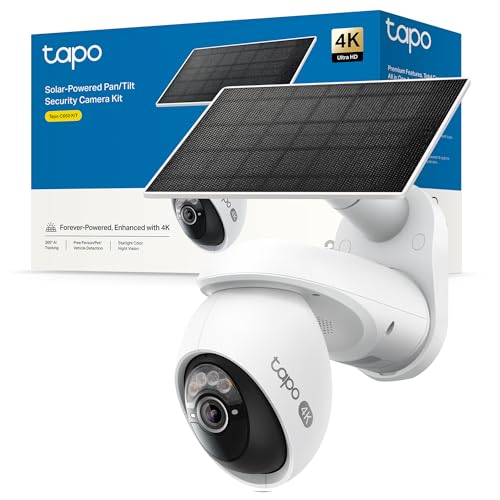 Tapo C660 Kit Tapo C660 Kit |
4K | Battery + solar | WiFi | microSD | Yes | See it › |
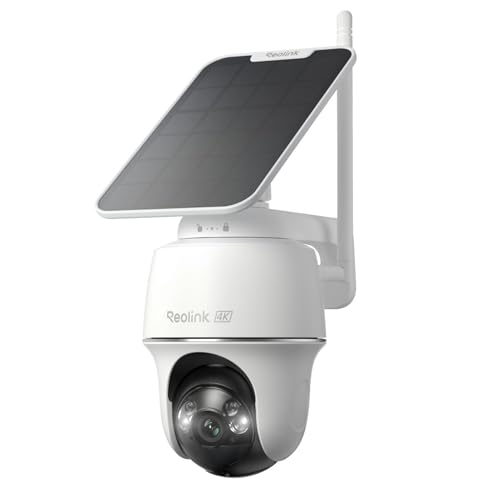 Reolink Argus PT Ultra Reolink Argus PT Ultra |
4K | Battery + solar | WiFi 6 | Card or NAS | Yes | See it › |
| eufyCam 2C |
1080p | Battery, months per charge | WiFi via HomeBase | HomeBase | Yes | See it › |
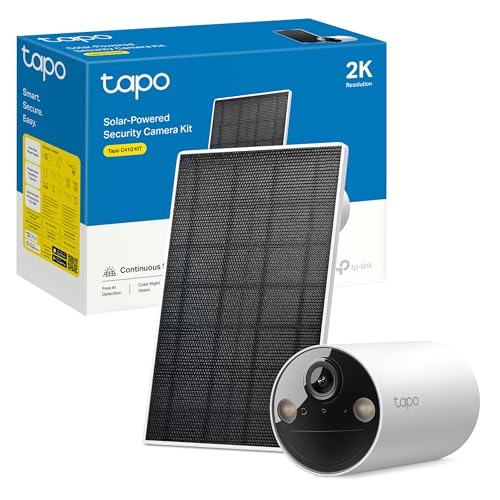 Tapo C410 Kit Tapo C410 Kit |
2K | Battery + solar | WiFi | microSD | Yes | See it › |
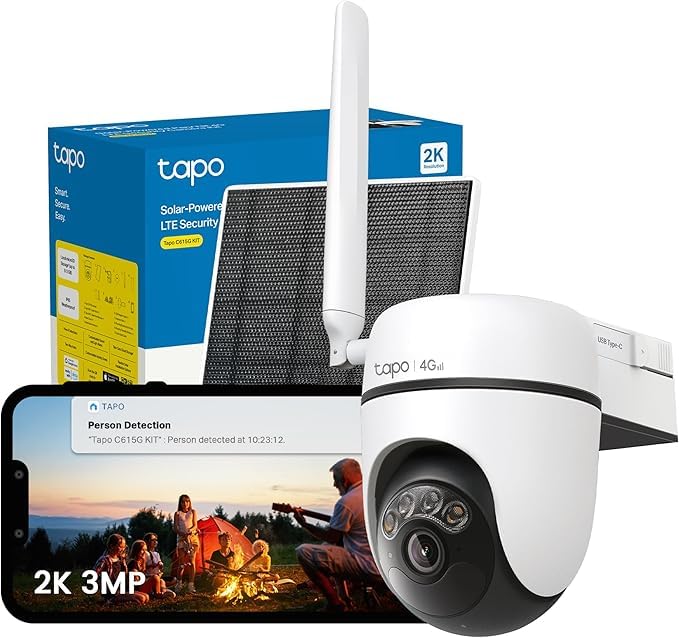 Tapo C615G 4G Tapo C615G 4G |
2K | Battery + solar | 4G with a SIM | Card and cloud | Yes, plus a data plan | See it › |
| wansview Solar |
2K | Battery + solar | WiFi | microSD | Yes | See it › |
One row that is not like the others: the Tapo C615G uses a mobile SIM instead of your router, so it works where there is no broadband at all. That also means a data plan, and it is a different purchase with a different sum behind it. It is covered properly in our guide to 4G security cameras that work with no WiFi, which is where you should go if the site has no broadband rather than weak broadband.
Where is it going? The camera changes with the spot
Tap the part of the house and we will tell you which of the eight fits, and why. The spots are the ones a British house actually has, which is why a driveway and a side return get different answers.
Where an outdoor camera is allowed to look
An outdoor camera frames far more than an indoor one, and in Britain the thing it frames is usually a pavement, a shared drive or somebody else's front garden. That is not a small legal detail: it is the line the published guidance actually draws.
The official guidance on domestic CCTV, published on GOV.UK and updated on 21 May 2026: "If your CCTV system captures images of people outside the boundary of your private domestic property, for example, from neighbours' homes or gardens, shared spaces, or from public areas, then the GDPR and the DPA will apply to you."
It is not a ban, it is a transfer of responsibility. The same document sets out what follows: you "must make sure that the information is not used for any other purpose than protecting your property", you "will need to be aware of individuals' data protection rights" and take steps to let people exercise them, and you "should not store any information or images for longer than is necessary to protect your property".
For an outdoor camera the practical consequence is a feature, and it is the one to look for on the listing. Under the question of whether the camera's range will take in "my neighbours' property, gardens, pavements or other areas", the guidance suggests "systems that can reduce intrusion, such as those which have privacy filters". Every camera in this comparison can draw a privacy zone in its app: an area blacked out of the recording itself, not merely excluded from motion alerts. On a terraced street or a shared drive, that setting is the difference between a camera and a dispute.
Two more from the same guidance that take a minute each. It asks you to be transparent, and names both "informing your neighbour(s) about your system" and "putting up a notice informing people that recording is taking place". And it asks whether the system "needs to record audio" at all. The Information Commissioner's Office treats sound as the more intrusive half, and says home CCTV can capture images and voices of other people, which counts as their personal information. Nothing about watching a driveway needs a microphone.
Privacy: where your footage ends up
A camera you can watch from your phone is, quite literally, a window onto your house that exists on the internet. Our privacy score looks at three things: whether it stores video on your own equipment, whether recording anything at all requires a plan, and what each brand's published history is.
A large slice of cheap outdoor cameras are cheap because the business is the monthly plan. Without it you lose recording, or history, or the detection that tells a person from a fox. Every camera on this page records to a card or to a base in your own home instead, so the commitment ends when you buy it. The tool below counts what that is worth in the only unit that travels: payments you never make.
Indoors is a different decision. Inside the house the argument is about a lens in a living room, not about weather sealing, and the answer changes: our comparison of home CCTV that records with no subscription covers the indoor models, the privacy scoring for all ten and the interactive check on the law.
The three we would fit, in detail
The outdoor reference of 2026. The F1.0 colour night vision is about as good as it gets without a floodlight, the 180 degree view removes the blind spots on a frontage, and it records locally with nothing to pay. If you want the good one and privacy matters to you, this is it.
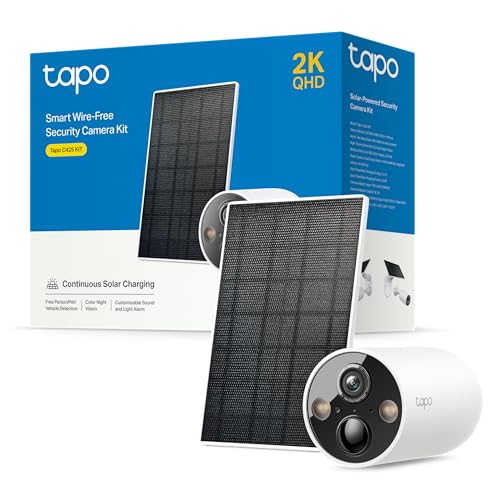
The one we would recommend to most households. Solar with a large battery, which is the combination that survives a British winter on a wall that gets some sun, a magnetic base you can re-aim by hand, a card slot with no plan and the simplest app in this class.
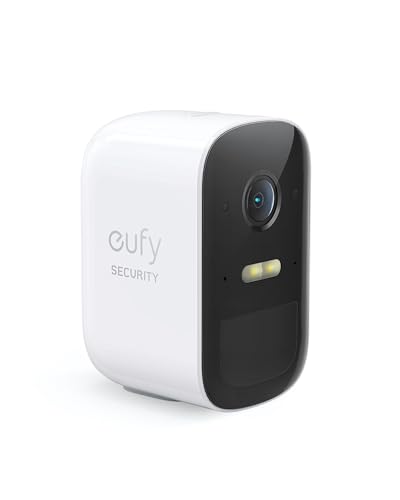
This is the answer to the section at the top of this page. On a north-facing wall, under a deep overhang or behind the neighbouring house, a solar panel is decoration, and the honest specification to buy instead is battery life. eufy declares months per charge, and the video goes to the HomeBase indoors rather than to anybody's servers.
The other five, by what they are for
Tapo C660 Kit
4K on a 360 degree pan and tilt head, with solar and free on-device detection. This is the driveway camera: 4K is what turns a car at the end of a drive into a readable number plate, and 2K does not.
See it on Amazon ›Reolink Argus PT Ultra
4K on a full 360 degrees with auto tracking: it turns to follow whoever is moving. For a long thin garden with a gate at the far end, which is most of them, one tracking camera beats two fixed ones.
See it on Amazon ›Tapo C410 Kit
The cheapest way into a proper brand: 2K, person detection, a card slot with no plan and the solar panel in the box. A narrow alley down the side of a house needs coverage, not resolution, and this is exactly enough.
See it on Amazon ›Tapo C615G 4G
A mobile SIM instead of your router, on a 360 degree solar head. Mentioned here for completeness rather than recommended in this comparison: a 4G camera comes with a data plan and a different sum, which we work through in the 4G camera guide.
See it on Amazon ›wansview Solar
2K, solar and a battery from a smaller brand. It scores lower on our privacy axis because there is less published detail about where the data goes, and it is still a sensible way to cover a back gate or a shed door. Keep it on the card.
See it on Amazon ›The other half of the front door. A camera on the wall tells you who came up the path. It does not stop them getting through the door, and in the UK that question is decided by the cylinder rather than by the camera: see smart locks for a uPVC door, including what your insurer's minimum security clause actually asks for.
Questions about outdoor security cameras
Guidance on the use of domestic CCTV, GOV.UK, updated 21 May 2026. The boundary test, the three duties, the transparency advice and the reference to systems with privacy filters. Read 31 August 2026.
Home CCTV systems, Information Commissioner's Office. The treatment of audio and of what a camera owner must do once the system records past the boundary. Read 31 August 2026.
December 2025 weather statistics, Met Office, published 6 January 2026. Source of the 70.8 hours of sunshine in East Anglia and the 130% of the long-term average. Read 31 August 2026.
Manufacturer specifications for all eight cameras, from each maker's own listing on the Amazon catalogue we track, read 31 August 2026: resolution, battery capacity, weather rating, storage type and whether a plan is required.
The short answer
For most homes the Tapo C425 is the intelligent buy: solar, a large battery, a card slot and a base you can re-aim by hand. If you want the best picture and the strongest privacy position, the Reolink Argus 4 Pro. And if the wall never sees the sun, stop shopping for solar and buy battery life: the eufyCam 2C. In all three the video is yours and there is nothing to pay monthly, which is what actually matters over the life of the camera.

m8d.io
We contrast what a product promises with what can be verified, and we publish the proof: the maker's own specification, an official source where one exists, or a public record. No manufacturer supplies us with hardware, and the affiliate links do not move the ordering.
About m8d.ioComments
Be the firstNo sign-up: just a name. Every comment is reviewed before it is published.