Best electric scooters in the UK for 2026: where the law lets you ride one, and which to buy for that
 m8d.ioUpdated on

This guide contains affiliate links. As an Amazon Associate, m8d.io earns from qualifying purchases, at no extra cost to you.

Before any electric scooter is worth comparing, one line settles where it can go: GOV.UK says it is illegal to ride a privately owned e-scooter in public, and that private land with the landowner's permission is the only place left. On that basis the pick is the Cecotec Bongo D40 XL Suspension, the only one here whose maker publishes continuous power, peak power, weight and the conditions behind its range.
Where you can legally ride a privately owned electric scooter in the UK
Nine results fill the first page of this search and seven of them are shops. The two that are not are GOV.UK and a news organisation, and they are the only two that answer the question everybody arrives with. So it goes first here.
GOV.UK puts it in one sentence: it is illegal to ride a privately owned electric scooter in public, for example on pavements, on roads or in parks, and you can only ride one on private land with the permission of the landowner. The reason is not a special e-scooter law. E-scooters are motor vehicles under the Road Traffic Act 1988, so the rules for motor vehicles apply to them, and one of those rules is insurance. The police forces put the consequence plainly on their shared advice page: it is not currently possible to insure a privately owned e-scooter, which is what leaves no legal route onto a public road.
None of that stops you buying one, owning one or riding one where you are allowed to. It changes what you should be comparing, which is the whole point of this guide. Before any of the nine below, we would settle where the private ground is, because that is what decides which figure matters: the nine here run from 11.8 to 26.3 kilos, and getting the scooter to that ground is the job the heavy ones fail.
- Riding a privately owned e-scooter in public is illegal, and GOV.UK names pavements, roads and parks.
- The one place left is private land, with the permission of the landowner.
- An e-scooter is a motor vehicle under the Road Traffic Act 1988, so licence and insurance rules apply to it.
- The police advice page states that a privately owned e-scooter cannot currently be insured, which is what closes the door.
- The penalty published by the forces is a fixed penalty of 300 pounds and six points for no insurance, and the scooter can be seized under section 165 of that Act.
The shops are not hiding the rule. They publish it, and where they publish it is the whole story of this category: one line at the bottom of the page, under the copyright notice, while the number that sells the scooter sits in the title of every product above it.
On the UK scooter shop that ranks at the top of this search today, read on 18 September 2026, the product titles carry 18.6 mph, 25 mph, 28 mph and 38 mph, with ranges of 12, 31, 40 and 62 miles. Speed and range are the two figures the category is sold on, and they are in the first line of every listing.
The same page carries this, in its footer, after the copyright line: "It is currently only legal to use an e-scooter on private land with the permission of the land owner. It is illegal to ride an e-scooter on a public road, cycle path, bridleway or pavement." It matches GOV.UK word for word in substance. The shop is right, and it is the one thing on the page that is not in the titles.
Because it changes what you should be buying on. If the only place you can ride is ground you own or have permission to use, then weight, tyre size and how it folds matter more than top speed, because the scooter has to get to that ground first. And the 38 mph that costs the most money is the figure with the least use on a private yard.
m8d rule: Before you compare a single mph figure, find the sentence about where the scooter may be used. If it is not on the product page, it is in the footer; if it is not in the footer, GOV.UK has it in one line. Work out the private ground you have first, and the speed second.
Electric scooter UK law checker: what a listing tells you and what it does not
Free electric scooter UK law checker: where you can legally ride the one you are looking at
Three answers, taken straight off the listing you have open: what it says about where the scooter may be used, how it describes the motor power, and what top speed it declares. Out of those three comes what you can check today and what you have to ask for. With the values it opens on, a listing that calls itself road legal, gives a watts figure without saying whether it is continuous or peak, and declares 15.5 mph is describing how the machine is built and telling you nothing about where you may ride it. Free, no account.
There is no approval that makes a privately owned electric scooter legal on a British road, so road legal, UK legal or EU approved is describing how the machine is built, not where it may be used. The gap is easy to see in the shops themselves: the top speed goes in the product title and the sentence about private land goes in the footer, under the copyright line.
The figure that never appears anywhere is the weight: of the 57 listings of e-scooter counted on 4 September 2026, 42 say how far they go and not one says how much they weigh. Five give a figure in kilos and in all five it is the maximum load, not the weight of the scooter. In Britain nothing in law turns on that number, which is exactly why it is the one nobody publishes and the one that decides whether the scooter reaches the private ground you may use it on. Riding an electric scooter: the rules, on GOV.UK ›
The checker classifies what a listing SAYS, not what is inside the box: it reads a listing and it does not replace the rules on GOV.UK. The counts come from our own sweep of Amazon's European catalogue on 4 September 2026, over the selling title of each listing. The legal position is the one published by GOV.UK on riding an electric scooter and by the police forces on their shared advice page, both linked at the foot. This is not legal advice.
Rental e-scooters: the only ones you can ride on a road, and the rules that come with them
There is one way to ride an e-scooter legally on a British road, and you cannot buy it. The government trials let approved operators rent them in named areas, and the rules that come with the hire are published on GOV.UK: you need a full or provisional UK driving licence with category Q entitlement, the operator provides third party motor insurance, and you may ride on the road, except motorways, and in cycle lanes. Pavements are out, and so are motorways.
The speed is fixed and it is the number to remember for the rest of this page: 15.5 mph is the maximum for a rental e-scooter, and some areas set it lower. A helmet is recommended and is not a legal requirement. The GOV.UK guidance for users was last updated on 7 July 2026, and the trials have been extended rather than closed, with the current period running to 2028.
That 15.5 mph matters here because of what it lines up with. The regulations that created the trials describe an e-scooter as one fitted with a motor whose maximum continuous power rating does not exceed 500 watts. Those two figures, 500 watts continuous and 15.5 mph, are the only numbers British law attaches to an electric scooter at all, and every machine in this guide is built inside them.
The watts on an electric scooter: continuous power, peak power, and the only figure the rules name
Here the proof comes from the makers themselves, which is the strongest kind there is: the brands that publish both figures on their spec sheet show only one of them in the shop title, and it is not the same one. Nobody is hiding anything, and that is exactly why it can be compared.
630 W. 800 W. 1,200 W. Twenty three of the e-scooter listings counted on 4 September 2026 give a watts figure, nearly always in the title and nearly always large. It is the selling argument of the category: more watts, more money.
The spec sheet of the Bongo D20 XL Connected declares 300 watts continuous and 630 peak; the D40 XL Suspension, 350 and 800; the Fresh Slim, 250 and 500. All three publish both figures, and in all three the listing shows the bigger one. Continuous power is what the motor holds for half an hour; peak is what it gives for an instant.
The Electric Scooter Trials regulations of 2020 define an e-scooter as fitted with an electric motor with a maximum continuous power rating not exceeding 500 watts. It is the only power figure British law puts on one of these machines, and it is a continuous rating, which is why the peak number in a listing answers a different question.
That a listing saying 1,200 W is not saying the scooter is over any line, and not saying it is under one either: it is saying nothing, because it does not say which of the two figures it is. In the sweep of 4 September 2026, one listing out of every one counted wrote the word nominal. It is the Olsson Fresh Slim view ›, and that is why it is in this guide.
m8d rule: If a listing gives watts and does not say continuous or nominal, the figure is almost always the peak, and it cannot be held up against the 500 watt continuous rating British regulations name. The continuous figure is on the maker's spec sheet, and it is usually about half.
And there is a practical consequence that saves money. At the speeds these machines are built to, extra watts do not turn into speed. They turn into climbing ability and into weight, because a bigger motor needs a bigger battery. If the ground is flat, paying for watts is paying for kilos.
What an electric scooter weighs, and why no listing will tell you
Nothing in British law turns on what an e-scooter weighs, and that is precisely why it is the most useful number you can find: it is the one the shops have no reason to publish, and the one that decides whether the machine is any use to you.
The arithmetic is blunt. If the only place you may ride is private land, the scooter has to get to that land. It goes up the stairs to a flat, into a car boot, onto a train, along a corridor. The nine machines here run from 11.8 kilos to 26.3 according to their makers' spec sheets, and the difference between those two is the difference between a scooter that travels with you and one that lives where it lands.
Of the e-scooter listings counted on 4 September 2026, 42 say how far they go and not one says how much they weigh. Five give a figure in kilos and in all five it is the maximum load the scooter carries, not what the scooter itself weighs. Where the machine sits in that eleven to twenty six kilo band, the spec sheet knows and the title does not. If you asked us to sort these nine by a single number, we would sort them by weight rather than by range, and it is the one number you have to go and find.

Xiaomi Scooter 6 Lite view ›
This is the one to look at if what you want is a large brand with a public spec sheet and a known weight. It declares 18.1 kilos, eight less than its bigger brother, and that is the figure that decides whether the scooter comes indoors with you. Both power figures are published, which in this category is the exception.
- 300 watts continuous and 500 peak, with 18.1 kilos of product weight declared by the brand. Both figures are on its official spec sheet, which is more than most of this category publishes.
- What changed against the model before it: against the Electric Scooter 4 Lite second generation, the motor is the same (300 watts continuous and 500 peak), the declared range is the same (16 miles) and so is the speed. What it adds is dual spring front suspension, and what it costs is weight. If the scooter goes up stairs every day, the earlier model still makes sense.
- A 10 inch pneumatic tyre, a drum brake at the front and electronic braking at the rear, with up to 100 kilos of load. The suspension and the big tyre are the real difference on a worn pavement; at this speed the watts barely show.
- Its range figure is measured, like the rest of the category, at a constant 9 mph on the flat. Ridden at the 15.5 mph the machine is built to, with hills, expect noticeably less.
- Weight, continuous power and peak power all published by the maker
- Front suspension and a 10 inch pneumatic tyre
- 300 watts continuous, comfortably inside the figure British regulations name
- Against the model before it, it gains suspension and loses lightness, with the same motor and range figures
- 16 declared miles: on a long round trip it goes on charge every day

iScooter i8M view ›
It puts its top speed in its own title, at 15.5 mph, which is the same ceiling the rental machines in the government trials are limited to, and that makes it easy to place. What it does not do is say whether its 500 watts are continuous or peak, which is the gap in most of this catalogue.
- It declares 500 watts with no qualifier. That cannot be held up against anything, because the figure British regulations name is a continuous rating: it is the case in 23 of the listings counted on 4 September 2026, which give a watts number and do not say which of the two it is.
- 12 to 16 miles of range and 15.5 mph of top speed, both declared in the title. Only 18 of the listings counted declare a speed at all, and it is the first figure that tells you whether the machine is built to the same ceiling as the scooters allowed in the trials.
- It carries a bell and an app. The bell is not an extra on a machine of this kind: a warning device fixed to the scooter itself, with its button on the handlebar, is what the trial rules expect, and a phone does not count.
- The weight is not published, and on a folding 8.5 inch scooter that is the figure that decides whether it travels with you or stays in a hallway. It is worth asking the seller before you pay.
- It declares its top speed in the listing itself, which most do not
- An integrated bell rather than a phone app for the sound
- 15.5 mph, the same ceiling the trial machines use
- Its watts do not say whether they are continuous or peak
- The brand does not publish the weight of the scooter
How far an electric scooter really goes, and the speed every range figure is measured at
Range is the most repeated figure in the category and the least examined. What almost nobody says is the condition it is measured in: a constant 9 mph, on the flat, no wind, at 25 degrees and with 75 kilos of rider and load. The makers' own spec sheets say so, in those words.
So the declared miles are the miles of a flat run at little more than half the speed the machine is built to. Ridden at 15.5 mph, with hills and a rucksack, plan on noticeably fewer, and pick above what you need rather than at it.
The rule from this section, to take to the shop: the range in the listing is a flat run at half speed. If your route has climbs and you ride it flat out, count on considerably less, and either buy above what you need or plan to charge it every day. Every figure here is the one its maker publishes, with the date at the foot.
With the rules read at source and the spec sheets declared, not with the brand name. (1) The legal position from GOV.UK, both the page on riding an electric scooter and the guidance for users of rental scooters, and the shared police advice page for the penalties, all read on 18 September 2026. (2) The Electric Scooter Trials regulations of 2020 for the 500 watt continuous rating, which is the only power figure British law names. (3) Catalogue sweep: thirteen searches across the family on Amazon's European catalogue, 62 distinct listings of which 57 are scooters, read on 4 September 2026, classifying what each selling title declares. (4) The maker's or its official distributor's spec sheet for continuous power, peak power, weight, range and the conditions the range is measured in, with the date it was read and the link at the foot. Every one of the nine is certified to the European build standard that caps construction speed at 25 km/h, which is the 15.5 mph used throughout this page. (5) No product price on this page: each button opens the Amazon store in your country. Where a figure appears in none of those sources, this guide says it does not appear. We are not lawyers and none of this is legal advice: the rules are quoted from their own source and linked.
The nine electric scooters compared by what each spec sheet declares
| Scooter | Declared power | Speed it is built to | Declared weight | Declared range | |
|---|---|---|---|---|---|
| Cecotec Bongo D40 XL Suspension Connected view › | 350 W continuous, 800 peak | 15.5 mph | 22 kg | 25 miles at 9 mph | View › |
 Olsson Fresh Slim view › Olsson Fresh Slim view › | 250 W continuous, 500 peak | 15.5 mph | not published | 11 miles | View › |
| Xiaomi Scooter 6 Lite view › | 300 W continuous, 500 peak | 15.5 mph | 18.1 kg | 16 miles | View › |
| iScooter i8M view › | 500 W, it does not say which | 15.5 mph, in the listing | not published | 12 to 16 miles | View › |
 Kukirin G2 Pro view › Kukirin G2 Pro view › | 500 W in the limited build | 15.5 mph limited, 28 mph standard | 22.3 kg | not in the listing | View › |
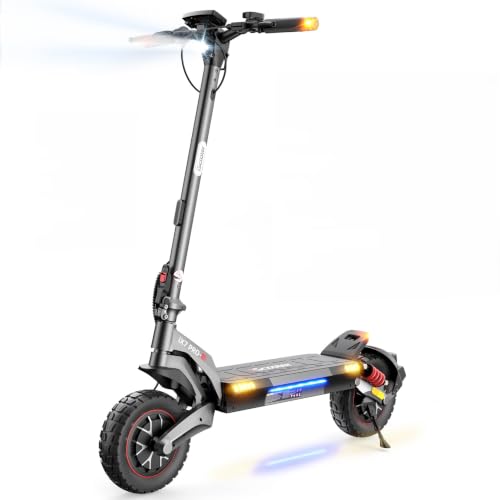 iScooter iX7 Pro view › iScooter iX7 Pro view › | 500 W x 2, it does not say which | 15.5 mph in the limited build | not published | 34 to 43 miles | View › |
 Cecotec Bongo D20 XL Connected view › Cecotec Bongo D20 XL Connected view › | 300 W continuous, 630 peak | 15.5 mph | 15.75 kg | 12 miles at 9 mph | View › |
 Voltrock F-Wasp 350 view › Voltrock F-Wasp 350 view › | 350 W continuous, 450 peak | 15.5 mph | 11.8 kg | 19 miles | View › |
 Xiaomi Electric Scooter 6 view › Xiaomi Electric Scooter 6 view › | 400 W continuous, 800 peak | 15.5 mph | 26.3 kg | 28 miles at 9 mph | View › |
Figures from each maker's spec sheet or its official distributor's, read on 4 September 2026, with kilometres converted to miles. "Not published" means the figure appears neither in the listing nor in the spec sheet we were able to read. The speed column is the construction limit of the European standard all nine are certified to, 25 km/h, which is 15.5 mph, and it is the same ceiling the rental scooters in the government trials are held to.
The nine electric scooters, with what each spec sheet declares and who each one is not for
Affiliate links: the buttons in this section go to Amazon and, as an Amazon Associate, m8d.io earns from qualifying purchases at no extra cost to you.
Cecotec Bongo D40 XL Suspension Connected view ›
It is not here for being the cheapest or the longest range. It is here because it is the only one in the group whose maker publishes at the same time the four figures a decision needs: continuous power, peak power, weight in running order, and the exact conditions behind the range. In a category where not one listing says what the scooter weighs, that is the recommendation.
- Its spec sheet declares 350 watts of continuous power and 800 of peak. The one that can be compared with anything is the first, and it sits well inside the 500 watt continuous rating British regulations use to describe the scooters allowed in the government trials. The shop listing shows only the 800, which is what nearly the whole catalogue does.
- 22 kilos in running order, declared by the brand. Weight is not a legal threshold here, and that is exactly why nobody publishes it: it is the figure that decides whether the scooter comes up to a third floor flat, goes on a train at rush hour or lives in a hallway.
- The 25 miles in the listing, 40 km on the spec sheet, are measured by its maker with a full battery, at 25 degrees, no wind, on the flat, with 75 kilos of rider and load and at a constant 9 mph. At 15.5 mph, with hills and more weight on board, the figure drops, and the brand says so itself.
- Dual suspension and pneumatic tyres are the two things that change how it rides on a worn pavement or a cobbled lane, which is the surface most private scooters actually meet on the private land they are allowed on.
- Continuous power, peak power, weight and the conditions behind the range: all four published
- Dual suspension and a 10 inch pneumatic tyre, which is what a broken pavement asks for
- Its 350 watts continuous sit inside the 500 watt figure British law names
- 22 kilos is a lot to carry up stairs every day
- The declared range is measured at 9 mph, not at the speed you will ride
Olsson Fresh Slim view ›
Of every listing counted in the sweep, this is the one whose title writes 250 W nominal power. It looks like a detail and it is the opposite: continuous power is the only form of watts that can be held up against the figure British regulations name, and here it is written where everyone reads it rather than buried in a spec sheet.
- The title declares 250 watts nominal, and the brand's spec sheet adds the 500 of peak. That is the usual relationship between the two figures: the peak nearly always doubles the continuous one, and the peak is the one that normally reaches the listing.
- Of every e-scooter listing counted on 4 September 2026, this is the one that writes the word nominal in the selling title. It matters because continuous power is the only form of watts British law puts a number on: the trial regulations describe a scooter as having a motor with a maximum continuous power rating not exceeding 500 watts.
- Pneumatic tyres of 8.5 inches with a disc brake and an electronic cut off. It is the combination consumer organisations recommend looking for, and it is visible in a photograph before you pay.
- 11 declared miles and a 100 kilo maximum load. It is a short run scooter on a well laid surface: at 8.5 inches and with no suspension, every joint in the paving reaches your wrists.
- The only listing in the sweep that puts the continuous power figure in its own title
- Pneumatic tyre and a disc brake, the combination consumer groups ask for
- 250 watts continuous, half the figure British regulations name
- 11 declared miles, the shortest range in the group
- 8.5 inches and no suspension: uncomfortable on broken surfaces
Kukirin G2 Pro view ›
It is the clearest example in this guide of something worth understanding before you buy: the same chassis is sold in two builds, one unlimited and one limited, and only the limited one is built to the figures British rules actually name. The limited build declares 500 watts and 15.5 mph with 22.3 kilos; the standard one, 600 watts and 28 mph.
- Two builds of the same model. The limited one declares 500 watts, 15.5 mph and 22.3 kilos; the standard one declares 600 watts, 28 mph and 25 kilos. They are not the same product even though they share a name, and the two figures that differ are exactly the two British regulations put a number on.
- Tubeless 9 inch tyres and dual suspension, with disc brakes front and rear. Two independent brakes are what any serious build standard asks for, and twin discs are the most direct way to get there.
- An integrated display. Also not decoration: a screen on the scooter itself, showing battery and instantaneous speed without changing your riding position, is what the trial specification expects, and a phone mount is not the same thing.
- At 22.3 kilos it is a machine for somewhere it can live at ground level. Carrying it is a two handed job, and the listing does not say so.
- Twin disc brakes and suspension on both axles
- An integrated display, so battery and speed do not live on a phone
- The limited build declares 500 watts and 15.5 mph, both figures British rules name
- The same name is sold in an unlimited build: the two are not the same product
- 22.3 kilos and the upper end of the catalogue for what is a short urban run
iScooter iX7 Pro view ›
It is the most expensive of the selection and the one that shows where the ceiling sits: it declares two 500 watt motors, and 500 watts continuous is the single power figure British regulations name for an electric scooter. Whether those 500 per motor are continuous or peak is exactly the question to put to the spec sheet before spending this much.
- It declares two 500 watt motors. One 500 watt motor is exactly the continuous rating British trial regulations name for an electric scooter, so a machine with two of them is describing something else entirely, and the listing does not say whether the figure is continuous or peak. When a number lands exactly on a line, the maker's spec sheet stops being optional.
- A 15 amp hour battery and 34 to 43 declared miles, the widest range in this selection. As with the rest of the category, that figure is measured at a constant speed on the flat.
- An electronic lock and off road tyres. The lock is one of the three things consumer organisations suggest looking for, alongside a disc brake and a pneumatic tyre, and it is the one that matters most where a scooter is left outside.
- This is the machine in the guide that makes least sense for a commute and most sense for private ground: the power and the tyres are built for a surface a road does not have.
- The widest declared range in the group
- An electronic lock built in
- Off road tyres for the private ground a private scooter is limited to
- Two motors of 500 watts, and the listing does not say whether that is continuous or peak
- It is the most expensive here, and for a short urban run it is far more machine than the job needs
It is the lighter of the two Cecotec machines here and it publishes the same four figures as its bigger brother: continuous power, peak power, weight and the conditions behind the range. For short runs on flat private ground there is nothing here it does not do.
View ›It solves the problem no listing talks about, which is carrying the thing. Its spec sheet declares 11.8 kilos, less than half the heaviest machine in this guide, and that decides whether the scooter travels with you or stays in a hallway. Its two power figures are 100 watts apart, which is the closest pair here.
View ›On paper it goes furthest of this group and, at the same time, it explains best why weight is the figure to look for: its maker declares 26.3 kilos. On a machine that can only be ridden on private land, the weight is not a comfort question, it is the question of how the scooter gets there at all. Its spec sheet is one of the few that publishes the conditions behind its 28 miles.
View ›Frequently asked questions about electric scooters in the UK
Can you legally ride an electric scooter in the UK?›
Not a privately owned one, anywhere public. GOV.UK states that it is illegal to ride a privately owned electric scooter in public, for example on pavements, on roads or in parks, and that you can only ride one on private land with the permission of the landowner. Rented e-scooters from the official trial schemes are different: those can be ridden on the road, except motorways, and in cycle lanes, with a full or provisional UK licence carrying category Q entitlement, and the operator provides the insurance. Buying, owning and selling a private e-scooter is not affected by any of this.
Will police stop you on an electric scooter?›
The forces publish what happens when they do. Their shared advice page explains that e-scooters are classed as motor vehicles under the Road Traffic Act 1988, so the rules for motor vehicles apply, including the need for insurance, and that it is not currently possible to insure a privately owned e-scooter. The published consequence is a fixed penalty notice of 300 pounds and six penalty points on your licence for having no insurance, and the machine can be seized under section 165 of that Act. Forces set and enforce penalties differently, so what happens varies by area.
What is the best electric scooter you can buy?›
Given where you are allowed to ride it, the one whose maker tells you the most. In this guide that is the Cecotec Bongo D40 XL Suspension: it is the only one of the nine that publishes continuous power, peak power, weight in running order and the exact conditions behind its range figure, and its 350 watts continuous sit inside the 500 watt rating British regulations name. If the priority is carrying it rather than riding far, weight is the figure to sort by, and it is the one no listing gives.
What is the speed limit for an e-scooter in the UK?›
The only speed British law puts on an electric scooter is the rental trial limit, and GOV.UK states it plainly: the maximum speed for a rental e-scooter is 15.5 mph, and in some areas they may be limited to a lower maximum. There is no equivalent figure for a privately owned scooter, because there is no public place it may legally be ridden. In practice 15.5 mph is also 25 km/h, which is the construction ceiling of the European standard nearly every scooter sold here is built to, including all nine in this guide.
How many watts can an electric scooter have in the UK?›
The number that appears in British regulations is 500 watts, and it is a continuous rating rather than a peak: the 2020 trial regulations describe an e-scooter as fitted with an electric motor whose maximum continuous power rating does not exceed 500 watts. That is why a listing saying 1,200 W is not telling you whether the machine is above or below anything, since it does not say which of the two figures it is quoting. Where both are published, the gap is usually double: 300 continuous against 630 peak, or 350 against 800.
Do you need a licence or insurance for an electric scooter?›
For a rental e-scooter from a trial scheme, you need a full or provisional UK driving licence with category Q entitlement, and the operator provides third party motor insurance. For a privately owned one the question does not arise in the same way: the police advice page states that it is not currently possible to insure a private e-scooter, and an uninsured motor vehicle cannot be used on a road, which is what leaves private land with permission as the only place it can be ridden.
How much does an electric scooter weigh?›
The nine here run from 11.8 to 26.3 kilos according to their makers' spec sheets. It matters more in Britain than anywhere the machine can be ridden on the road, because the scooter has to be carried to the private ground where it is allowed: up a stairwell, into a boot, onto a train. And it is the figure no listing publishes. Of the e-scooter listings counted on 4 September 2026, 42 said how far they go and not one said how much they weigh. Five gave a figure in kilos and in all five it was the maximum load, not the weight of the scooter.
What should you look for when buying an electric scooter?›
Five things, in this order. Where you are allowed to ride it, which is private land with the landowner's permission, because that decides everything else. The weight, because the scooter has to get there. The continuous power rather than the peak, because it is the only figure comparable with the 500 watts British regulations name. The range, knowing it is measured at a constant 9 mph on the flat. And the tyres and brakes: a pneumatic tyre and a disc brake at the rear are what consumer organisations point to, and both are visible in the photograph before you pay.
For most people, we would take the Cecotec Bongo D40 XL Suspension Connected view ›: it is the only one of the nine whose maker publishes the four figures a decision needs, continuous power, peak power, weight in running order and the conditions behind the range, and its 350 watts continuous sit inside the only power figure British regulations name. If you want that number written where anyone can read it, the Olsson Fresh Slim view › is the one listing in the sweep that puts nominal power in its own title. If you want a large brand with a public spec sheet, the Xiaomi Scooter 6 Lite view ›, at a declared 18.1 kilos. And if the ground you are allowed to ride on is rough, the Kukirin G2 Pro view ›, remembering that the same name is sold in two builds and only one of them is limited. The rule to take with you: a privately owned electric scooter can only be ridden on private land with the landowner's permission, so work out the ground you have before you compare a single mph figure.
m8d pick, the one you can check all the way throughCecotec Bongo D40 XL Suspension ConnectedSee it on Amazon ›The big brand that publishes its weight and both power figuresXiaomi Scooter 6 LiteSee it on Amazon ›The ones that hold up the specific figures in this piece, with the date they were read.
- GOV.UKRiding an electric scooter: the rules"It is illegal to ride a privately owned electric scooter in public, for example on pavements, on roads or in parks" and "You can only ride a privately owned electric scooter on private land with the permission of the landowner". Read on 18 September 2026.
- GOV.UK, Department for TransportUsing a rental e-scooterFull or provisional UK driving licence with category Q entitlement, third party motor insurance provided by the operator, use on the road except motorways and in cycle lanes, and "The maximum speed for a rental e-scooter is 15.5mph". Page last updated 7 July 2026, read on 18 September 2026.
- Police forces, shared advice pageAdvice on e-scooter usageE-scooters classed as motor vehicles under the Road Traffic Act 1988, a private e-scooter cannot currently be insured, a fixed penalty of 300 pounds and six penalty points for no insurance, and seizure under section 165 of the Act. Read on 18 September 2026.
- legislation.gov.uk, SI 2020/663The Electric Scooter Trials and Traffic Signs (Coronavirus) Regulations and General Directions 2020The definition of an e-scooter for the trials, fitted with an electric motor with a maximum continuous power rating not exceeding 500 watts. It is the only power figure British law attaches to one of these machines. Read on 18 September 2026.
- Spanish traffic authority, certification listOfficial list of certified personal mobility vehiclesThe European build standard all nine scooters in this guide are certified to, which caps construction speed between 6 and 25 km/h and continuous power at 1,000 watts. It is the source of the 15.5 mph construction ceiling used in the table. Spanish language page. Read on 4 September 2026.
- Cecotec, maker's spec sheetOfficial spec sheets for the Cecotec Bongo D40 XL Suspension Connected and the Bongo D20 XL ConnectedContinuous and peak power, mass in running order, and the exact conditions behind the range measurement. Spanish language page. Read on 4 September 2026.
- Xiaomi, maker's spec sheetOfficial spec sheets for the Xiaomi Electric Scooter 6 and the Scooter 6 LiteProduct weight, continuous and peak power, and the note with the conditions of the range test at a constant 15 km/h. Spanish language page. Read on 4 September 2026.
- PcComponentes, official distributorVoltrock F-Wasp 350 spec sheet350 W continuous, 450 W peak and 11.8 kg declared. Spanish language page. Read on 4 September 2026.
- AmazonAmazon product listingsDeclared specifications of the nine scooters and the count of 62 distinct listings across thirteen searches of the family, of which 57 are scooters, read through our interface on 4 September 2026 from the European catalogue m8d tracks daily.
- Consumer organisation buying guideHow to choose an electric scooterThe three things it points to before buying: a disc brake at least on the rear wheel, pneumatic tyres and an anti theft system. Spanish language page. Read on 4 September 2026.
Comments
Be the firstNo sign-up: just a name. Every comment is reviewed before it is published.