Best instant camera 2026: which of nine to buy, and what each photo costs in the UK with instax and Polaroid film
 m8d.ioUpdated on

This guide contains affiliate links. As an Amazon Associate, m8d.io earns from qualifying purchases, at no extra cost to you.
The best instant camera for most people is the instax mini 12: its film costs 85p a shot in a £16.99 twin pack at Fujifilm's UK store, against £2.12 per Polaroid i-Type photo (23 September 2026). The Polaroid Now Generation 3 gives the big white-frame photo, and the instax mini EVO lets you choose what to print.
- The camera is paid for once and the film always: the cost per photo decides more than the price of the box.
- At the makers' UK stores on 23 September 2026, a Polaroid i-Type photo cost £2.12 and an instax mini one 85p: two and a half times as much.
- The big instax photo measures 61.4 cm² and the Polaroid one 60.8: the same area, at 95p and £2.12 a photo at the makers' UK stores.
- At Fujifilm's UK store, instax SQUARE film costs the same per shot as mini, £16.99 for 20, for a third more image.
- If a listing does not name the film, it is not an instant film camera: 12 of the 46 products in Argos's instant cameras range use no instant film.
What each instant camera photo costs in the UK, the sum that decides the purchase
An instant camera is one of the few tech purchases where the device is the small part of the spending. Five photos a month for two years is 120 photos: six twin packs, £101.94 of instax mini film at Fujifilm's UK price on 23 September 2026, and that sum appears on no spec sheet. It is a division, the price of a pack over the photos in it, and the second number is published: Fujifilm declares ten photos per pack on the mini 12 and mini 41 spec sheets, and Polaroid eight per pack on its i-Type film sheet. The rest of the difference between the two brands is the price of the pack: at the makers' UK stores, £16.99 buys eight Polaroid photos or twenty instax mini shots.
Instant camera cost per photo calculator
The instant camera cost per photo calculator does the division no spec sheet does: the price of a film pack over the photos it holds, which are not the same in every format. And it adds the column every comparison leaves out, the image area, so that a small photo and a big one can be compared without fooling yourself. With what it opens on, instax mini at five photos a month, that is £0.85 a photo, £50.97 of film a year and £2.98 per 100 cm² at Fujifilm's UK price. A tool from m8d.io, free, with no account.
The most widespread format and, at Fujifilm's UK store, the cheapest per shot of the film formats along with SQUARE: £16.99 for 20. The image is the size of a credit card, and Fujifilm publishes both the size and the ten shots in each pack on the Mini 12 and Mini 41 spec sheets.
Time until you see the photo: about 90 seconds, according to its maker.
- 10-shot pack, frame designs£1.00 a photo
- Twin pack, 20 shots£0.85 a photo
- Bundle of 100 shotsnot on Fujifilm's UK store
With the prices published on 23 September 2026, the pack that works out cheapest per photo is the twin pack of 20. Buying more photos at once does not guarantee paying less for each: it is a ten-second division, worth doing every time.
Count of 23 September 2026 on Argos's instant cameras range: 46 products, of which 12 use no instant film: five digital cameras with a printer inside and seven that are not instant cameras at all. Photos per pack and image sizes come from Fujifilm's and Polaroid's official spec sheets.

The calculator divides the price of a pack by the photos it holds, and the two come from different places: photos per pack and image sizes from Fujifilm's and Polaroid's official spec sheets, and the price from the maker's own UK store on 23 September 2026 (Fujifilm's UK eShop and MyFUJIFILM for instax, Polaroid's UK store for i-Type and Go). Other packs and other shops have other prices: the division is the same.
And a small cost to add: batteries. Fujifilm declares that the mini 12 and the mini 41 run on two AA batteries for about ten packs of ten photos, one set per hundred photos, while the SQUARE SQ40 takes two CR2 lithium batteries for about thirty packs. The Polaroid Now and the instax mini EVO use no disposable batteries: they have a rechargeable one, and the EVO's cannot be removed.
Instax mini film and Polaroid film in the UK: what each pack costs per shot at the makers' own stores
Film is the purchase that repeats, so its price per shot matters more than any difference between cameras. At Fujifilm's UK eShop on 23 September 2026, the instax mini twin pack of 20 shots cost £16.99, 85p a shot. The store sold 10-shot mini packs only in its frame designs, such as Macaron or Black Frame, at £9.99, about a pound a shot. The SQUARE and WIDE twin packs cost £16.99 and £18.99, 85p and 95p a shot. At Polaroid's UK store, colour i-Type film was £16.99 for eight photos, £2.12 each, 600 film £18.99 for eight, £2.37 each, and Go film £18.99 for sixteen, £1.19 each.
Three things stand out. The instax twin pack saves about 15p a shot against the 10-shot packs, and at Fujifilm's UK prices SQUARE costs exactly what mini costs per shot while giving a third more image. If you shoot more than a pack a month, we recommend the plain twin pack: at Fujifilm's UK store it is the cheapest way to buy mini film per shot. And Polaroid lists the Now among the cameras that take 600 film as well as i-Type, so a Now owner pays less per photo with i-Type. Fujifilm's UK store did not sell a 100-shot mini bundle that day, so the calculator leaves that row without a price.
Two packs of ten photos, a 62 × 46 mm image and about 90 seconds of development. It is the film of the mini 12, the mini 13, the mini 41, the EVO and the LiPlay.
View ›
A single pack of ten photos. It is here to compare the price per photo of the three ways of buying the same film.
View ›
A hundred photos in ten packs. It is in the selection to check whether buying a lot at once brings the price per photo down, which almost everyone takes for granted.
View ›
A 62 × 62 mm square image on an 86 × 72 mm sheet, ISO 800 and about 90 seconds of development. A third more area than the mini, and at Fujifilm's UK store on 23 September 2026 the same price per shot.
View ›
A 99 × 62 mm image, 61.4 cm²: practically the 60.8 cm² of a Polaroid i-Type, with ten photos per pack instead of eight.
View ›
Two packs of eight photos, a 79 × 77 mm image on a 107 × 88 mm sheet, ISO 640 and ten to fifteen minutes of development. It is the film of the Now and the Now+.
View ›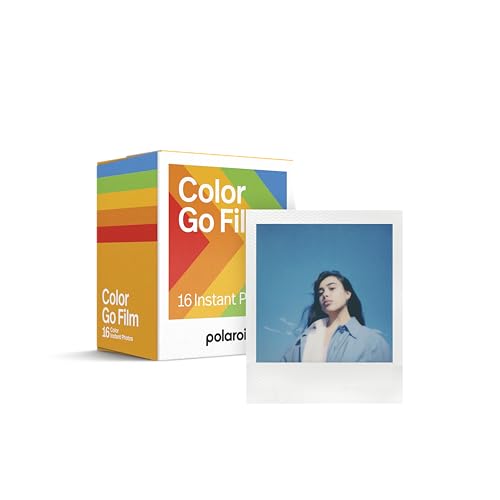
A 47 × 46 mm image, the same chemistry and the same white frame as the big one in about a third of its area. Sixteen photos in two packs of eight.
View ›Instax vs Polaroid: the difference, and which is cheaper to run in the UK
The difference between instax and Polaroid comes down to three things, and none of them is quality. One: the size and shape of the photo. Two: how many photos come in each pack, ten with instax and eight with Polaroid. Three: the time until you see the image, about 90 seconds with instax and ten to fifteen minutes with Polaroid, according to their makers. The feel of using them comes from those three, and the price per photo from the second one and the price of each pack.
And there is a crossover the category's comparisons leave out. Fujifilm's biggest photo, the instax WIDE, measures 99 × 62 mm, or 61.4 cm² of image. The classic Polaroid photo measures 79 × 77 mm, or 60.8 cm². They are the same size of memory, less than one per cent apart, at 95p and £2.12 a photo at the makers' UK stores on 23 September 2026. If you want the big photo and the shape does not matter to you, the decision is made.
| Film | Photos per pack | Image | Area | Development | Per photo, UK maker's store | Cameras that use it | |
|---|---|---|---|---|---|---|---|
| Fujifilm instax mini film, 20 shots view › | 20 (two of 10) | 62 × 46 mm | 28.5 cm² | about 90 s | 85p | mini 12, 13, 41, EVO, LiPlay | View › |
| Fujifilm instax SQUARE film, 20 shots view › | 20 (two of 10) | 62 × 62 mm | 38.4 cm² | about 90 s | 85p | SQUARE SQ1 and SQ40 | View › |
| Fujifilm instax WIDE film, 20 shots view › | 20 (two of 10) | 99 × 62 mm | 61.4 cm² | about 90 s | 95p | WIDE 400 and WIDE EVO | View › |
| Polaroid i-Type colour film, 16 photos view › | 16 (two of 8) | 79 × 77 mm | 60.8 cm² | 10 to 15 min | £2.12 | Now and Now+ Generation 3 | View › |
| Polaroid Go colour film, 16 photos view › | 16 (two of 8) | 47 × 46 mm | 21.6 cm² | 10 to 15 min | £1.19 | Go Generation 2 and 3 | View › |
 Kodak 2 × 3 inch ZINK paper, 20 sheets view › Kodak 2 × 3 inch ZINK paper, 20 sheets view › | 20 sheets | 51 × 76 mm | 38.8 cm² | no development | 35p | Printomatic, Smile, Sprocket | View › |
Photos per pack, image sizes and development times from Fujifilm's and Polaroid's official spec sheets, read on 4 September 2026; the areas are the product of those sizes. Price per photo at Fujifilm's UK eShop, Polaroid's UK store and the Kodak Photo Plus UK store on 23 September 2026 (ZINK from its pack of 150 on offer at £52.99; at its regular £74.99 it is 50p a sheet). The highlighted row gives the most image area per pack.

The cheapest film per photo at Fujifilm's UK store, tied with SQUARE, and the battery life declared.
See it on Amazon ›The nine instant cameras, one by one, with what changes from the previous model
Fujifilm instax mini 12 view ›
Our pick among the film cameras: its film is the cheapest per shot at Fujifilm's UK store along with SQUARE, as the film prices section shows, and its official sheet is one of the few that says how many packs its two batteries last. All you do is turn the lens to switch it on and shoot.
- Fujifilm declares two AA alkaline batteries for about ten packs of ten photos on its spec sheet, one set of batteries per hundred photos. Next to the film, batteries are not a cost to worry about: they add pennies per photo.
- The close-up mode comes on by turning the lens one step further and focuses from 0.3 to 0.5 m with parallax correction. In practice it is the mode that gets a plate, a ring or a face a hand's width away in focus instead of blurred.
- It weighs 306 grams without batteries or film, according to its spec sheet: the lightest of the film cameras in this selection, almost forty grams less than the mini 41, which you notice in a small bag.
- Development takes about 90 seconds, the figure Fujifilm publishes for all its film. Polaroid takes ten to fifteen minutes: if the photo is for handing to someone before they leave, that difference decides.
- The lowest cost per photo of the film formats, tied with SQUARE
- Fujifilm publishes the battery life, counted in packs
- Close-up mode with parallax correction
- 306 grams: the lightest of the film cameras here
- No self-timer: to be in the photo you have to ask someone
- Runs on AA batteries, not a rechargeable one
- No screen: what comes out is what you get
Film for the instax mini 12: the instax mini twin pack of 20 shots view ›, 85p a shot at Fujifilm's UK store on 23 September 2026.

Fujifilm instax mini 13 view ›
It is the mini 12 with the part it was missing: a self-timer lever with two settings. If the camera is for groups, couples or photos of yourself, that lever is exactly the difference you pay for.
- Against the previous model: what Fujifilm shows of the mini 13 against the mini 12 is a self-timer lever with a light that switches between two and ten seconds. Two seconds removes the shake of your hand in a close photo; ten lets you rest the camera and step into the frame.
- It uses the same instax mini film as the 12, the 41, the EVO and the LiPlay, so the cost per photo is identical and the film is easy to find. Switching between them changes nothing of what you spend afterwards.
- The self-timer can be cancelled once started, according to Fujifilm's own page. It sounds minor and it is not: every failed shot with an instant camera is a paid photo thrown away.
- Two and ten second self-timer, on a physical lever
- Same film and same cost per photo as the mini 12
- The self-timer can be cancelled before it fires
- Costs more than the mini 12 with the rest of the sheet the same
- Still no screen and no phone connection
- It sits next to the mini 12 in shops, which confuses

Fujifilm instax mini 41 view ›
The same film and the same development as the mini 12, inside a black body with an old-camera look. What you pay for here is the design and a bigger body, not a different result on paper.
- Against the previous model: the mini 41's sheet declares a close-up mode from 0.3 to 0.5 m with parallax correction, while the mini 40's declares that range as a selfie mode, with a 1/2 to 1/250 shutter. The same family with the short focus better solved, not a new camera.
- It weighs 345 grams without batteries or film and measures 104.5 × 122.5 × 67.5 mm, according to Fujifilm. It is one of the big ones: not a coat-pocket camera but a bag or backpack one.
- It shares with the mini 12 the figures that matter for your pocket: two AA batteries for about ten packs of ten photos, development in about 90 seconds and a 62 × 46 mm image. On paper, the two give exactly the same.
- Classic camera looks without giving up automatic exposure
- Close-up mode with parallax correction
- Selfie mirror next to the lens
- 345 grams and a large body
- The result on paper is the same as the mini 12's
- No self-timer and no phone connection
Film for the mini 13 and the mini 41: the same instax mini twin pack view › as the mini 12, so the calculator above gives the same cost per photo for the three.

Fujifilm instax mini EVO view ›
A screen is the only way to bring the cost per photo down without changing format: you shoot as much as you like and print only what is worth it. In exchange, a computer comes between your eye and the paper.
- Fujifilm declares a 1/5-inch sensor capturing 2560 × 1920 pixels and printing at 1600 × 600 dots. In other words, the camera sees almost five megapixels and the copy comes out with less than one. The limit is not the sensor but what the film can reproduce, and that goes for any hybrid.
- The battery is built-in lithium-ion and not removable, for about 100 prints per charge according to its sheet. That is the camera's underlying drawback: when the battery is finally worn out, years from now, it does not get replaced.
- It stores about 45 images in internal memory and takes a microSD card, so it also works as a printer for your phone's photos. That is what turns spending on film into a decision rather than an accident.
- It weighs about 285 grams and works between 5 and 40 degrees with 20 to 80 per cent humidity, according to Fujifilm. The film, the same maker says, should not be left in a closed car in the sun.
- You choose which photo gets printed: no film wasted
- It also prints your phone's photos over Bluetooth
- A hundred prints per battery charge, declared
- The battery is built in and cannot be replaced
- The print comes out at under a megapixel despite the sensor
- A screen and a computer between you and the paper

Fujifilm instax mini LiPlay view ›
The same idea as the EVO in a smaller body, with a feature of its own: it records a short sound and leaves it inside a code on the photo. It is the one that works best as a pocket printer for your phone.
- Fujifilm classes it on its own site as a hybrid instant camera and smartphone printer, and that double role is what you are buying: it shoots, and it prints what is already in your phone's camera roll.
- It prints on instax mini film, the same as the mini 12 and the EVO, so the cost per photo is identical and the calculator above works the same.
- Like any hybrid, the copy comes out at the resolution the film gives, not the sensor's. What changes against an analogue camera is not the quality of the printed photo: it is that the choice is made before the paper is spent.
- Camera and phone printer in a small body
- Records a short sound linked to the photo
- Same film as the mini 12: identical cost per photo
- The printed copy does not use the sensor's resolution
- Relies on the phone app for the interesting part
- A screen and an app between you and the print
Film for the mini EVO and the LiPlay: instax mini film view › as well, at the same 85p a shot; the difference is that only the photos you choose on screen reach the paper.

Polaroid Now Generation 3 view ›
It is the Polaroid of the image everyone has in mind, with the white frame and 79 mm of image on each side. The purchase is decided knowing that each photo costs about two and a half times an instax mini one at the makers' UK stores, not afterwards.
- Against the previous model: Polaroid sums up what Generation 3 brings over Generation 2 in its own words: better light meter placement, an improved distance sensor, a two-lens autofocus system, a built-in tripod thread and filter compatibility, in a body made with 40 per cent recycled material.
- i-Type film holds eight photos per pack, not ten, with a 79 × 77 mm image and 10 to 15 minutes of development, according to Polaroid's own sheet. Eight photos instead of ten is part of why each photo costs about two and a half times an instax mini one at the makers' UK stores.
- i-Type film has no battery inside, because the battery lives in the camera and charges over USB. 600 film does carry one in each pack, to power the old 600 cameras, and Polaroid lists the Now among the cameras it also fits; at Polaroid's UK store, i-Type is the cheaper of the two per photo.
- The focus system works with two fixed zones, from 0.40 to 1.3 m and from 1 m to infinity. In practice it is a camera for portraits and groups, not for details a hand's width away.
- The biggest photo of the cameras in this selection
- Two-lens autofocus, declared by Polaroid
- Built-in tripod thread and filter compatibility
- Rechargeable over USB, with no batteries to buy
- Eight photos per pack: the highest cost per photo
- Ten to fifteen minutes before you see the photo
- Zone focus: not for close-ups

Polaroid Go Generation 3 view ›
The same white frame and the same chemical development as a Polaroid, with about a third of the image area and film at a little over half the price per photo. It is the cheap way into Polaroid.
- Against the previous model: Polaroid says Generation 3 has an improved lens, set further into the body to reduce glare in strong light, and a more powerful flash, and keeps the selfie mirror, the self-timer and the double exposure of Generation 2.
- Its film gives a 47 × 46 mm image, 21.6 cm²: Polaroid itself describes it as four times smaller than the classic i-Type format, and by the official image sizes the area is about a third of the 60.8 cm² of an i-Type photo. The pack holds sixteen photos in two packs of eight.
- Here is the figure that turns the brand comparison around: per square centimetre of image, Go film is the dearest of all; per photo it is the cheap Polaroid, at a little over half the price of an i-Type photo at Polaroid's UK store. Which sum matters depends on whether the photo will be looked at up close or stuck on a wall.
- The Polaroid with the lowest cost per photo
- Fits a real pocket
- Selfie mirror, self-timer and double exposure
- Lens and flash improved over Generation 2
- About a third of the classic image area
- Per square centimetre, the dearest film
- Ten to fifteen minutes to develop
Film for the two Polaroids: the Now Generation 3 takes i-Type colour film view ›, £2.12 a photo at Polaroid's UK store, and the Go Generation 3 takes Go colour film view ›, £1.19 a photo (23 September 2026). Go film does not fit the Now, and i-Type film does not fit the Go.
Instax vs Kodak: film you develop against a printer inside the camera, and what each print costs in the UK
The Kodak instant cameras in this category are not film cameras. The Mini Shot 3 Retro prints by dye sublimation in four passes onto 7.6 × 7.6 cm sheets from its own cartridge, and the Printomatic, Smile and Step models print onto 2 × 3 inch ZINK paper, sheets that colour with heat. Neither develops anything: the print comes out finished and dry.
So the per-print sum changes. ZINK paper cost 35p a sheet at the Kodak Photo Plus UK store on 23 September 2026, in a pack of 150 on offer at £52.99 (50p at its regular £74.99), against 85p for an instax mini shot. What you give up is the photo itself: a developed instant photo on one side, and on the other a print from a digital file, which can be chosen on a screen before it is printed.

Kodak Mini Shot 3 Retro view ›
It gives a square print similar to an instax SQUARE by a different route: no chemical development, a sublimation printer inside. It is here because it sits on the same shelf, and it is not the same thing.
- It prints by four-pass dye sublimation onto 7.6 × 7.6 cm sheets and comes with 38 of them. There is no instant film: that is why its print can be touched as soon as it comes out, with nothing to develop.
- With no chemistry there is also no limit of the kind an analogue camera has: you see the photo on the screen and decide whether to print it. It is the same advantage as Fujifilm's hybrids, with another paper.
- The catch is in its consumable: not a standard film format found anywhere, but a cartridge of its own, which ties the camera to its brand for its whole life.
- A square print ready at once, with no wait for development
- You choose on screen what gets printed
- It prints from your phone too
- Not an instant film camera
- Its own brand cartridge, not a standard format
- The result is a print, not a development
Paper for Kodak's ZINK cameras: the Printomatic, Smile and Step take Kodak 2 × 3 inch ZINK paper view ›; the Mini Shot 3 Retro above does not, because it uses its own cartridge.
What is sold as an instant camera in the UK: Argos's range counted, kids' cameras included
Argos's instant cameras range listed 46 products on 23 September 2026. Thirty-four use instant film: 18 instax mini cameras (three of them EVO hybrids with a screen), three WIDE, one SQUARE, seven Polaroid Go, four Polaroid i-Type and an instax Link printer. The other twelve use none: five are digital cameras with a printer inside, four of them sold for children, whose names mention no film, and seven are not instant cameras at all, from 35 mm and single-use film cameras to a Fujifilm mirrorless camera.
- Instant film, analogueinstax and Polaroid29 products63%
- Hybrid or printer, on instant filmfour EVO models and a Link printer5 products11%
- Digital camera with a printer insideno film named5 products11%
- Not an instant camera35 mm, single-use, mirrorless7 products15%
Our own count on 23 September 2026 of the products in Argos's instant cameras range, each counted once, by what it prints on or uses.
The category name describes an experience, not a technology, which is why three devices with nothing in common sit under it: a film camera, a digital camera with a printer inside and a digital camera with a roll of paper. All three give a paper copy quickly, and only the first gives the photo the adverts talk about.
m8d rule: If the listing does not name the film (instax mini, SQUARE or WIDE, Polaroid i-Type, 600 or Go), it is not an instant film camera.
For a child, the choice is therefore between two different devices. A film camera gives the white-frame photo they have seen, and each shot costs 85p with instax mini film at Fujifilm's UK price on 23 September 2026; a camera with a paper roll lets them shoot without counting, because the consumable is paper, and what comes out is a print on roll paper. If the camera is for one birthday, the first; if it is for playing with all year, the second. For other gifts that get used, the practical tech gifts guide has seven that solve a real problem.

HiMont KC02 kids' camera view ›
It is the kind of device that fills the kids' instant camera shelf, and it is worth knowing what it is before buying: a digital camera with a roll printer inside, not a film camera.
- Its own listing names printing paper and a 32 GB card, and names no film. That is the detail that separates it from an instax or a Polaroid, and it is written in the title for anyone to see.
- The good side of that difference is real: a roll of paper costs a fraction of any film, so a child can shoot as much as they like without it hurting anyone. What you cannot expect is the colour photo with a white frame that the category's adverts talk about.
- If what you want is the film photo with a white frame to give to someone, in this selection that is the instax mini 12. If what you want is a child printing whatever they like without every shot costing money, this is it.
- The consumable is a paper roll, far cheaper per print
- It records video and keeps the photos on the card
- A body made for small hands
- No instant film, and its listing names none
- The listing does not say how the print comes out either
- It does not give the white-frame photo the category is searched for
How long an instant photo takes to develop, and how long it lasts afterwards, according to each maker
Development time is published, and it is a big difference: Fujifilm declares about 90 seconds for all its film, and Polaroid ten to fifteen minutes for its own. If the photo is for giving to someone on the spot, the instax hands it over and the Polaroid is still developing in your pocket.
How long the photo lasts afterwards is another matter, and here it is worth saying what is known and what is not: neither maker publishes a number of years. What they publish are conditions. Polaroid asks for photos not to be pressed or put in an album for the first 30 days, to be kept somewhere dry and dark meanwhile, and to go in UV-protective frames if they will hang on a wall. Fujifilm asks for prints to be kept out of direct sunlight, somewhere cool and dry.
And both makers agree on unused film: Polaroid recommends storing it flat in the fridge, between 4 and 18 degrees, and never freezing it because the chemistry is ruined; Fujifilm asks for it not to be left somewhere with extreme temperatures, such as a closed car in the sun, and to be back at room temperature before use. It is the part of the upkeep that decides whether a pack you paid for comes out right or with shifted colours.
Instant camera questions, with the source of each answer
What is the best instant camera in the UK?›
For most people, the Fujifilm instax mini 12: its film costs 85p a shot in a twin pack at Fujifilm's UK store on 23 September 2026, as low as any film format there, and its sheet declares how many packs its batteries last. For the big photo with a white frame, the Polaroid Now Generation 3; to avoid wasting film, the instax mini EVO, which lets you choose on screen what gets printed.
Is instax better or Polaroid?›
Neither on quality: they differ in three things. The size and shape of the photo, 62 × 46 mm of image in instax mini against 79 × 77 in Polaroid i-Type; the photos per pack, ten against eight; and the development, about 90 seconds against ten to fifteen minutes. Add the price of each pack and you get the price per photo at the makers' UK stores on 23 September 2026: 85p against £2.12.
Why is instax so much cheaper than Polaroid?›
Because of what each pack holds and what it costs. At the makers' UK stores on 23 September 2026, 20 instax mini shots cost £16.99 and eight Polaroid i-Type photos £16.99 too, so each Polaroid photo costs two and a half times as much. The Polaroid photo is bigger, 60.8 cm² against 28.5; instax WIDE matches its size at 95p a shot.
How much do 10 sheets of instax mini film cost?›
At Fujifilm's UK eShop on 23 September 2026, the 10-shot mini packs were sold in frame designs such as Macaron or Black Frame, at £9.99, about a pound a shot. The plain film came as a twin pack of 20 at £16.99, 85p a shot, so the twin pack saves about 15p a photo.
Is instax or Kodak better?›
They do different things. Instax develops a photo chemically on film; Kodak's instant cameras print, the Mini Shot 3 by dye sublimation from its own cartridge and the Printomatic, Smile and Step on ZINK paper. ZINK is cheaper per sheet, 35p in the pack of 150 on offer at the Kodak Photo Plus UK store on 23 September 2026 against 85p for an instax mini shot, and what you get is a print, not a developed photo.
Are all instax mini films compatible?›
Within the mini format, yes: Fujifilm's UK store says its instax mini film is compatible with all instax mini instant cameras and printers, such as the instax mini Link printers. SQUARE and WIDE films are other sizes, with their own cameras. On the Polaroid side, Polaroid lists the Now among the cameras that take 600 film as well as i-Type; i-Type film carries no battery, and the old 600 cameras take their power from the pack.
How long do instant photos last?›
Neither maker publishes a number of years, so none is given here. What they publish are conditions: Polaroid asks for photos not to be pressed or kept in an album during the first 30 days, to be kept dry and dark and to go in UV-protective frames; Fujifilm asks for them to be kept out of direct sunlight, somewhere cool and dry.
What is a hybrid instant camera?›
A digital camera with a screen that prints on real instant film, such as the instax mini EVO or the mini LiPlay. The advantage is that you choose what gets printed, and that is the only way to bring the cost per photo down without changing format. The copy comes out at the film's resolution: Fujifilm declares a 2560 × 1920 pixel sensor and 1600 × 600 dot printing for the EVO.
Which instant camera is best for a child?›
Pick the kind before the model. On 23 September 2026 Argos's instant cameras range included five digital cameras with a printer inside, four of them sold for children: the consumable is paper, not film, and what comes out is a print. A film camera gives the white-frame photo, at 85p a shot with instax mini film at Fujifilm's UK price.
If you ask us, for taking photos and giving them away, the instax mini 12: film at 85p a shot at Fujifilm's UK store, development in a minute and a half and a sheet that even says how long the batteries last. If what you want is the big photo with a white frame, the Polaroid Now Generation 3, knowing that each shot costs about two and a half times as much. And if the idea of throwing away a badly taken photo bothers you, the instax mini EVO, the one of the three that lets you choose on a screen what reaches the paper.
The selection comes from a count of the Amazon Spain catalogue that m8d follows: six searches of the family on 4 September 2026, each listing counted once and classed by what it prints on. For the UK, Argos's instant cameras range was counted the same way on 23 September 2026. Photos per pack, image sizes, development times, battery type and weights are what Fujifilm and Polaroid publish on their product and film sheets, linked below; the areas in square centimetres are the product of those official sizes.
The UK film prices are the ones Fujifilm and Polaroid publish on their own UK stores, and the Kodak Photo Plus UK store for ZINK paper, all read on 23 September 2026. What decides which camera comes first is the cost of owning it for a year, not the price of the box, and no brand pays to appear. Availability changes by country: the buttons take you to Amazon's store for yours.
The ones behind the specific figures on this page, with the date they were read.
- Fujifilminstax mini 12 specificationsFilm used, ten photos per pack, two AA batteries for about ten packs, development in about 90 seconds and 306 grams. Read on 4 September 2026.
- Fujifilminstax mini 41 specifications62 × 46 mm image, close-up mode from 0.3 to 0.5 m with parallax correction, 345 grams. Read on 4 September 2026.
- Fujifilminstax mini 40 specifications1/2 to 1/250 shutter and selfie mode from 0.3 to 0.5 m, for the contrast with the mini 41. Read on 4 September 2026.
- FujifilmThe instax mini 13 and its self-timerSelf-timer lever with a light, two and ten seconds, cancellable. Read on 4 September 2026.
- Fujifilminstax mini EVO specifications1/5-inch sensor, 2560 × 1920 px capture, 1600 × 600 dot printing, built-in battery for about 100 prints, 285 grams. Read on 4 September 2026.
- Fujifilminstax SQUARE SQ40 specificationsTwo CR2 lithium batteries for about thirty packs of SQUARE film, development in about 90 seconds, 453 grams. Read on 4 September 2026.
- Fujifilminstax SQUARE film sheetTen photos per pack, 86 × 72 mm sheet, 62 × 62 mm image, ISO 800 and development in about 90 seconds. Read on 4 September 2026.
- PolaroidColour film for i-Type sheetEight photos per pack, 107 × 88 mm format, 79 × 77 mm image, ISO 640, 10 to 15 minutes of development and a pack without a battery. Read on 4 September 2026.
- PolaroidColour film for Go sheetSixteen photos, 66.6 × 53.9 mm sheet, 47 × 46 mm image and the format described as four times smaller than i-Type. Read on 4 September 2026.
- PolaroidIntroducing the Polaroid Now and Now+ Generation 3What the brand declares of Generation 3: better light meter placement, improved distance sensor, two-lens autofocus, tripod thread, filter compatibility and 40 per cent recycled material. Read on 4 September 2026.
- PolaroidMeet the Polaroid Go Generation 3Improved lens set further in to reduce glare, a more powerful flash, and the selfie mirror, self-timer and double exposure kept. Read on 4 September 2026.
- Polaroid supportHow should I store Polaroid film?Store flat in the fridge between 4 and 18 degrees, do not freeze, and do not press the photos during the first 30 days. Read on 4 September 2026.
- Fujifilm UKinstax film on Fujifilm's UK eShopinstax mini Film Twin Pack (20 Shots) at £16.99; 10-shot mini packs listed only in frame designs (Monochrome, Macaron, Black Frame and others) at £9.99. Read on 23 September 2026.
- MyFUJIFILM UKinstax mini film Twin Pack (20 Shots)£16.99; compatible with all instax mini instant cameras and printers; 46 × 62 mm image, developed in under 90 seconds. Read on 23 September 2026.
- Fujifilm UKinstax SQUARE Film Twin Pack (20 Shots)£16.99, in stock. Read on 23 September 2026.
- MyFUJIFILM UKinstax WIDE film Twin Pack (20 Shots)£18.99, 99 × 62 mm image, prints in under 90 seconds. Read on 23 September 2026.
- Polaroid UKPolaroid i-Type film on the UK storeColour i-Type film, 8 photos, £16.99; Golden Moments double pack, 16 photos, £33.99. Read on 23 September 2026.
- Polaroid UKColour 600 film on the UK store8 photos, £18.99; each pack carries a battery for the old 600 cameras, and the film is listed as compatible with the I-2, Now, Now+, Lab, OneStep 2 and OneStep+. Read on 23 September 2026.
- Polaroid UKPolaroid Go film on the UK storeGo colour film double pack, 16 photos, £18.99. Read on 23 September 2026.
- Kodak Photo Plus UK, under licence from KodakKodak 2 × 3 inch ZINK paper, pack of 150£52.99 for 150 sheets on offer (regular price £74.99); no 20-sheet pack listed. Read on 23 September 2026.
- ArgosInstant cameras range46 products counted on 23 September 2026 and classed by what they print on.
- m8d's registerInstant camera catalogue on Amazon SpainOwn count of 4 September 2026 with six searches of the family on the Amazon API: 28 distinct listings, classed by what they print on. It is where the selection comes from.

Comments
Be the firstNo sign-up: just a name. Every comment is reviewed before it is published.