Best power bank 2026: which one really charges most, and the flight rules that changed in March
 m8d.ioUpdated on
This guide contains affiliate links. As an Amazon Associate, m8d.io earns from qualifying purchases, at no extra cost to you.
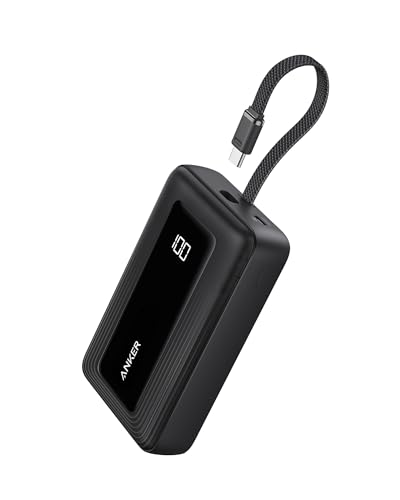
The best power bank for most people in 2026 is the Anker Zolo 20,000 mAh: enough for three to four real charges, 30W and a cable built into the body. The number that matters is not the mAh on the wrapper, it is the real charges: 20,000 mAh delivers around 12,600 to your phone, not 20,000. And if you fly, the rules changed in March: two power banks per person, carry-on only, and no charging them on board.
- Best overall: Anker Zolo 20,000 mAh: 30W, a cable built into the body and honest capacity figures.
- The mAh illusion: a "20,000 mAh" pack delivers about 12,600 (60 to 65%). That is why we compare by charges of your phone rather than by mAh.
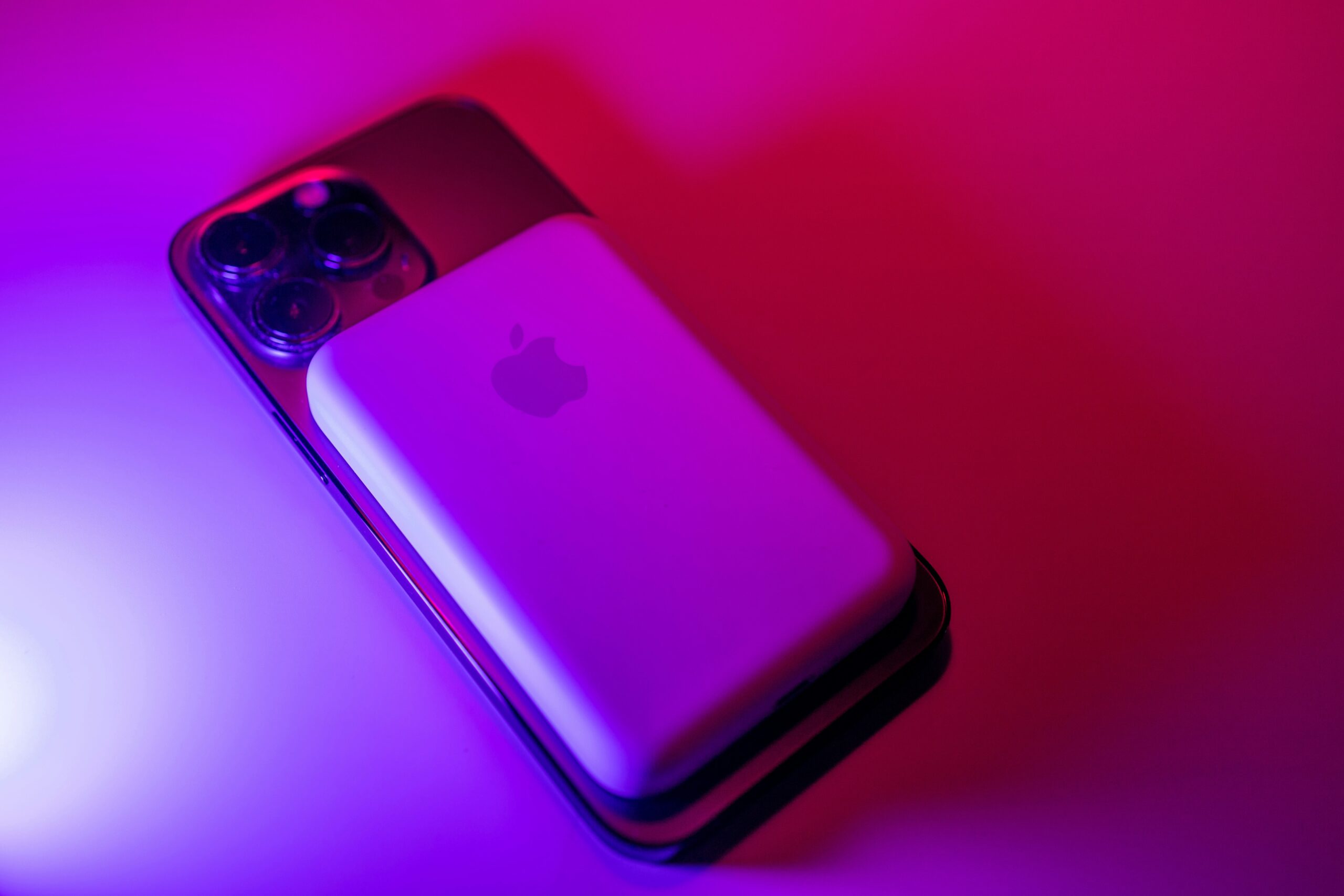
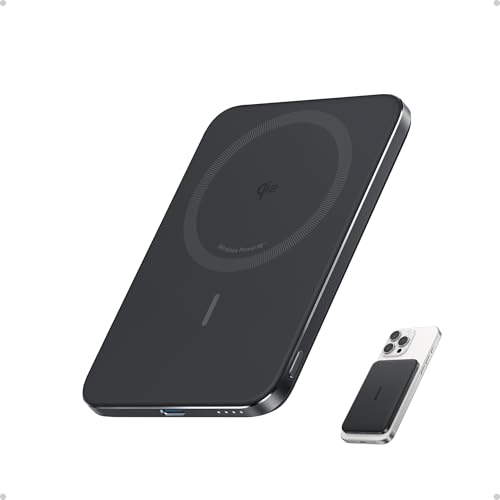
- For iPhone: the Anker Nano MagSafe sticks to the back of the phone and charges with no cable at all.
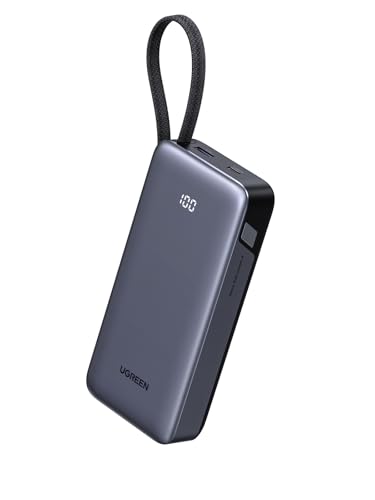
- For a laptop: you need USB-C PD at 45W: the UGREEN Nexode 45W. Anything at 5 to 22.5W will charge it painfully slowly or not recognise it at all.
- On a flight, and this changed on 27 March 2026: carry-on only, a maximum of two per person, they must not be recharged on board and should not be used to charge anything during the flight. The limit is 100 Wh, which is around 27,000 mAh; between 100 and 160 Wh you need the airline's approval.
Buying a power bank looks simple until you meet two hundred listings all claiming "20,000 mAh", "50,000 mAh" or "fast charging" across a wide range of prices. The big number does not mean what you think it means, and the cheap one is sometimes the expensive one. Here is what actually matters.
We scored each power bank on real capacity rather than advertised, complete phone charges, charging power (watts, and whether it supports PD for a laptop), weight and thickness, and whether it can fly, which is a watt-hour question rather than a mAh one.
Real charges are calculated on the roughly 63% efficiency typical of converting a 3.7V cell to a 5V USB output, cross-checked against the figures manufacturers such as Anker publish themselves and against the Civil Aviation Authority rules on lithium batteries. This is technical analysis with verifiable figures, not marketing. Our catalogue is read from the Amazon Spain listings that m8d tracks daily, part of Amazon's shared European catalogue, so availability and the exact model on sale vary by country.
Taking a power bank on a flight: what changed in March 2026
This is the question that decides which capacity you should buy, and the answer changed this year. On 27 March 2026 the rules on carrying lithium batteries and power banks were amended, and they are stricter than most people flying this summer realise.
| The rule | What it means for you |
|---|---|
| Carry-on only | A power bank must be in the cabin with you. Never in checked luggage, because a battery that overheats in the hold is a fire nobody can reach. |
| A maximum of two per person | This is the change that catches people out. If you were planning to take a large pack plus two small ones for a family, you cannot. |
| Not recharged on board | They must not be recharged during the flight, and should not be used to charge other devices in the air either. The seat power socket is for your phone, not for topping up the battery pack. |
| Up to 100 Wh | Allowed without asking anyone. That is roughly 27,000 mAh, so the 10,000 and 20,000 mAh packs on this page are all fine. |
| 100 to 160 Wh | Allowed only with the airline's approval, which you have to arrange in advance. A 30,000 mAh pack is about 111 Wh and sits in this band. |
| Individually protected | In the original packaging, with the terminals taped, or in a separate plastic bag. Loose in a rucksack with keys and coins is exactly what the rule exists to prevent. |
The arithmetic that turns a wrapper into a watt-hour figure is one line, and it is the number the airport cares about: Wh = mAh × 3.7 ÷ 1,000. So 10,000 mAh is 37 Wh, 20,000 mAh is 74 Wh, 26,800 mAh is 99 Wh and just squeaks under, and 30,000 mAh is 111 Wh and needs a conversation. A good power bank prints the watt-hour figure on its body, precisely so that a security officer does not have to do the sum. If a listing does not state Wh anywhere, that is a small warning about who made it.
You may also be asked to keep it in the seat pocket rather than the overhead locker, and individual airlines can be stricter than the baseline. Check yours before you fly rather than at the gate.
Comparison: which one charges most and what it weighs
Sorted by use. Look at the real charges column: that is what you actually notice, not the mAh on the wrapper. The watt-hour column is the one the airport looks at.
| Power bank | Capacity | Real charges* | Charging | Weight | Watt-hours |
|---|---|---|---|---|---|
| Anker Zolo |
20,000 mAh | ~3.8 iPhone | 30W | ~356 g (12.6 oz) | 74 Wh |
| UGREEN Nexode |
20,000 mAh | ~3.8 iPhone | 45W PD | 468 g (16.5 oz) | 74 Wh |
| Anker Nano MagSafe |
5,000 mAh | ~0.9 iPhone | MagSafe 15W | ~115 g (4.1 oz) | 18.5 Wh |
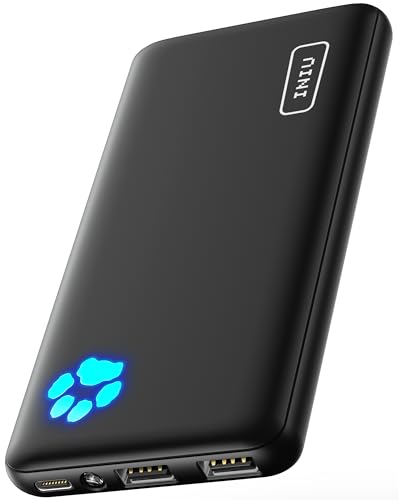 INIU Slim INIU Slim |
10,000 mAh | ~1.9 iPhone | 22.5W | ~220 g · 1.5 cm (0.6 in) | 37 Wh |
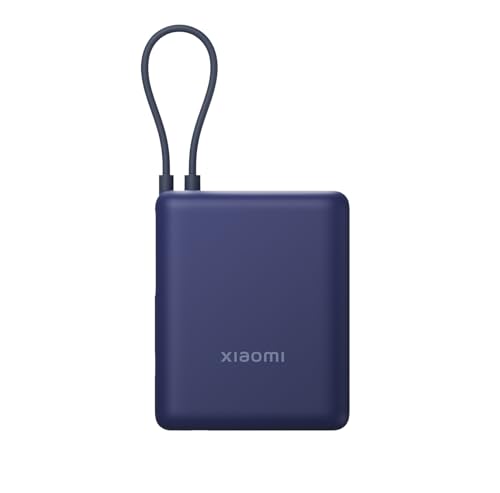 Xiaomi 33W Xiaomi 33W |
10,000 mAh | ~1.9 iPhone | 33W | ~200 g (7.1 oz) | 37 Wh |
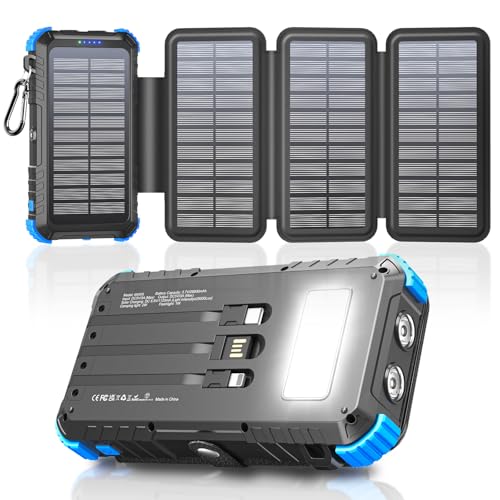 Solar 26,800 Solar 26,800 |
26,800 mAh | ~5 iPhone | 15W plus solar | ~600 g (21 oz) | 99 Wh |
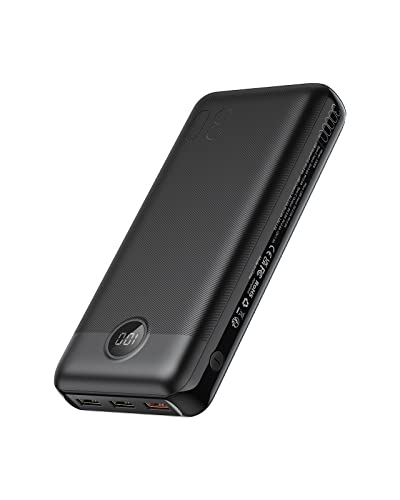 VEGER 30,000 VEGER 30,000 |
30,000 mAh | ~5.6 iPhone | 20W | 617 g (21.8 oz) | 111 Wh |
*Real charges estimated for an iPhone 15 (3,349 mAh) at 63% efficiency. Your result varies with your phone: try the calculator below. Watt-hours calculated as mAh × 3.7 ÷ 1,000, which is the figure that decides whether it can fly. The 30,000 mAh pack is the only one here above 100 Wh, so it needs airline approval and is the one we would not choose for travel.
The mAh illusion: advertised against real
No manufacturer is exactly lying: the big number is the capacity of the cell at 3.7V. But your phone charges at 5V, and that conversion loses 35 to 40%. This is what actually reaches your handset:
| Advertised mAh | Real mAh (5V) | iPhone 15 charges | Galaxy S24 charges |
|---|---|---|---|
| 5,000 | ~3,150 | ~0.9 | ~0.8 |
| 10,000 | ~6,300 | ~1.9 | ~1.6 |
| 20,000 | ~12,600 | ~3.8 | ~3.1 |
| 30,000 | ~18,900 | ~5.6 | ~4.7 |
That is why a "50,000 mAh power bank" at the bottom of the market is warning sign number one: either it uses poor cells, or the number is inflated. Serious brands (Anker, UGREEN, Xiaomi, INIU) state the real charge count in their own description; the ones that only shout the number in capitals do not. And there is a second tell that costs nothing to check: a 50,000 mAh pack would be about 185 Wh, which is well over the limit for any flight, and a manufacturer that has genuinely built one would have to say so.
The 7 best power banks of 2026, one by one
This is the one we would recommend to a friend without thinking about it. Anker states real charge counts (an iPhone 15 about four times), the USB-C cable is attached to the body so there is nothing loose to forget, and it charges at 30W in both directions, so it refills quickly too. About the size of a drinks can, and at 74 Wh it goes through security without a conversation.
The difference between a power bank that says it works with laptops and one that does is the letters PD and a number above 45. This has both. It will keep a MacBook Air or a Steam Deck going for a meaningful stretch, and it charges a phone at full speed at the same time. It is heavier than the Anker, which is the price of the extra output.
It snaps onto the back of a recent iPhone and charges it with no cable at all, which sounds like a small thing until you have used one on a train. At 5,000 mAh it is a rescue charge rather than a weekend, and that is the honest framing: it exists to be thin enough that you take it, not to last three days.
Charging the phone on a bedside table or a desk? See our guide to the best wireless charger for iPhone, Samsung and Xiaomi, which explains why an iPhone stops at 7.5 watts on most pads.
At 1.5 centimetres thick it goes in a jacket pocket and stays there, which is the only quality that matters in a power bank you are meant to carry every day. Two real charges is the right amount for a working day and a night out, and INIU is a brand with a long enough track record to be worth the small premium over an unknown one.
If you want to stay with a name you have heard of at the small end of the market, this is the answer. Xiaomi builds in a USB-C cable that doubles as a carrying loop, and it charges at 33W, above the average for its size. For one full phone charge a day it is more than enough.
Large capacity with a carabiner and a torch for use outdoors. At 99 Wh it slides in just under the cabin limit, which is worth knowing if it is going in a rucksack on a flight. The solar panel is the part to be realistic about, and we would rather say so than sell it.
The most capacity on this page, with a display showing the exact percentage remaining. It is also the only one here that crosses the 100 Wh line, at about 111 Wh, which puts it in the band that needs the airline's permission arranged in advance rather than discovered at the gate.
Frequently asked questions about power banks

m8d.io
Comments
Be the firstNo sign-up: just a name. Every comment is reviewed before it is published.