Best cordless vacuum UK 2026: what pascals and air watts really compare, and how long it lasts on the floor
 m8d.ioUpdated on
This guide contains affiliate links. As an Amazon Associate, m8d.io earns from qualifying purchases, at no extra cost to you.

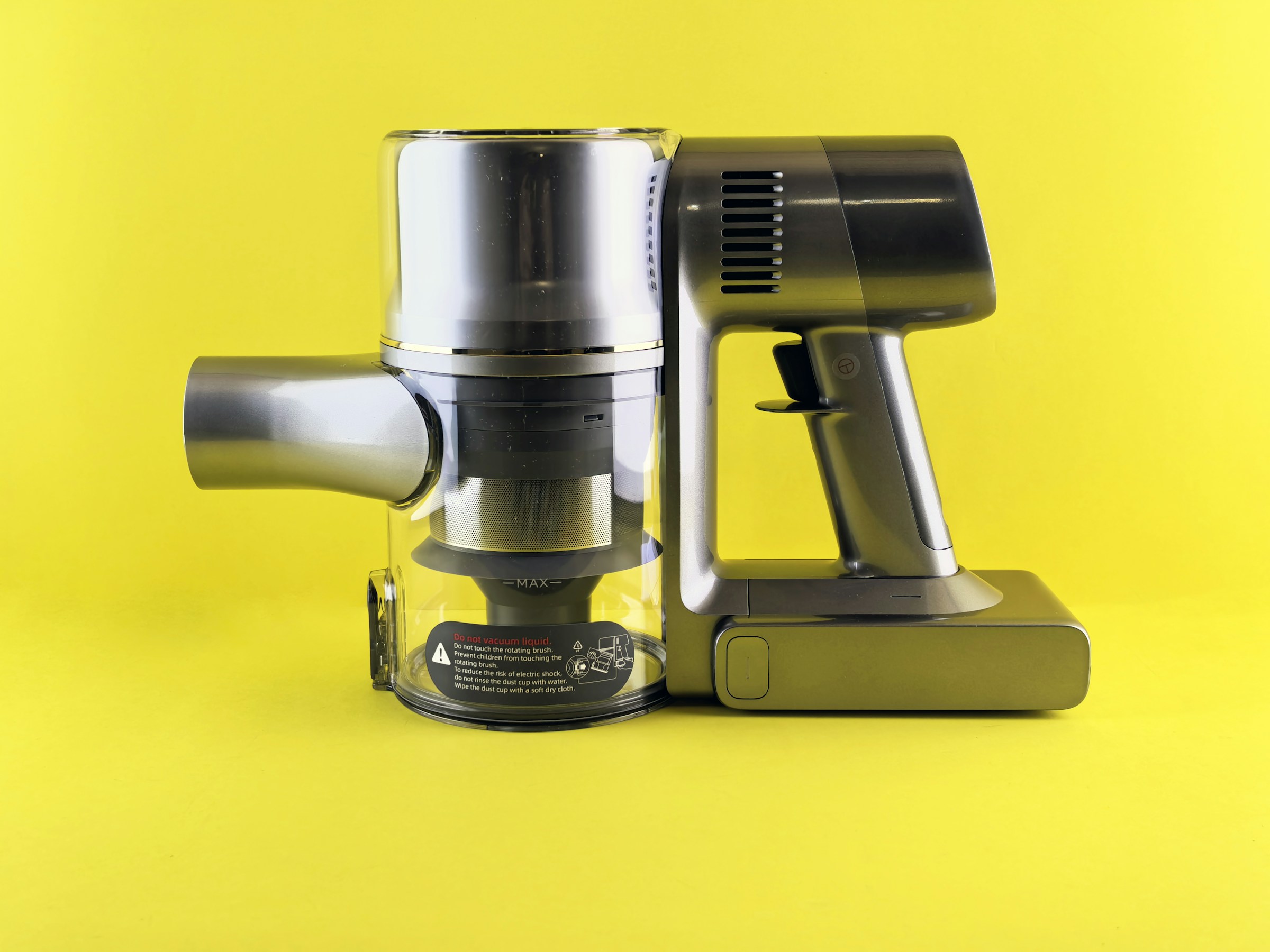
The best cordless vacuum is chosen by air watts, not pascals. Of 35 listings we counted on Amazon Spain on 8 September 2026, only four declare both figures, and the one advertising 60,000 pascals declares 120 air watts while another with 30,000 declares 300. The m8d pick: the Cecotec Conga Rockstar RS80.
200 air watts declared, a published runtime table and a removable battery on its spec sheet.
See it on Amazon ›Which cordless vacuum has the most suction? Why the figures on the shelf don't compare
There's no single answer because there's no single unit. On 8 September 2026 we counted 35 different cordless vacuum listings on Amazon Spain, the catalogue behind this guide, across eight searches in the category and leaving out corded models. Twenty-two declare pascals, twenty-two declare motor watts, ten declare air watts and seven declare no suction figure at all. Only four declare pascals and air watts together, and they're the only ones you can hold up against both sides of the shelf.
The three units measure different things. Pascals are pressure with the tube blocked, which never happens while you clean. Motor watts are electricity going in. Air watts combine pressure and airflow, which is what pulls dirt off the floor. In the count, the median declared figure is 55,000 pascals, 135 air watts and 600 motor watts.
And a pattern shows up once the count is sorted: of the 14 listings declaring 50,000 pascals or more, only one also gives air watts. The big number and the comparable figure almost never travel in the same headline.
Of the 35 listings in the count, four declare pascals and air watts in the same headline. They come from the same maker, were read on the same day, and lined up side by side they show that the two figures don't rank the same way. If pascals worked for comparing, the 60,000 one would be the most powerful of the four.
m8d rule: If a listing only gives you pascals, you can't compare it with one that gives air watts, or the other way round: there's no published equivalence between the two, and in the same range the one with more pascals declares fewer air watts.
Cordless vacuum suction translator: pascals, air watts and motor watts
A tool from m8d.io. Pick the unit the listing you're looking at gives and the figure it shows, and out comes what it measures, what it can and can't be compared with, and where it ranks among the 35 listings we counted on Amazon Spain on 8 September 2026. 'It gives none' is a result too: it's the case for seven of the thirty-five. Free, with no account and no ads.
Of the 35 listings in the Amazon Spain count of 8 September 2026, 22 declare this unit. At 55,000 Pa, the machine you're looking at sits above 14 of those 22 and below 7.
Watch this band. Of the 14 listings that declare 50,000 pascals or more, only 1 also gives air watts, and that one declares 120 with its 60,000 pascals. The big number and the comparable figure hardly ever travel together.
The three units and how they're split come from m8d's own count: 35 different cordless vacuum listings on Amazon Spain, read through our Amazon interface on 8 September 2026 across eight searches in the category, counting what the headline each one is sold with declares. UK listings for the same models can word their headlines differently. Pascals and air watts measure different things and there's no public formula to turn one into the other: this tool explains what each spec sheet says, it doesn't convert units.
Why UK cordless vacuum pages rarely give a suction figure, and why no rule makes them
On 22 September 2026 the first two Google results in the UK for 'cordless vacuum' were two makers' own shops, Gtech and Vax, and neither cordless range page gives a suction figure in any unit: no pascals, no kilopascals, no air watts (both read on 22 September 2026). What they sell on is runtime, weight and features. That isn't an oversight by two brands, and the reason is written into the law.
The ecodesign rules for vacuum cleaners, Regulation (EU) No 666/2013 in the version kept in UK law, set requirements for 'electric mains-operated vacuum cleaners' and, in Article 1, 'shall not apply to' 'wet, wet and dry, battery operated, robot, industrial, or central vacuum cleaners'. The rule that brought order to plug-in vacuums has never covered battery ones, so each maker chooses the unit it advertises in, or none at all. That's why the translator above explains what each figure measures instead of converting one into another: there's no published formula to do it.
What to do with a listing that gives no figure, or only pascals. Look for 'air watts' or 'AW' on the maker's own spec sheet before trusting the headline; compare runtime only when the condition is written next to it; and compare the rest on what the spec sheet declares: the battery, the filter and the floor head. Our advice is not to rank two machines on pascals alone: in our count, the listing with 60,000 Pa declares 120 air watts and the one with 30,000 Pa declares 300.
How long a cordless vacuum really lasts in the mode you clean the floor with
The minutes in the headline are the lowest mode and, almost always, with the machine used as a handheld and without the powered floor head that cleans the floor. That head has its own motor and draws on the same battery. Four of the machines in this guide publish their full table in their own listing, and that's where the difference shows: the Conga Rockstar RS80 advertises 65 minutes and declares 20 in boost with the floor head fitted, 31% of the headline.
UK makers write the same condition when they write one. The footnotes on Vax's cordless range page say the runtimes they mark are measured 'in standard power mode on hard floor, with floor brush switched off', and the 'up to 90 minutes' on one of its models is two 4.0Ah batteries of 45 minutes each. Gtech's range page sells a 'Long 80 Minute Runtime' without saying in which mode (both read on 22 September 2026). When the maker writes the condition, the figure is useful; when it doesn't, the headline number doesn't tell you which mode it belongs to.
| Cordless vacuum | Air watts | Pascals | Eco, floor head fitted | Boost, floor head fitted | Battery, per its spec sheet | |
|---|---|---|---|---|---|---|
| Cecotec Conga Rockstar RS80 view › | 200 AW | not declared | 60 min | 20 min | removable | View › |
 Cecotec Conga Rockstar RX50 view › Cecotec Conga Rockstar RX50 view › | 300 AW | 30,000 Pa | 60 min | 15 min | doesn't say | View › |
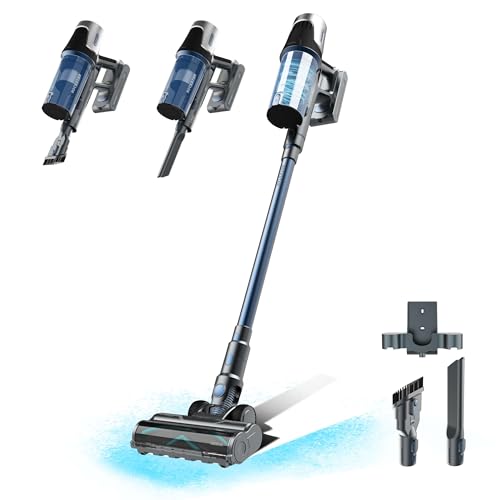 Cecotec Conga Rockstar RS50 view › Cecotec Conga Rockstar RS50 view › | 120 AW | 60,000 Pa | 50 min | 15 min | doesn't say | View › |
 Cecotec Conga Rockstar P50 view › Cecotec Conga Rockstar P50 view › | 80 AW | 20,000 Pa | 45 min | 15 min | removable | View › |
 dreame dreame R10 view › dreame dreame R10 view › | 120 AW | 20,000 Pa | not published | not published | doesn't say | View › |
Figures declared by each maker in its own Amazon Spain listing, read on 8 September 2026. 'Not published' means that spec sheet doesn't give the figure, not that the machine lacks it. The dreame R10 does publish its three modes as a handheld: 60, 27 and 7 minutes.
Cordless vacuum runtime calculator: minutes by mode, with the floor head fitted
A tool from m8d.io. Pick one of the four machines that publish their full table, the mode you'll clean in and whether you'll use the powered floor head, and out comes the minute its own maker declares for that combination and the share of the headline figure that's left. If your vacuum doesn't publish its table, the tool gives you the range of the four that do. Free, with no account and no ads.
20 minutes declared in boost mode with the floor head fitted, out of the 65 minutes in the headline = 31% of what it advertises.
The gap isn't a fault in the machine: the floor head has its own motor and draws on the same battery, and boost mode multiplies the draw. What you can ask for is that the figure comes with its condition next to it, and these four spec sheets have it.
The four tables are the ones each maker publishes in its own Amazon Spain listing, read on 8 September 2026: the three modes as a handheld and, where the spec sheet gives them, the three with the tube and the powered floor head fitted. Every minute shown here is the one that spec sheet declares, with its date: if a spec sheet doesn't publish a figure, the tool says so instead of filling it in.
Cecotec Conga Rockstar RS50 view ›
Of the four listings that give both figures, the one that declares the most pascals, and far from the most air watts. As a purchase it's a sound stick vacuum for a small flat, with an automatic mode; as data, it's the proof that pascals don't rank suction.
- It declares 60 kPa and 120 air watts in the same headline. The model from its own brand that declares half the pascals, the RX50, declares 300 air watts.
- It publishes 60, 35 and 20 minutes as a handheld and 50, 30 and 15 with the floor head fitted.
- The automatic mode it advertises adjusts the power to the dirt, which is how to stretch the battery without thinking about modes.
- Automatic mode declared
- Publishes its full runtime table
- Declares all three units
- 120 air watts with 60,000 Pa: the big number in the headline isn't the one that cleans
- Its spec sheet doesn't say whether the battery comes out
dreame dreame R10 view ›
It declares 120 air watts with the same 20,000 Pa as the Conga Rockstar P50, which declares 80: two makers, the same advertised pressure and forty air watts apart. And it publishes what almost nobody does: 60, 27 and 7 minutes.
- Its listing states that the maximum times in eco, medium and boost are 60, 27 and 7 minutes. Seven minutes is the most surprising figure in this guide, and its own maker wrote it.
- With seven minutes in boost, the maximum power mode is for one particular rug, not for cleaning the house.
- Its spec sheet doesn't say whether the battery comes out.
- Publishes all three modes with their number, boost included
- 120 air watts with 20,000 Pa declared
- A lit floor head with V-shaped bristles declared anti-tangle
- Seven minutes in boost: you'll have to clean by zones
- It doesn't publish the table with the powered floor head fitted
Cordless vacuums with a removable battery: why it decides how long the machine lasts, and what UK law says
A cordless vacuum ages at the rate of its battery, so the line that decides how long it lasts is whether the battery comes out. In this guide, the spec sheets of the Conga Rockstar RS80 (33.6 V, 2,500 mAh) and the Conga Rockstar P50 (25.2 V, 2,200 mAh) declare a removable battery; those of the RS50, the RX50, the dreame R10 and the Xiaomi G20 don't say, and what a spec sheet doesn't declare can't be assumed. The two UK makers at the top of the search both sell batteries as parts: Gtech offers its batteries to replace a worn one or to 'double your runtime', and Vax sells one of its cordless models with two 'removable' ONEPWR batteries.
UK law backs the buyer on the same point. Under the Consumer Rights Act 2015, durability is one of the aspects of satisfactory quality (section 9(3)(e)), what the maker says in advertising or labelling counts when judging it (section 9(5) and (6)), and a fault that shows up within six months of delivery is taken to have been there from the start unless it's shown otherwise (section 19). A runtime claim on the listing is one of those public statements, so it's worth saving the page when you buy. If you ask us, on a machine you expect to keep for years, a battery you can swap is worth more than the last 50 air watts: two of the three podium machines declare one.
The m8d pick of cordless vacuum for 2026, and who it isn't for
With the count in front of us, we recommend the Conga Rockstar RS80, for three reasons you can check on its own listing: it declares 200 air watts, publishes its full runtime table and says the battery comes out. The P50 does the same three things with 80 air watts, and the Z30 declares more air watts but publishes no table. With the floor head fitted it keeps 20 of its 65 minutes in the most demanding mode, the largest share among the machines in this guide that publish a floor-head table.
Who it isn't for: a home with thick carpet in several rooms, where 200 air watts fall short of the dreame Z30's 310; and anyone who wants to compare on pascals, because this spec sheet doesn't declare them.
Cecotec Conga Rockstar RS80 view ›
It declares 200 air watts with a 600 W motor, publishes its full runtime table and, with the P50, is one of the two podium machines whose spec sheet says the battery comes out. In boost with the floor head fitted it declares 20 minutes, 31% of its headline, the largest share among the machines in this guide that publish a floor-head table.
- Its spec sheet publishes the six numbers almost nobody gives: 65, 40 and 25 minutes in eco, medium and boost as a handheld, and 60, 35 and 20 with the tube and the powered floor head fitted. The headline sells the 65 (Cecotec's Amazon Spain listing, 8 September 2026).
- What changed from the previous model: the RS70 from the same family is still on sale and declares 150 air watts with 500 W; the RS80 goes up to 200 with 600 W and adds the green GreenDetect light, with the same advertised 65 minutes in eco. Both figures are on the two listings, read the same day.
- It doesn't declare pascals, and in this guide that isn't a flaw: air watts are the figure you can compare with nine others in the count, and pascals only with twenty-one.
- The battery it declares is 33.6 V and 2,500 mAh, removable. That's what separates a machine you can repair from one you replace whole when the battery ages.
- 200 air watts declared, the third-highest figure in the count
- Publishes its full runtime table, with and without the powered floor head
- Its spec sheet declares a removable battery
- Keeps 31% of its headline in boost with the floor head fitted, the largest share among the tables in this guide
- It doesn't declare pascals, so it can't be set against listings that only give that figure
- The 140 m² it advertises are in eco mode, by its own asterisk

dreame Z30 view ›
The one in this guide that declares the most air watts, 310, alongside 28,000 Pa, and the only one with a HEPA 14 filter declared at 99.99% of particles down to 0.1 microns. What its listing leaves out is how long it lasts in boost.
- Its listing declares 90 minutes of runtime and a 150,000 rpm motor, but doesn't publish the table by mode: from that spec sheet there's no way to know how long it lasts in boost (read on 8 September 2026).
- What changed from the previous model: the dreame Z10 is still on sale and declares 210 air watts and 24,000 Pa; the Z30 goes up to 310 and 28,000.
- The HEPA 14 filter it declares captures particles down to 0.1 microns; the H13 declared on other models from the same brand works to 0.3. That's the difference that matters in a home with allergies, and the figure comes from the maker's spec sheet, with its reading date.
- 310 air watts declared, the highest figure in this guide
- HEPA 14 filter declared at 99.99% down to 0.1 microns
- Dirt detection that adjusts the power by itself
- It doesn't publish its runtime table by mode: the 90 minutes come with no written condition
- No figure for boost mode, which is the one carpet and pet hair call for
Cecotec Conga Rockstar P50 view ›
One of the four listings in the count that declare all three units, with its full runtime table published. At 80 air watts it sits at the floor of the ten that declare that unit: it's for hard floors and daily cleaning, not thick carpet.
- It declares 50, 30 and 17 minutes in eco, medium and boost as a handheld, and 45, 25 and 15 with the floor head fitted. The drop from eco to boost is thirty minutes, and it's written on its own listing.
- Its declared battery is 25.2 V and 2,200 mAh, removable.
- There's a second listing from the same brand, the P50 Neo, with the same three declared figures (80 air watts, 20,000 Pa, 265 W) and the same 1,200 ml bin. Two names, one spec sheet: worth knowing before paying for the name.
- Declares air watts, pascals and motor watts, which only four of the 35 listings do
- Removable battery declared
- Publishes its runtime table with and without the powered floor head
- 80 air watts is the floor of the count: on thick carpet you'll go over twice
- The 1,200 ml bin is felt in the wrist when it's full
Is there a cordless vacuum as good as a Dyson? What the declared figures compare, and what they can't
It comes up again and again in the questions UK searchers ask: as good as a Dyson, better than a Dyson, Dyson's biggest competitor. On declared figures, the Dyson V8 Absolute declares 115 air watts on its Amazon Spain listing, the third-lowest of the ten listings in the count that give that unit and below their median of 135, while the count includes listings declaring 300 and 350. That doesn't make it a bad buy: what this brand is chosen for is its balance in the hand, its floor head and its parts and service, and none of those is declared in any unit.
So the honest answer to 'as good as' depends on what you compare. On the figure that measures what comes off the floor, several listings declare more. On handling, no listing gives a number, and a machine that's awkward to use gets used less. What is worth checking is that whichever listing you pay for declares something you can check.

Dyson V8 Absolute view ›
It declares 115 air watts, the third-lowest of the ten listings that declare that unit. It's chosen for its balance in the hand, its floor head and the brand's service, not for its declared suction.
- Its spec sheet declares two power modes and up to 40 minutes, with a 110,000 rpm motor and fifteen cyclones. It doesn't publish how many minutes are left in the maximum power mode.
- 115 air watts is the third-lowest figure among the ten listings in the count that declare that unit, below their median of 135.
- What this brand is chosen for doesn't appear in any unit: the balance in the hand, the floor head, and the parts and service.
- Balance and handling in the hand, which is what you notice over long sessions
- Parts and service from the brand itself
- Fifteen cyclones declared
- 115 air watts, below the median of the ten listings that declare that unit
- Its listing doesn't publish the minutes in maximum power mode
- You hold a trigger the whole time, which tires the hand on long sessions

XIAOMI G20 view ›
It declares 150 air watts and 25 kPa, just above the median of the count in the unit you can compare, and adds a front light that shows fine dust on dark floors. What it doesn't publish is the table by mode.
- Its spec sheet declares five-stage filtration that retains 99.9% of particles down to 0.3 microns, and a 3,000 mAh battery with up to 60 minutes. It doesn't say which mode those 60 minutes are in.
- The front light isn't decoration: on a dark floor it shows fine dust you can't otherwise see, and changes where you go over a second time.
- Its spec sheet doesn't declare whether the battery is removable, and that's the detail that decides whether an ageing battery means a new part or a new vacuum.
- 150 air watts declared, above the median of the ten that declare that unit
- Five-stage filtration declared at 99.9% down to 0.3 microns
- A front light that shows fine dust on dark floors
- It doesn't publish runtime by mode: the 60 minutes come with no condition
- Its spec sheet doesn't say whether the battery can be changed
A cordless hard floor cleaner or a stick vacuum: which one your floor needs
They're two different machines and they don't compete. A cordless wet and dry vacuum, which UK makers such as Vax and Gtech sell as a hard floor cleaner, has a wet roller that lifts stuck-on dirt from hard floors and cleans itself afterwards; a stick vacuum works dry and also does carpet, upholstery, stairs and the car. In the count, the wet and dry models declare pascals and almost never air watts, because the air isn't doing all the work.
If your home has hard floors and what bothers you is marks and spills, the hard floor cleaner does more. If there are carpets, pets or stairs, the stick vacuum stays the main machine and the hard floor cleaner is the second.

roborock F25 GT Gen 2 view ›
It isn't a stick vacuum: it vacuums and mops at once on hard floors, with a roller spinning at 450 rpm and self-cleaning with hot air at 90 °C. It answers a different question, and that's why it's here with its warning.
- It declares 20,000 Pa wet and dry, and no air watts: in this category the figure you compare is another one, because the wet roller does the work, not only the air.
- Its spec sheet declares high-temperature self-cleaning and hot-air drying at 90 °C, which is what stops the roller smelling after three days. roborock's own footnote adds that the self-cleaning temperature is that of the hot air blowing over the water, not of the water.
- It weighs 4 kg according to its spec sheet and isn't comfortable on the stairs: for a two-storey house, the stick vacuum still wins.
- Vacuums and mops in the same pass on hard floors
- Roller self-cleaning and drying declared at 90 °C
- A head that lies flat at 180 degrees to reach under furniture
- It doesn't replace a stick vacuum on carpet or upholstery
- Four kilos declared: not the machine for reaching a high shelf
What is the best cordless vacuum to buy?›
On the figures declared on 8 September 2026, the Cecotec Conga Rockstar RS80 is the one that best backs up what it advertises: 200 air watts, a full runtime table published and a removable battery on its spec sheet. If the home has thick carpet, the dreame Z30 declares 310 air watts and 28,000 Pa.
Which cordless vacuum has the best suction in the UK?›
It depends on the unit, and that's the catch in the question. In our Amazon Spain count, the highest figure is 350 in air watts and 70,000 in pascals, and the two can't be compared: of the four listings that declare both, the one advertising 60,000 pascals declares 120 air watts and another with 30,000 declares 300. The cordless range pages of the UK's two leading makers give no suction figure in any unit.
Is there a cordless vacuum as good as a Dyson?›
On the figure that measures what comes off the floor, yes: the Dyson V8 Absolute declares 115 air watts, below the median of 135 among the ten listings in our count that give that unit, and several declare 300 or more. What the brand is chosen for, its balance in the hand, its floor head and its service, isn't declared in any unit, so it has to be weighed separately.
How many watts should a good cordless vacuum have?›
Motor watts don't measure suction, they measure consumption. In the 8 September 2026 count, six different listings declare exactly 600 W, and the two that also give air watts declare 160 and 200. The figure to look at is air watts, and ten of the thirty-five listings declare it.
How long do cordless vacuums last?›
In practice, as long as their battery, which is why a removable one matters: in this guide the RS80 and the P50 declare one, and the RS50, RX50, R10 and G20 say nothing either way. UK law treats durability as part of satisfactory quality (Consumer Rights Act 2015, section 9), and a fault in the first six months is taken to have been there on delivery (section 19).
Do cordless vacuums really last 60 or 90 minutes?›
In the lowest mode and almost always without the powered floor head. The four machines in this guide that publish their table advertise between 50 and 65 minutes, and the three that publish the floor-head figures declare between 15 and 20 in boost with it fitted. Vax writes the same condition in its footnotes: 'standard power mode on hard floor, with floor brush switched off'. The dreame R10 publishes its three modes: 60, 27 and 7 minutes.
Are cordless vacuums as powerful as corded ones?›
There's no shared figure to settle it. The ecodesign rules for mains vacuums, Regulation (EU) No 666/2013 in the version kept in UK law, exclude battery-operated ones, so each cordless listing picks its own unit. What you can compare is air watts, between two cordless machines that both declare them.
Does a cordless wet and dry vacuum replace a stick vacuum and a mop?›
It replaces the mop on hard floors, not the stick vacuum. It vacuums and mops in the same pass with a wet roller, but it isn't for carpet, upholstery or stairs, and the ones in this category declare pascals and almost never air watts, because the air isn't doing all the work.
We started from the catalogue, not from a list. On 8 September 2026 we read 35 different cordless vacuum listings on Amazon Spain, the catalogue behind this guide, across eight searches in the category, and counted what each headline declares: pascals, air watts, motor watts or nothing. From that count came the figures that order this guide and the contrast that holds it up: one maker's own range contradicting the order of its own figures. UK listings for the same models can word their headlines differently, and availability varies by country: the buttons take you to your own country's Amazon store.
Then we read each candidate's full spec sheet on its listing: the runtime table by mode, what it says about the battery and what it declares about filtration. Where a spec sheet doesn't publish a figure, this guide says so instead of filling it in with an average. For this UK edition we read the cordless range pages of Gtech and Vax, the two makers' shops at the top of the UK search, the version of Regulation (EU) No 666/2013 kept in UK law, the Consumer Rights Act 2015 and roborock's page for the F25 GT Gen 2, all on 22 September 2026.
Review. The selection is reviewed every quarter, and when a recommended machine goes out of stock it stops being a recommendation: it keeps its place in the tables as data, never at the top.
Every figure above comes from one of these sources, with the date it was read.
- legislation.gov.ukRegulation (EU) No 666/2013, Article 1: subject matter and scopeThe version kept in UK law: requirements for mains-operated vacuum cleaners, with battery-operated ones excluded. Read on 22 September 2026.
- GtechCordless vacuum cleanersRuntimes such as 'Long 80 Minute Runtime', batteries sold as parts, and no suction figure in any unit. Read on 22 September 2026.
- VaxCordless vacuum cleanersThe runtime footnote, 'in standard power mode on hard floor, with floor brush switched off', and two removable 4.0Ah batteries of 45 minutes each. Read on 22 September 2026.
- legislation.gov.ukConsumer Rights Act 2015, section 9: goods to be of satisfactory qualityDurability, section 9(3)(e), and public statements in advertising or labelling, section 9(5) and (6); section 19 for the six-month presumption. Read on 22 September 2026.
- roborock (Spain)roborock F25 GT Gen 2: self-cleaning and hot-air drying at 90 °CIts footnote says the self-cleaning temperature is that of the hot air blowing over the water, not of the water. Spanish-language page, read on 22 September 2026.
- m8dCount of 35 cordless vacuum listings on Amazon SpainEight searches in the category, read on 8 September 2026. It counts what each listing's headline declares.
- Each maker, on its Amazon Spain listingProduct spec sheets from Cecotec, dreame, Xiaomi, Dyson and roborockRuntime tables by mode, filtration and battery. Read on 8 September 2026.
If you take one thing from this guide, make it this: the best cordless vacuum of 2026 is the one that declares a figure you can compare. Ten of the thirty-five listings we counted on 8 September declare air watts, and only four also give pascals. The Conga Rockstar RS80 declares its air watts, publishes its whole runtime table and says its battery can be changed; the dreame Z30 is the one for carpet; and the Conga Rockstar P50 is the one that declares every figure for hard floors and daily cleaning.


Comments
Be the firstNo sign-up: just a name. Every comment is reviewed before it is published.