Best coffee machine 2026: which type to buy for home, from pod to moka pot, by what a year of coffee costs in the UK
 m8d.ioUpdated on

This guide contains affiliate links. As an Amazon Associate, m8d.io earns from qualifying purchases, at no extra cost to you.
The best coffee machine for a UK kitchen is chosen by type before model: at two cups a day, the eight coffees we priced on UK shelves on 22 September 2026 cost £104 to £336 a year. For most homes, a manual espresso machine on ground coffee; with no time in the morning, a pod machine.

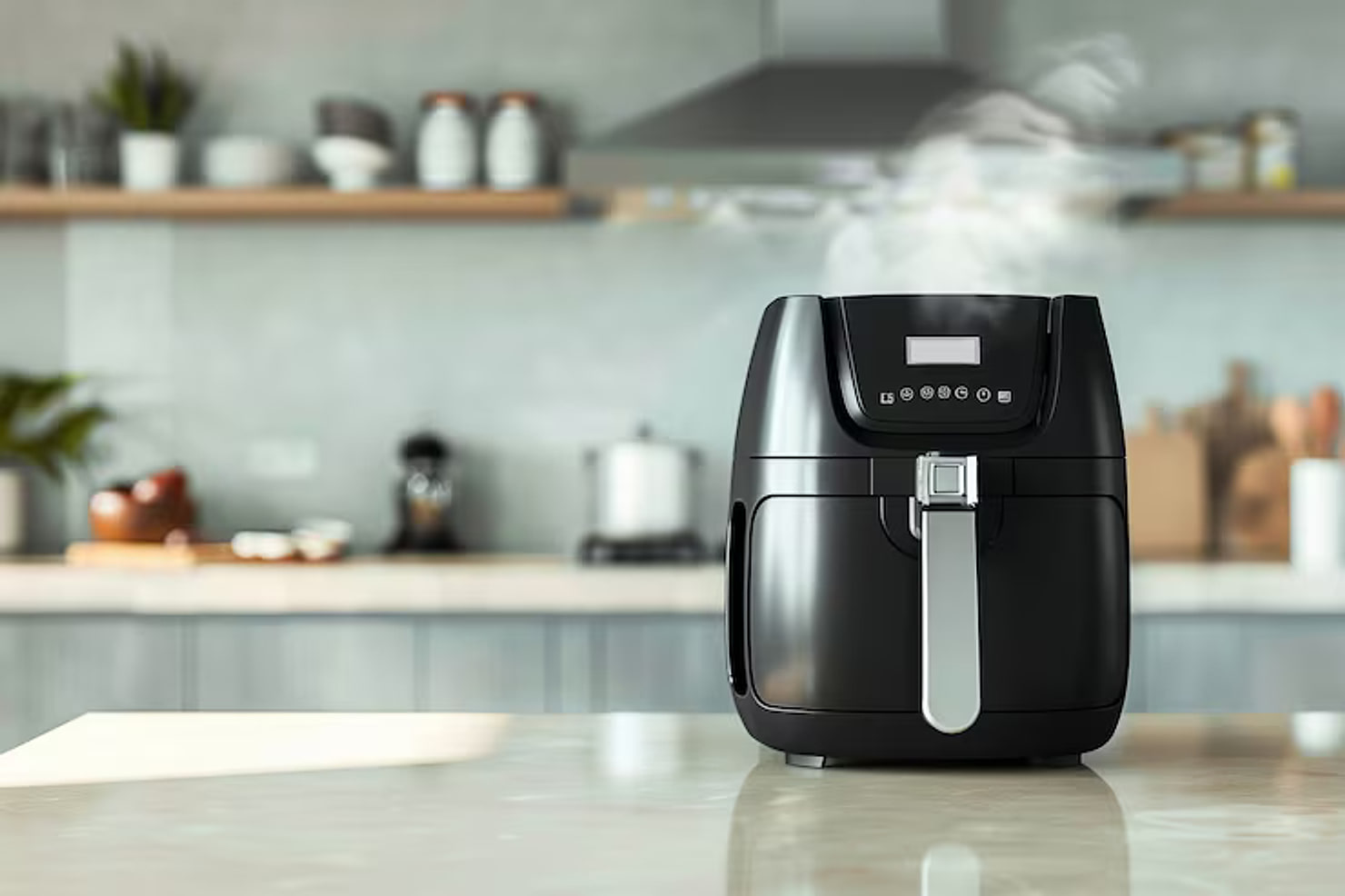
Pod machine: press a button and there is nothing to clean. Its coffee is the dearest per cup of the five types.
See it on Amazon ›What a year of coffee costs in the UK with each type of coffee machine: pods, ground and beans
A coffee machine is paid for once and the coffee is paid for every day. On 22 September 2026 we read the shelf price of eight coffees in the formats these machines use, in the brand's own shop or in a supermarket: Nespresso UK, Lavazza UK, Iceland and Morrisons. At two cups a day, a year of coffee runs from £104 with the cheapest beans to £336 with a mid-priced Nespresso capsule. Nespresso's own Original sleeves ran from 39p to 55p a pod that day, which is £285 to £402 a year at the same two cups. Between the cheapest beans and that mid-priced capsule the gap is £232 a year, and it comes back every year the machine lasts.
Coffee machine running cost calculator: which type suits you and what a year of coffee costs
A free m8d.io tool, with no account. The figure that decides this purchase is not on the machine's box: it is what the coffee will cost for as long as the machine lasts. Choose how many cups are drunk at home, how much time there is in the morning, what matters most and how much you want to spend, and you get the type that fits, the cost of a year of coffee with it and what you give up with that type. With the default answers (two cups a day, two or three minutes in the morning, convenience first and up to £80 on the machine) it points to a pod coffee machine, and with the pods we priced on UK shelves on 22 September 2026 that is £203 to £336 of coffee a year.
2 cups a day are 730 a year. With this type the coffee comes in pods, and on 22 September 2026 that cost between £0.278 a cup (Starbucks House Blend by Nespresso, box of 18 for Original machines, at Iceland) and £0.460 (Nespresso Original Buenos Aires Lungo, sleeve of 10, at nespresso.com/uk) in UK shops. One pod is one cup, so there is nothing to measure out. Multiplied out: £203 to £336 a year.
| Format | Pack read | Per cup | Per year |
|---|---|---|---|
| the machine maker's own capsule, a mid-priced one: its Original sleeves ran from 39p to 55p a pod | Nespresso Original Buenos Aires Lungo, sleeve of 10, at nespresso.com/uk | £0.460 | £336 |
| closed system: it only fits a Tassimo | Tassimo Kenco Americano Grande XL, 16 pods, at Iceland | £0.356 | £260 |
| closed system: it only fits a Dolce Gusto | Nescafé Dolce Gusto Americano Intenso, 16 pods, at Iceland | £0.313 | £228 |
| a compatible capsule for the same machine, the cheapest per cup we read | Starbucks House Blend by Nespresso, box of 18 for Original machines, at Iceland | £0.278 | £203 |
| branded ground coffee, at the brand's own shop | Lavazza Qualità Oro Dark Roast ground coffee, 250 g, at lavazza.co.uk | £0.260 | £190 |
| branded beans, at the brand's own shop | Lavazza Qualità Rossa beans, 1 kg, at lavazza.co.uk | £0.225 | £164 |
| supermarket own-label ground coffee, the lowest regular price per kilo we read | Morrisons The Best Fair Trade Colombian ground coffee, 227 g, at Morrisons | £0.189 | £138 |
| supermarket own-label beans, the lowest per kilo we read | Morrisons Espresso Blend coffee beans, 1 kg, at Morrisons | £0.143 | £104 |
The type comes from a written rule, not from a score: at the lowest budget the moka pot is the type that brews without a pump or electronics; with under a minute in the morning the pod wins; and from £150 up the bean-to-cup is the only type that grinds beans on the spot. Coffee prices are from one specific day and they change: the sums stay on screen so you can redo them with the coffee you buy.
Nespresso, Tassimo or Dolce Gusto: which pod system costs least per cup on UK shelves
The three pod systems sold in the UK are not equally closed, and that decides what a pod machine costs to run. Nespresso's Original machines also take capsules made by other brands: on 22 September 2026 Iceland sold a box of 18 Starbucks by Nespresso capsules for the Original system at £5.00, about 28p a cup, against 39p to 55p for Nespresso's own Original capsules on nespresso.com/uk. Tassimo and Dolce Gusto work the other way round: each machine only takes its own discs or pods, and on the same shelf a Tassimo Kenco Americano came to about 36p a cup and a Dolce Gusto Americano Intenso to about 31p.
That answers the question people ask after buying one, whether other pods fit. In the Original system they do, and the cheapest capsule we read was a compatible one. In Tassimo and Dolce Gusto only pods made for that system fit, so the price per cup is whatever those brands charge. Nespresso's Vertuo machines are a separate system with their own capsules, and nothing in this paragraph applies to them.
Nespresso De'Longhi Inissia EN80.B view ›
It is the answer when the morning allows no more than a minute: pop in the capsule, press and there is nothing to clean. The bill is on the other side, and it is the figure that decides this purchase: at two cups a day, the maker's own capsules cost from over two and a half to nearly four times as much a year as the cheapest beans we read, at UK shelf prices on 22 September 2026.
- It is the pod model with the most ratings in our amazon.es search of 8 September 2026.
- The listing declares 19 bars and automatic switch-off. Of the 18 pod listings in the census, only two give a figure in millilitres and both are the water tank: none says how much coffee comes out of a capsule.
- It is a Nespresso Original machine, so it takes the maker's capsules and compatible ones from other brands: on 22 September 2026 the maker's own cost from two-fifths more to almost twice as much per cup as the compatible one we read in UK shops.
- It is one of the few machines in the census that asks for no cleaning after each coffee: the grounds stay in the used capsule.
- The fastest and cleanest coffee of the five types
- The same result every day without touching a setting
- Fits in any gap on the worktop
- The dearest coffee per cup of the five types
- Only takes the capsule format of its system
- No use for ground coffee or beans

Bosch Tassimo Happy Friendly view ›
It is the pod machine for anyone who wants a cup without touching anything, and it runs on a closed system: only Tassimo discs fit. That is why the sum to do before buying it is not the machine's, it is the coffee's: on Kenco Americano pods it is one of the dearest per cup in our UK list of 22 September 2026.
- It reads a code on each disc to set the brew, according to its listing. No disc from another system fits it.
- On Kenco Americano pods, a year of coffee at two cups a day came to over a quarter more than on the compatible Nespresso capsule we read, at the UK shelf prices of 22 September 2026.
- Descaling tablets come in the box, the upkeep any pump machine needs, and more often in a hard-water area.
- It also makes milk drinks from its own pods, which a moka pot or a filter machine cannot.
- Coffee without touching anything and nothing to clean
- Very compact, with no grounds to empty
- Also makes milk drinks
- Only works with pods made for Tassimo
- One of the dearest coffees per cup in our UK list
- No use for ground coffee or beans
If a pod machine is what you are after, we would check the price of the pod before the price of the machine: on 22 September 2026 Nespresso's own Original capsules cost 39p to 55p a cup against about 28p for the compatible one we read, and both go into the same Original machine.
Which type of coffee machine is best for home, and the rule that decides it
There are five types of home coffee machine and each one solves a different problem. The stovetop moka pot and the filter machine brew by infusion and never reach espresso pressure; the manual espresso machine, the pod machine and the bean-to-cup machine have a pump and do. That is the only technical line between the five, and it is the one that decides the taste. The other line is time: a pod takes seconds and leaves nothing to clean, while a manual espresso machine asks you to dose, tamp and rinse every morning.
- Stovetop moka pot. Brews at low pressure on the hob: strong and full-bodied, without crema. On ground coffee it costs £138 to £190 a year at two cups a day with our UK list. In our amazon.es census all ten moka listings give their cups and only one gives the millilitres.
- Filter coffee machine. Long, mild coffee, several cups at once, on the same ground coffee and at the same yearly cost. It is the type that explains itself best: nine of the eleven filter listings in the census declare their capacity.
- Manual espresso machine. Espresso with crema and a steam wand for milk, in exchange for dosing, tamping and cleaning every time. Twelve of the thirteen espresso listings in the census put the bars in the headline.
- Pod coffee machine. The fastest and cleanest coffee, and the dearest per cup: £203 to £336 a year at two a day with the pods we priced, from a compatible capsule to a mid-priced one of the maker's own. It is the most numerous type in the census, eighteen of sixty-one.
- Bean-to-cup coffee machine. The only one that grinds beans on the spot, and the cheapest cup in our UK list came from beans: £104 to £164 a year at two a day. Nine listings in the census, and only two declare their grinder.
How many millilitres is a cup on a coffee maker, and why twelve filter cups are not twelve moka cups
The word cup appears in 19 of the 61 listings of our amazon.es census, read on 8 September 2026, and it does not mean the same thing in any two of them. In the only moka pot spec sheet that publishes both figures, a cup is 50 millilitres. In the five filter machines that do, it runs from 98 to 210. The same word measures four times more in one type than in another, and there is no standard behind it: each maker uses it as it pleases.
Nine of the ten moka pot listings in the census give the cups and not the millilitres. The most visible case is the second best seller in the search, the Orbegozo KF 900, which is sold as a nine-cup pot.
A nine-cup moka pot. Orbegozo's official spec sheet for the KF 900, consulted on 8 September 2026, repeats the nine cups and the material, aluminium, and does not state anywhere how many millilitres those nine cups are.
Of the ten moka listings in the census, one publishes both figures: Cecotec declares 300 millilitres for 6 cups on its own spec sheet for the Piccolina 600. That is 50 millilitres a cup. At that rate nine cups are about 450 millilitres, less than two 250 ml mugs. In the five filter spec sheets that give both figures, a cup runs from 98 to 210 millilitres, so a six-cup filter machine can make more coffee than a twelve-cup moka pot.
Orbegozo's official KF 900 spec sheet on orbegozo.com and Cecotec's official Piccolina 600 spec sheet on cecotec.es, both consulted on 8 September 2026, plus our census of 61 amazon.es listings read the same day. The six spec sheets that allow the division are listed one by one in the converter below.
m8d rule: Before comparing two coffee makers by cups, divide their millilitres by their cups. In a moka pot a cup is about 50 millilitres and in a filter machine up to 210. And if the spec sheet does not give the millilitres, the number of cups does not tell you how much coffee comes out.
Coffee maker cup size converter: how many millilitres a cup on the box really is
A free m8d.io tool, with no account. It turns the cups printed on the box into the coffee that actually fits inside, using the only measure the makers publish: 50 millilitres per cup in a moka pot and 98 to 210 in a filter machine. Below it are the six spec sheets from our census of 61 amazon.es listings, read on 8 September 2026, where the division can be done. With the default answer, the nine cups of a moka pot come to about 450 millilitres, or 1.80 mugs of 250 millilitres.
9 cups × 50 ml per cup = 450 ml. The 50 millilitres come from the only moka pot spec sheet in the census that publishes millilitres and cups together: Cecotec declares 300 ml for 6 cups on the Piccolina 600. The other nine moka listings give the cups and not the millilitres, so on those the cup count does not tell you how much coffee comes out.
| Spec sheet | Type | Declares | Per cup |
|---|---|---|---|
| Cecotec Piccolina 600 | Moka pot | 300 ml and 6 cups | 50 ml |
| Jata CA290 | Filter machine | 1,175 ml and 12 cups | 98 ml |
| Ufesa Capriccio CG7124 | Filter machine | 1,200 ml and 12 cups | 100 ml |
| Cecotec Coffee 66 Time | Filter machine | 1,200 ml and 10 cups | 120 ml |
| Cecotec Coffee 66 Drop | Filter machine | 800 ml and 6 cups | 133 ml |
| Bestron ACM112Z | Filter machine | 420 ml and 2 cups | 210 ml |
The division is what each spec sheet declares, not an industry standard: it tells you how much coffee fits inside and lets you compare two coffee makers. The 250 millilitre mug is an everyday reference, stated as such. In an espresso or pod machine this sum does not apply: there the litres are the water tank.
What the litres on an espresso machine mean, and why they are not coffee
Twenty of the 61 listings in the census publish a capacity in litres or millilitres, and you have to read which one it is. In a filter machine and a moka pot that figure is the coffee that comes out. In an espresso machine and a pod machine it is the water tank, and it says nothing about how much coffee the machine makes: the same machine with a 1.5 litre tank brews one or two coffees at a time.
The espresso machine with the most ratings in the search, the Cecotec Power Espresso 20, advertises 20 bars and its official spec sheet also publishes the capacity. That is where the second thing worth checking appears, on the spec sheet of the machine at the top of this guide, because it is the pattern of the whole category and not one brand's slip.
Headlines of this type sell bars and litres. Twelve of the thirteen espresso listings in the census put the bars first, and seven publish a figure in litres next to them.
On Cecotec's official spec sheet for the Power Espresso 20, that figure is the water tank, and the sheet gives it twice with two different values: 1.5 litres in the specification table and 1.6 in the description. The same sheet says the portafilter has two filters, for one or two coffees at a time. So that litre and a half is not coffee: it is how often you refill the tank.
The manufacturer's official spec sheet on cecotec.es, consulted on 8 September 2026, with the two contradictory lines on the same page, and the census of 61 amazon.es listings from the same day. Pod machines are the same: two of the eighteen pod listings give a capacity and both are the tank.
m8d rule: In an espresso or pod machine the litres are the water tank and do not tell you how much coffee comes out. Only in a filter machine and a moka pot are the millilitres coffee.
Buying a coffee machine in the UK: the three-pin plug and your 30 days to reject a faulty one
A coffee machine sold in the UK has to come with a UK plug. Regulation 12 of the Plugs and Sockets etc. (Safety) Regulations 1994 says an appliance can only be supplied fitted with a standard plug, a BS 1363 plug with a BS 1362 fuse, or with a conversion plug that encloses the foreign plug and can only be taken off with a tool. A loose travel adaptor in the box is not that. If a marketplace listing says EU plug, it is the continental version, and on a machine that draws 750 to 1,350 watts, like the electric ones in this guide, it is worth reading that line before paying.
And if the machine arrives faulty, the Consumer Rights Act 2015 gives you a short-term right to reject it: section 22 sets the limit at 30 days, counted from the day after it has been delivered and become yours. Inside those 30 days you can ask for your money back instead of a repair, so the first week is the time to run the pump, the steam wand and the grinder, not the week the guarantee runs out.
Best coffee machines for home: the nine in this guide compared by type and by what their coffee costs
| Coffee maker | Type | What its spec sheet declares | Coffee a year at 2 a day | Who it is not for | |
|---|---|---|---|---|---|
 Cecotec Power Espresso 20 view › Cecotec Power Espresso 20 view › | Manual espresso | 850 W and two filters; the tank, with two figures | £138 to £190 | Anyone who will not rinse a portafilter every day | View › |
| Nespresso De'Longhi Inissia EN80.B view › | Pod | 19 bars; no millilitres per coffee | £203 to £402 | Anyone who drinks many cups a day | View › |
 Cecotec Piccolina 600 view › Cecotec Piccolina 600 view › | Moka pot | 300 ml and 6 cups, so 50 ml a cup | £138 to £190 | Anyone who wants crema or steamed milk | View › |
 Jata CA290 view › Jata CA290 view › | Filter | 1,175 ml and 12 cups, so 98 ml a cup | £138 to £190 | Anyone after an espresso with body | View › |
 Cecotec Cremmaet Cube view › Cecotec Cremmaet Cube view › | Bean-to-cup | 10 g a cup and 5 grind settings | £104 to £164 | Anyone with a small budget for the machine | View › |
| Bosch Tassimo Happy Friendly view › | Pod | Up to 70 drinks; no capacity | About £260 on Kenco pods | Anyone who wants ground coffee now and then | View › |
 Jata CAX104 Odin view › Jata CAX104 Odin view › | Moka pot | 4 cups and stainless steel; no millilitres | £138 to £190 | Anyone making coffee for more than two | View › |
 De'Longhi Magnifica S ECAM11.112.B view › De'Longhi Magnifica S ECAM11.112.B view › | Bean-to-cup | Built-in grinder; no grams or capacity | £104 to £164 | Anyone short of worktop | View › |
 Bestron ACM112Z view › Bestron ACM112Z view › | Filter, single-serve | 420 ml and 2 cups, so 210 ml a cup | £69 to £95 at one a day | Anyone making coffee for more than one | View › |
Coffee a year is 730 cups at two a day (365 for the single-serve), with the UK shelf prices we read on 22 September 2026 and 10 grams per cup for ground coffee and beans. Which models are sold, and at what price, changes from one country to another: the buttons take you to your local Amazon store.
The manual espresso machine at the top of this guide, and who it is not for
Cecotec Power Espresso 20 view ›
If your home drinks ground coffee and has two or three minutes in the morning, we recommend this one: it makes espresso with crema and has a steam wand, on ground coffee that costs less per cup than any pod in our UK list. Its official spec sheet declares 850 W and a removable tank, and it is the model with the most ratings in the whole search.
- It is the listing with the most ratings across the nine searches of our amazon.es census of 8 September 2026.
- The portafilter has a dual spout and two filters, one for a single coffee and one for two, according to Cecotec's official spec sheet consulted on 8 September 2026.
- The same official sheet gives two different capacities for the same tank, 1.5 and 1.6 litres, in two separate lines of the same page. That figure is the water tank, not the coffee that comes out.
- It takes ordinary ground coffee, which costs less per cup than any pod in our UK list of 22 September 2026: the yearly figure is in the chart and the calculator above.
- Ground coffee costs less per cup than any pod in our UK list
- A steam wand for milk, which the filter machine and the moka pot lack
- Takes any ground coffee from the supermarket
- You have to dose, tamp and empty the portafilter for every coffee
- The result depends on the grind you buy, and its spec sheet recommends none
- Its official spec sheet gives two different tank capacities
Best stovetop moka pots: stainless steel or aluminium, and which ones work on induction
Cecotec Piccolina 600 view ›
Of the ten moka listings in the census it is the only one that publishes the millilitres next to the cups: 300 ml for 6 cups, so 50 ml a cup. It is the spec sheet that makes this whole guide checkable, and it is stainless steel, so it also works on induction, which is where aluminium does not.
- Its official spec sheet on cecotec.es, consulted on 8 September 2026, says in so many words that its 300 ml capacity makes it ideal for 6 cups of coffee.
- It is the only one of the ten moka listings in the census that publishes both figures, and the one that shows a moka cup is about 50 millilitres.
- Stainless steel and suitable for induction, gas, electric and ceramic hobs according to the same sheet. Two of the ten moka listings declare gas, electric and ceramic hobs and do not mention induction.
- It runs on ground coffee, cheaper per cup than any pod in our UK list, and has no electronic part that can fail.
- The only moka pot in the census that declares millilitres and cups
- Stainless steel and induction-ready
- Nothing electronic to go wrong
- No espresso or crema: it works at far lower pressure
- You have to stay by the hob while it brews
- No steam wand for milk
Jata CAX104 Odin view ›
It answers one of the questions asked most in this category, aluminium or stainless steel, and the answer is not about taste: it is about the hob. Steel works on induction and aluminium does not, and this listing says so. Four moka cups come to about 200 millilitres with the only published measure in the census.
- It is one of the three moka pots in the census that declare stainless steel, and one of the two that name induction explicitly.
- Its listing says four cups and not the millilitres, the case of nine of the ten moka listings read that day.
- At the 50 millilitres per cup that Cecotec publishes for its moka pot, those four cups come to about 200 millilitres, less than one 250 ml mug.
- It has no electrical part at all.
- Stainless steel and induction-ready
- No electronics and no consumables
- Nothing to plug in
- Its spec sheet does not say how many millilitres its four cups are
- No espresso or crema
- Too small for more than two people
Best filter coffee machines: how many cups really come out of the jug
Jata CA290 view ›
It is the filter machine that explains itself best of the eleven in the census: it says 12 cups and 1,175 millilitres in the same headline, so its cup is 98 ml, the smallest of the five filter spec sheets that give both figures. And its permanent filter ends the cost of paper filters for good.
- It declares the two figures needed to divide, 1,175 ml and 12 cups, and comes out tightest: 98 millilitres a cup against 210 at the other end of the census.
- The permanent reusable filter removes paper filters, the only recurring cost of this type apart from the coffee.
- At three cups a day, a year of ground coffee costs one and a half times the two-cup figure for ground coffee in the chart above.
- The jug is glass and sits on a hotplate: the coffee stays hot, which is why it is worth taking it off once nobody wants more.
- Declares millilitres and cups, which 7 of 61 listings do
- Permanent filter: no paper filters to buy
- Several cups at once on cheap ground coffee
- Long, mild coffee, with no body or crema
- The hotplate keeps cooking the coffee if left on
- Takes more worktop than a moka pot or a pod machine
Bestron ACM112Z view ›
It is the coffee maker for one person, and along the way it is the end of the scale that proves this guide's point: it declares 0.42 litres for 2 large cups, so 210 millilitres a cup. That is the largest cup of the six spec sheets in the census that give both figures, more than four times a moka cup.
- It declares 420 millilitres and 2 large cups: 210 millilitres a cup, the top of the six spec sheets in the census that publish both figures.
- It comes with its own double-walled insulated mug, so the coffee goes straight into what you will drink it from, with no jug in between.
- Its 750 watts are declared, as nine of the eleven filter listings in the census do, against twenty-three of sixty-one overall.
- At one cup a day, a year of ground coffee costs half the two-cup figure for ground coffee in the chart above.
- Declares millilitres and cups, so the sum is honest
- Takes up very little room and needs no jug
- Ground coffee, cheaper per cup than any pod we read
- Only for one person
- Filter coffee: no body or crema
- The insulated mug ties it to its own vessel
Bean-to-cup coffee machines: when the jump from a manual espresso machine pays off
Cecotec Cremmaet Cube view ›
It is an entry model for the one type that grinds beans on the spot, and the only listing out of 61 in the census that publishes how many grams of coffee it uses per cup: 10. That figure is what lets you work out the cost of each cup from beans, and it is why it is the reference in this guide's calculator.
- It is the only listing out of 61 in our census of 8 September 2026 that publishes the grams of coffee per cup: 10.
- On beans, a year of coffee costs less than with any pod we read: the cheapest cup in our UK list of 22 September 2026 came from own-label beans.
- It declares five grind settings, which is what separates a bean-to-cup from an espresso machine: the grinder is built in and adjustable.
- Its 10 grams per cup is the figure that lets the calculator in this guide work out the cost of coffee from beans.
- Grinds the beans on the spot, which no other type does
- The only listing in the census that declares its grams per cup
- Beans cost less per cup than any pod we read
- The dearest type of machine of the five
- Takes up a fair amount of worktop
- The brewing unit needs a regular rinse
De'Longhi Magnifica S ECAM11.112.B view ›
It appears on almost every list of coffee machines, and its role here is to be the reference for its type: if the Cremmaet Cube is the way in, this is the band where the category really moves. What it does not publish, the grams per cup, is what the Cremmaet declares.
- Its listing does not publish the grams of coffee per cup or the tank capacity, the pattern of eight of the nine bean-to-cup listings in the census.
- It grinds the beans on the spot and makes two drinks, the working minimum of the type.
- In our UK list of 22 September 2026 the cheaper beans came to less per cup than any ground coffee or pod we read, and even the branded beans came in under every pod.
- Because it grinds for each cup, the beans stay whole until the moment of brewing.
- Grinds the beans on the spot
- A reference model for its type
- Runs on beans, which gave the cheapest cup in our UK list
- Its listing declares neither grams per cup nor capacity
- A bean-to-cup: the dearest type of machine of the five
- Takes up worktop and needs a regular rinse
How we chose these coffee machines and where every figure comes from
We started from the whole catalogue, not from a list. On 8 September 2026 we went through amazon.es with nine searches of the family using our Amazon API, and found 61 distinct coffee maker listings. On those 61 we counted what each one declares: 25 the bars, 23 the watts, 19 the cups, 20 a capacity, 7 the two figures that allow the division, 3 the grinder and 1 the grams of coffee per cup. That census is Spanish, and it is the source of every count in this guide.
The figures come from four places and each one carries its source next to it. One, that census, with its date. Two, the manufacturers' official spec sheets: the Piccolina 600 and the Power Espresso 20 on cecotec.es and the nine-cup moka pot on Orbegozo's site, all consulted on 8 September 2026. Three, the UK coffee prices, read on 22 September 2026 at the regular shelf price in the brand's own shop or in a supermarket (nespresso.com/uk, lavazza.co.uk, iceland.co.uk and groceries.morrisons.com), never on Amazon; they feed the calculator and are listed pack by pack. Four, the UK rules on plugs and on rejecting faulty goods, quoted from legislation.gov.uk.
The five dimensions we weigh are the extraction method, what the coffee costs in that format, what the spec sheet declares and what it leaves out, what has to be done every morning, and maintenance. None decides on its own. The machines are the ones in our Spanish guide, where each product had a price and stock when it was chosen; availability and price change from one country to another, and the buttons take you to your local Amazon store.
How often it is reviewed: the selection and the census every quarter, and the UK coffee prices whenever the guide is revised. When a figure changes, the date next to it changes too.
Coffee machine questions, answered with figures
What type of coffee machine is best for home?›
The one that fits two things only you know: how many cups are drunk at home and how much time there is in the morning. With under a minute, a pod machine is the only routine that fits, and its coffee is the dearest per cup: £203 to £336 a year at two cups a day with the pods we priced on 22 September 2026. With two or three minutes and a taste for espresso, a manual espresso machine on ground coffee. With three cups a day or more and no need for crema, a filter machine. And if you want freshly ground coffee, only a bean-to-cup grinds on the spot.
Is it cheaper to use coffee pods or beans?›
Beans, by a distance. At 10 grams a cup, the beans we read on 22 September 2026 came to 14p to 23p a cup and ground coffee to 19p to 26p, while pods started at about 28p for a capsule compatible with Nespresso Original, and Nespresso's own ran from 39p to 55p. At two cups a day that is £104 to £164 a year on beans against at least £203 on pods, and £285 to £402 on Nespresso's own.
Is it worth having a coffee machine at home?›
On the coffee alone, the sums are lopsided. BBC Good Food put the average takeaway hot drink at £3.02 a cup in November 2025, so two a day come to about £2,200 a year, against £104 to £336 of coffee a year at home with the eight coffees we priced on UK shelves on 22 September 2026. The machine itself is on top of that, and which type you buy decides which end of the home range you pay.
Do other pods fit a Nespresso machine?›
In the Original system they do: capsules from other brands are made for it, and the cheapest one we read on 22 September 2026, a box of 18 Starbucks by Nespresso capsules at Iceland, came to about 28p a cup, against 39p to 55p for Nespresso's own Original capsules. Vertuo machines are a separate system with their own capsules. Tassimo and Dolce Gusto machines only take pods made for their own system.
How many millilitres is a cup on a coffee maker?›
There is no single measure, and that is the answer. In the only moka pot spec sheet in our census that publishes both figures, a cup is 50 millilitres: Cecotec declares 300 ml for 6 cups on its Piccolina 600. In the five filter spec sheets that publish both figures, a cup runs from 98 to 210 millilitres. The same word can measure four times more in one type than in another, so comparing two coffee makers by their cups tells you nothing unless you know the millilitres.
Is an aluminium or a stainless steel moka pot better?›
The practical difference is not taste, it is the hob. Stainless steel works on induction and aluminium does not, because induction needs a magnetic material. In our census of 8 September 2026, two of the ten moka listings say they work on gas, electric and ceramic hobs and do not mention induction; three declare stainless steel and two of those name induction explicitly. If your hob is induction, that line of the listing is the one to read first.
Can I use ordinary ground coffee in a pod machine?›
In closed-system pod machines, no: each one only takes its own format. The exception is the portafilter espresso machine that accepts ESE pods, an open format made by several brands that goes in the same holder as ground coffee. Of the 61 listings in our census of 8 September 2026, two declare in their headline that they take ground coffee and pods, and only one names the ESE format.
What should I look for before buying a coffee machine?›
Four things, in this order. The coffee format you will buy every week, because that sets the running cost: £104 to £336 a year at two cups a day with our UK list. The real time you have in the morning. Whether the spec sheet declares what matters: millilitres next to cups on a filter machine or moka pot, grams per cup on one that grinds, and induction on a moka pot. And, in the UK, a UK plug on the machine: an EU plug means the continental version.
Every figure on this page comes from one of these sources, with the date it was consulted.
- Nespresso UKNespresso Original capsules, UK pricesOriginal capsules from 39p to 55p a pod in sleeves of 10; Buenos Aires Lungo at 46p (£4.60 a sleeve). Read on 22 September 2026
- IcelandCoffee machine pods at IcelandTassimo Kenco Americano Grande XL x16 at £5.70, Dolce Gusto Americano Intenso x16 at £5.00 and Starbucks House Blend by Nespresso, box of 18, at £5.00. Read on 22 September 2026
- Lavazza UKLavazza ground coffee and beans, UK shopQualità Oro Dark Roast ground, 250 g, £6.50; Qualità Rossa beans, 1 kg, £22.50. Read on 22 September 2026
- MorrisonsGround coffee and coffee beans at MorrisonsThe Best Fair Trade Colombian ground, 227 g, £4.30; Espresso Blend beans, 1 kg, £14.25. Read on 22 September 2026
- m8d, with the Amazon APICensus of amazon.es coffee maker listings61 distinct listings from nine searches of the family, read on 8 September 2026
- CecotecOfficial spec sheet of the Piccolina 600 moka potDeclares 300 ml for 6 cups and induction-ready stainless steel. Consulted on 8 September 2026. Spanish-language page
- CecotecOfficial spec sheet of the Power Espresso 20Gives the tank with two different values on the same page, 1.5 and 1.6 litres. Consulted on 8 September 2026. Spanish-language page
- OrbegozoOfficial spec sheet of the KF 900 moka potDeclares 9 cups and aluminium, and does not publish the millilitres. Consulted on 8 September 2026. Spanish-language page
- legislation.gov.ukThe Plugs and Sockets etc. (Safety) Regulations 1994, regulation 12Appliances supplied in the UK must be fitted with a standard plug and BS 1362 fuse, or an approved conversion plug removable only with a tool. Read on 22 September 2026
- legislation.gov.ukConsumer Rights Act 2015, section 22The 30-day time limit for the short-term right to reject. Read on 22 September 2026
- BBC Good FoodThe best coffee machines to buy in 2026Average takeaway hot drink at £3.02 a cup, as of November 2025. Read on 22 September 2026
If you ask us for one machine for an ordinary home, it is the Cecotec Power Espresso 20 view ›: it makes espresso with crema on ground coffee, which cost 19p to 26p a cup in our UK list against 28p or more for any pod we read, and it has a steam wand for milk. The downside is written on its spec sheet and we do not hide it: you have to dose, tamp and rinse the portafilter every day.
If that morning does not exist, the Nespresso De'Longhi Inissia EN80.B view › makes the coffee in a minute with nothing to clean, in exchange for the highest cost per cup of the five types. And if what you want is coffee at home for the smallest outlay, the Cecotec Piccolina 600 view › needs no electricity and is the only moka pot in our census that says how much coffee comes out.
The moka pot · The only one that says how much coffee comes outCecotec Piccolina 600See it on Amazon ›
Comments
Be the firstNo sign-up: just a name. Every comment is reviewed before it is published.