The best treadmill for home in 2026: we've compared walking pads and treadmills by your height, weight, room and flat
 m8d.ioUpdated on
This guide contains affiliate links. As an Amazon Associate, m8d.io earns from qualifying purchases, at no extra cost to you.
More picks from this guide


The best treadmill for home depends on what you'll do on it. To walk, a walking pad like the WalkingPad Z1: it reaches 6 km/h (3.7 mph) and folds to 13.8 cm, for under the sofa. To run, the NordicTrack T Series 10, with a 152 cm belt and a 12% incline. To walk and jog, the WalkingPad R2.
Treadmill size calculator: walking pad or treadmill for your height, weight and room
Four things about your home matter more than the horsepower in the title: what you'll do on it, how tall you are, what you weigh and where it will live. From those come the belt length, the max user weight and the speed you need, the space it asks for, and which machine meets them. Height goes in feet and inches and weight in stone; the machines' figures stay in centimetres and kilos, as their makers publish them.
Your height, your weight, what you'll do on it and where it lives decide the belt length, the max weight, the speed and the space you need, and which machine meets them; it also works out the electricity at the Ofgem price cap. A tool from m8d.io: free, no sign-up, no ads.
Your electricity price (optional)
26.32p per kWh: the Ofgem price cap average unit rate for electricity paid by Direct Debit, 1 October to 31 December 2026, with no VAT on electricity in that period (published 26 August 2026). If you know yours, change it.
For walking, if you're 5 ft 9 in to 6 ft 1 in (1.75 to 1.85 m) and weigh 12st 8lb to 15st 10lb (80 to 100 kg)
WalkingPad Z1
It reaches 6 km/h (3.7 mph), its 121 cm belt works for walking up to around 6 ft 3 in, and folded it slides under the sofa.
What you need, in any treadmill you look at
- Top speed6 km/h or moreMeets it: 6 km/h6 km/h (3.7 mph) is already a brisk walk.
- Belt120 × 40 cm or moreMeets it: 121 × 40 cmSo your stride fits walking if you're 5 ft 9 in to 6 ft 1 in (1.75 to 1.85 m).
- Max user weight110 kg or moreMeets it: 110 kg10 kg over your own weight, so you're not at the limit the warranty covers.
- MotorWhatever it comes withWalking, power barely matters: at 4.8 km/h (3 mph) the measured treadmill drew 244 W.
- To store it14 cm or less foldedMeets it: 13.8 cmIt weighs 23 kg: people who get it out every day say that's the hardest part.
The space it needs: 3.4 m × 1.8 m
Set up, the WalkingPad Z1 measures 1.43 m × 0.56 m; behind it, 2 m clear (BH's manual asks for it), and 0.6 m on each side (NordicTrack's).
Watch out: no handrail and no incline: it's for walking, not jogging; if you might want to jog one day, the R2.
Someone lives below. Walking, each step lands far softer than running: a mat is enough to protect the floor and stop the vibration travelling.
Underneath, the mat it fits on whole
Mat 152 × 76 cm: it protects the floor, takes the vibration away from downstairs and, on carpet, lets the motor breathe.
The others, for you
- WalkingPad R2Won't doFolded it's 16.2 cm tall: it won't fit your gap.
- NordicTrack T Series 10Won't doIt folds upright: it won't go under any furniture.
- WalkingPad X218Won't doFolded it's 29.5 cm tall: it won't fit your gap.
Measured by ecocostsavings.com on a 2 HP treadmill with a smart-plug meter, on the flat (published 31 January 2024). It's a single machine: take it as the order of magnitude. Electricity at £0.2632 per kWh.
Walking pad or treadmill? What you'll do on it decides everything else
If you're going to walk, you don't need a running treadmill. A walking pad reaches 6 km/h (3.7 mph), already a brisk walk, has no handrail or a folding one, and folded it's 13 to 16 cm tall: it goes under the sofa or the bed. A running treadmill reaches 16 to 20 km/h (10 to 12.4 mph), has handrails, a console and usually a motorised incline, and set up it's nearly two metres long.
In between sit the two-in-ones, like the WalkingPad R2: you walk with the bar down and jog at 12 km/h (7.5 mph) with the bar up. If you ask us where to start, decide first whether you'll really run: if the answer is “maybe one day”, the R2; if it's “no”, the Z1, which weighs 23 kg against its 36 and folds 2.4 cm lower.
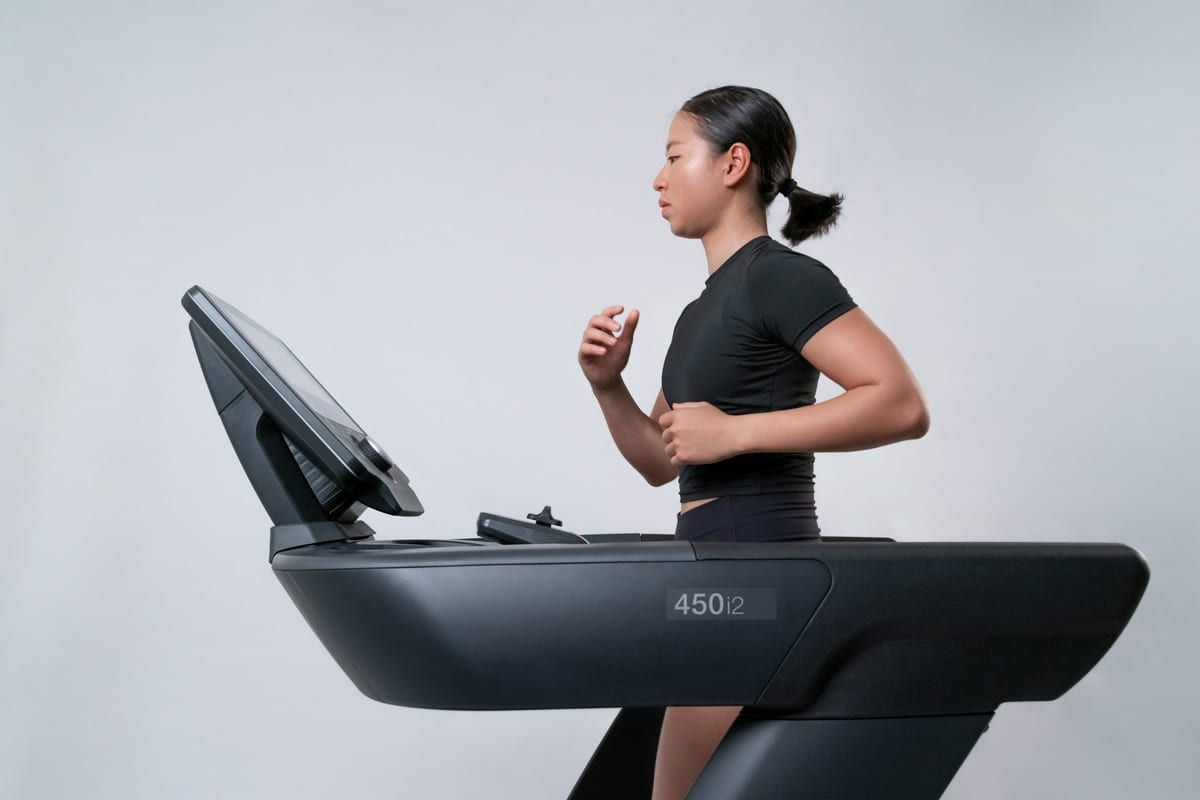

WalkingPad Z1 See offer ›
The one we'd buy to walk at home: it reaches 6 km/h, a brisk pace, its 121 cm belt works for walking up to around 6 ft 3 in, and folded it's 13.8 cm tall, so it goes under almost any sofa.
- Its spec sheet gives 1 to 6 km/h (0.6 to 3.7 mph), a 121 × 40 cm belt and a 110 kg (17st 4lb) max user weight.
- Folded it measures 81 × 56 × 13.8 cm and weighs 23 kg; set up, 142.5 × 56 cm.
- A 2.25 HP brushless motor and under 65 dB, according to its maker; you run it with its remote or its app.
- No incline and no handrail: it's for walking, not jogging.
- Fits under the sofa: 13.8 cm folded
- 121 cm belt: fine for walking up to around 6 ft 3 in
- 23 kg: one of the lightest to put away
- Tops out at 6 km/h (3.7 mph): no jogging
- No incline and no handrail
Best folding treadmill: which one fits under the sofa and which one stands in a corner
A walking pad fits under a sofa: the Z1 is 13.8 cm tall folded. The R2, with its bar, 16.2 cm: under a bed or a high sofa. The X218 folds in half to 29.5 cm, for under a high bed, and a running treadmill like the T Series 10 folds by lifting the belt and stands upright in a corner. Measure your gap with a tape before you buy.
And moving it is the hard part: the Z1 weighs 23 kg, the R2 36 and the X218 58.5. People who get it out and put it away every day say it's the heaviest part of using one: if you have nowhere to leave it set up, look at the kilos as much as the centimetres.
What size treadmill belt do you need? For walking your height barely matters; for running it does
For walking, a 120 cm belt works up to around 6 ft 3 in. One owner who's 6 ft 2 in describes a 94 cm walking pad as tight but enough, and the ones in this guide are 26 cm longer. For running your stride lengthens: Abt asks for at least 137 cm (54 in), and BarBend for 152 × 51 cm (60 × 20 in) if you run fast or you're tall. The American Council on Exercise puts the minimum for any treadmill at 124 × 43 cm. Width matters less: 40 cm to walk; to run, 46 cm upwards, and 51 if you do intervals.
| Treadmill | Good for running? | Stride fits? | Takes your weight? | Under the sofa? | Inclines? | |
|---|---|---|---|---|---|---|
| WalkingPad Z1 view › | WeakReaches 6 km/h: for walking1-6 km/h | GoodWalking, up to about 6 ft 3 in121 × 40 cm | GoodWith 10 kg of margin110 kg | ExcellentFolded, 13.8 cm tall81 × 56 × 13.8 cm | WeakDoesn't inclineNo incline | See offer › |
 WalkingPad R2 view › | FairUp to 12 km/h with the bar up1-12 km/h | FairJogging, best under 5 ft 9 in120 × 44 cm | GoodWith 10 kg of margin110 kg | GoodOr a high sofa: 16.2 cm100 × 72 × 16.2 cm | WeakDoesn't inclineNo incline | See it on Amazon › |
 WalkingPad X218 view › | GoodUp to 18 km/h1-18 km/h | GoodUp to 6 ft 1 in; taller, tight140 × 51 cm | ExcellentWith 10 kg of margin136 kg | FairFolded, 29.5 cm and 58.5 kg108 × 84 × 29.5 cm | WeakDoesn't inclineNo incline | See offer › |
 NordicTrack T Series 10 view › | ExcellentUp to 20 km/h: intervals too0-20 km/h | ExcellentThe length for running fast152 × 51 cm | ExcellentThe most of all148 kg | WeakFolds upright, in a corner190.8 × 87.1 cm set up | ExcellentMotorised, in half-point steps0-12% | Check price › |
From each maker's spec sheet. The belt length you need: about 120 cm to walk, 137 cm or more to run (Abt) and 152 × 51 cm to run fast or if you're tall (BarBend).
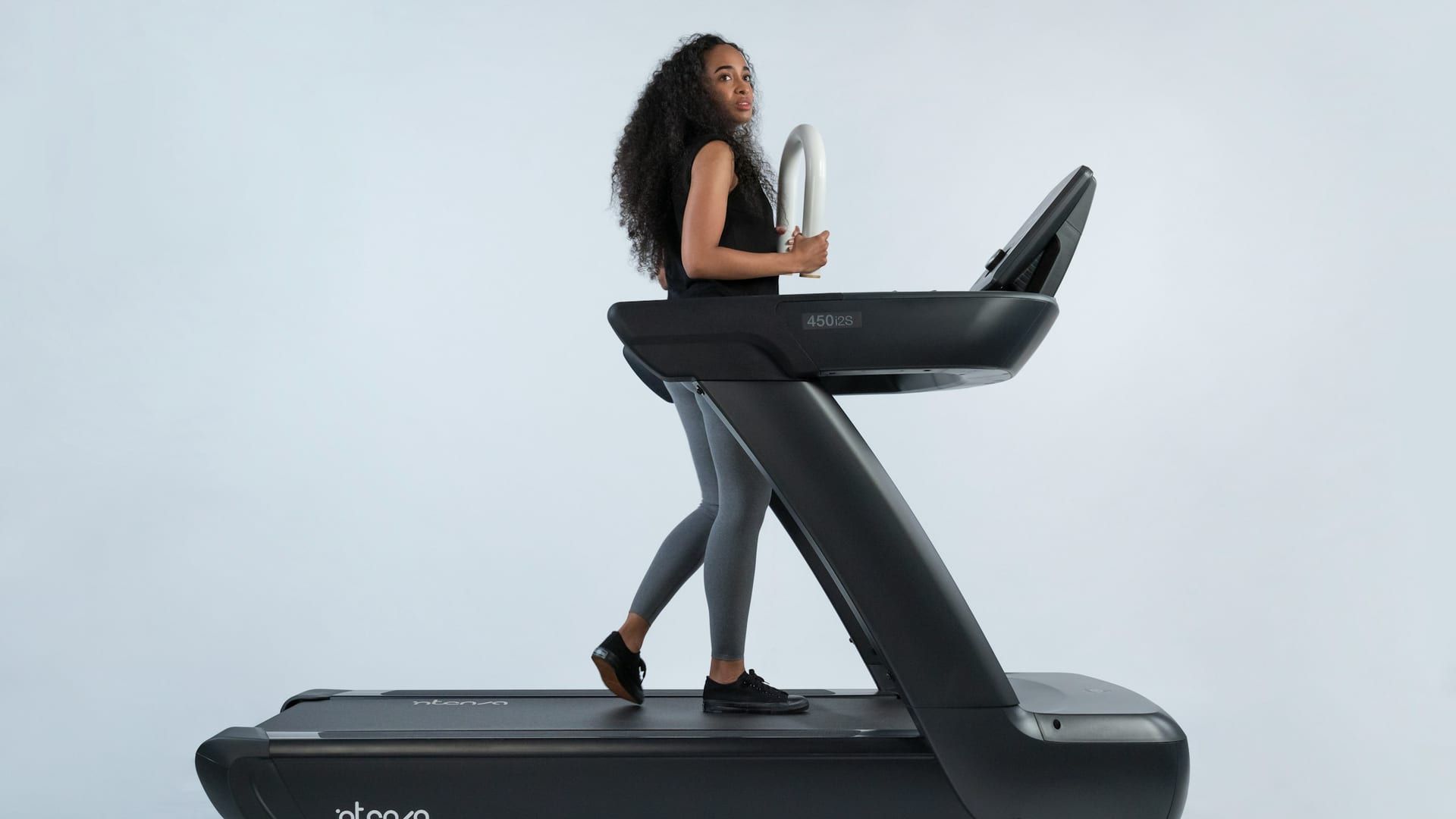
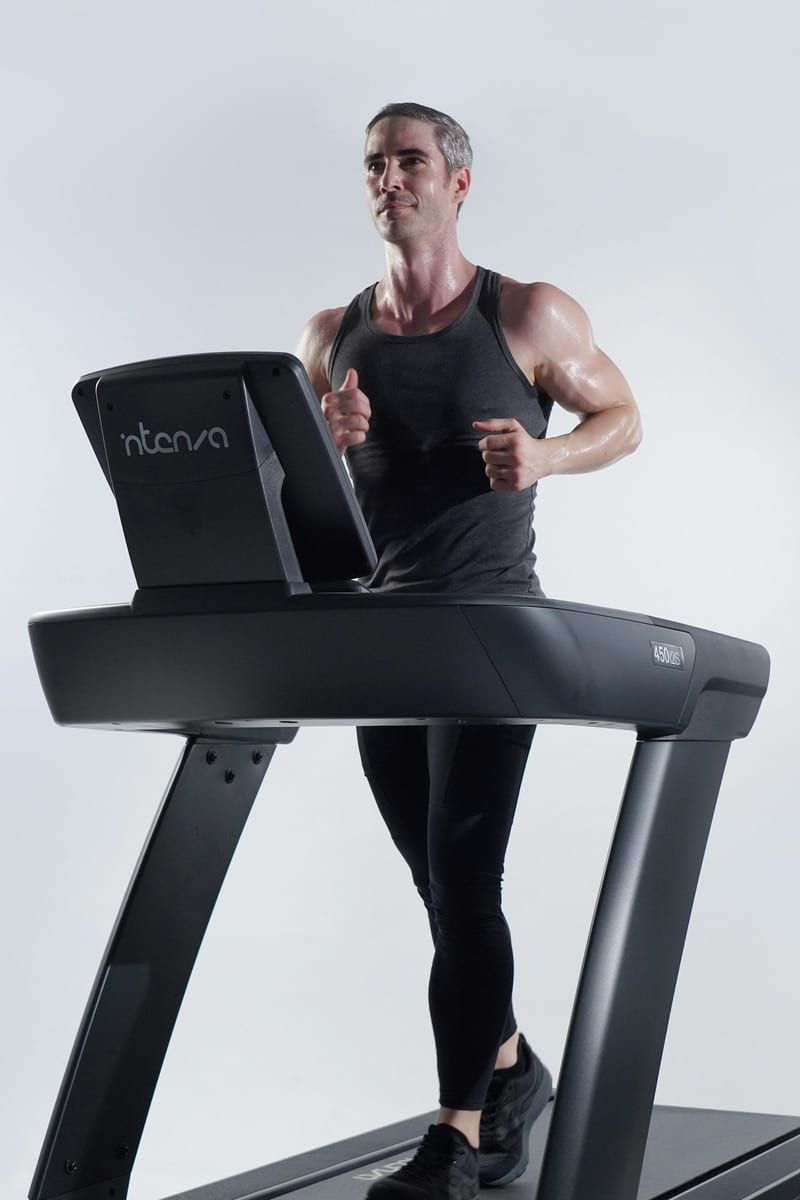
NordicTrack T Series 10 Check price ›
To run at home without falling short on anything: a 152 cm belt, the length for running fast or if you're tall, up to 20 km/h, a motorised 12% incline and 148 kg max weight. The screen classes are a separate membership.
- Its spec sheet gives 0 to 20 km/h (12.4 mph), a 0 to 12% incline in half-point steps, a 51 × 152 cm belt and a 148 kg (23st 4lb) max user weight.
- A 3.0 CHP motor, which is the continuous power: above the 2 HP continuous the American Council on Exercise asks for if you run and weigh over 82 kg.
- Set up it takes 190.8 × 87.1 cm and you step 21.1 cm up onto it; it folds by lifting the belt.
- It works with a free iFIT account; the classes on its screen need a monthly or yearly membership.
- 152 cm belt: you run without treading on the edge
- Motorised 12% incline: ready for the 12-3-30
- 3.0 HP continuous motor
- Screen classes need an iFIT membership
- Set up, it needs about 3.9 m of length with the space behind
- Folds upright: it won't go under anything
WalkingPad R2 View ›
The one that lets you walk and jog without a running machine in the living room: bar up, it reaches 12 km/h and, folded in half, it's 16.2 cm tall. To jog on its 120 cm belt, better if you're under 5 ft 9 in.
- Its spec sheet gives 1 to 12 km/h (0.6 to 7.5 mph), a 120 × 44 cm belt and a 110 kg max user weight.
- Folded it measures 100 × 72 × 16.2 cm and weighs 36 kg: it fits under a bed or a high sofa.
- The bar goes up to hold on while you jog and down to walk under a desk.
- Its website gives two powers for the same motor: 1.25 HP in the table and 3.75 HP in the text.
- Walks and jogs: up to 12 km/h (7.5 mph)
- 16.2 cm folded: under the bed
- A bar that goes up and down
- 120 cm belt: short for jogging if you're over 5 ft 9 in
- 36 kg: putting it away daily takes effort
- No incline
WalkingPad X218 See offer ›
To run with no screen and no membership: up to 18 km/h, a 140 × 51 cm belt and 136 kg, and it folds in half to 29.5 cm tall to store flat. It doesn't incline and it weighs 58.5 kg.
- Its spec sheet gives 1 to 18 km/h (0.6 to 11.2 mph), a 140 × 51 cm belt and a 136 kg (21st 6lb) max user weight.
- Folded it measures 108 × 84 × 29.5 cm: it fits flat under a high bed, not a sofa; set up, 162 × 84 cm.
- Its website gives two powers for the same motor: 5.25 HP in the table and 1.75 HP in the description.
- Quick keys for 5, 10 and 14 km/h and a dial to adjust in 0.1 steps.
- Up to 18 km/h (11.2 mph)
- 140 × 51 cm belt
- No screen and no membership
- No incline
- 58.5 kg: not one to get out every day
- For fast running over 6 ft 1 in, 140 cm is tight
What treadmill horsepower means: peak power and continuous power
One figure in the title, and no word on which power it is.
“3 HP motor”, “2.25 HP”, “5.25 HP”: one figure in the title, without saying which power it is.
It gives two figures for the same motor on the same page: the R2, 1.25 HP in its table and 3.75 HP in its text; the X218, 5.25 HP in the table and 1.75 HP in the description. It doesn't say which is continuous.
It publishes both separately: its Sherpa Run, 2.0 HP peak and 1.0 continuous; the NYDO, 3.0 and 2.0.
It gives the continuous figure (3.0 CHP on the T Series 10) and writes that it's a lab figure for comparing, not what the motor delivers in a home.
m8d rule: If the spec sheet doesn't say “continuous”, the horsepower is the peak figure, and it can be twice what the motor holds for a whole session.
For walking, power barely matters: at 4.8 km/h (3 mph), the measured treadmill drew 244 W, a fraction of the 1,678 W that 2.25 HP works out at. To run if you weigh over 82 kg (12st 13lb), look for 2 HP continuous or more, which is what the American Council on Exercise asks for: the T Series 10 gives 3.0. The R2 and the X218 don't say which of their two figures is continuous.
How much space does a treadmill need? Its length plus two metres clear behind
It needs its own length plus two metres clear behind, which is what BH's manual asks for (2 m behind and 1 m around); NordicTrack's T Series 5 manual asks for 2.4 m behind and 0.6 m on each side. With 2 m behind and 0.6 m at the sides, a walking pad like the Z1 asks for about 3.4 × 1.8 m, and a running treadmill like the T Series 10, about 3.9 × 2.1 m.
- The clear length: the treadmill set up, plus 2 m behind. If you come off, it shouldn't be into a wall.
- The width: the treadmill plus 0.6 m on each side.
- The ceiling, if it's a loft room: your height, plus what you step up onto it (21.1 cm on the T Series 10), plus about 30 cm.Check price ›
- What's underneath: a rubber mat protects the floor, and on carpet it lets the motor breathe.
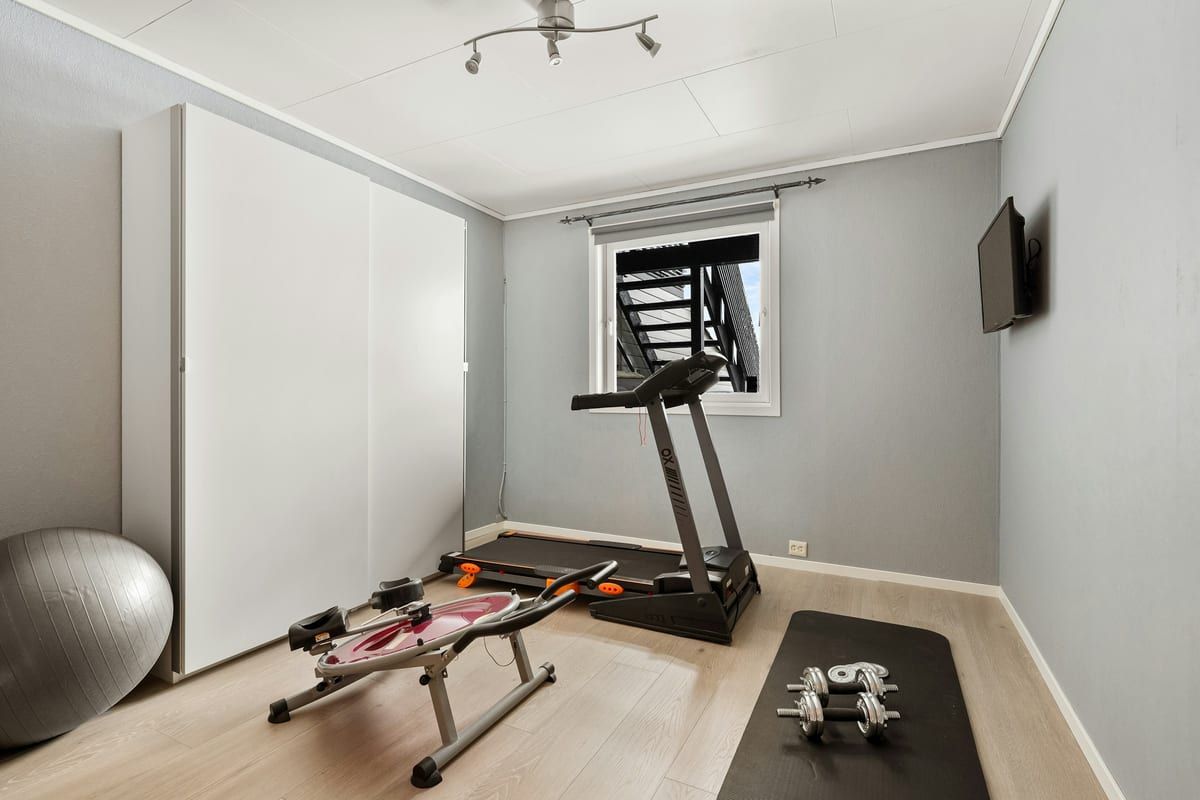
Can the neighbours below hear a treadmill in a flat? What they hear is your footsteps
The motor is barely audible; what reaches downstairs is your footsteps, and more the heavier you are and the faster you go. People with one in a flat say the thuds come through, and they put gym pads or a rubber mat underneath. The Z1 declares under 65 dB. Walking, each step lands far softer than running. If someone lives below and you plan to run, keep to sensible hours and use a mat; if you'll walk, the mat is enough to protect the floor and stop the vibration travelling.
Put the mat down on day one. BH's manual asks for one under the treadmill to protect the floor, and walking pad owners warn against standing it straight on carpet: the motor needs air underneath. Under each card in this guide is the mat that fits it whole.
How much electricity does a treadmill use? Under £1 a month walking half an hour a day
Walking half an hour a day costs about 98p of electricity a month at the Ofgem price cap (26.32p per kWh by Direct Debit, October to December 2026). At 4.8 km/h (3 mph), a treadmill measured with a smart-plug meter drew 244 W, and running at 16 km/h (10 mph), 712 W. Running 45 minutes four days a week at about 10 km/h (6 mph) comes to around £1.41 a month. The standing charge you pay anyway.
What does cost money is a membership. The T Series 10 works with a free iFIT account, but the classes on its screen need a monthly or yearly membership. The WalkingPads run from their remote or their app, with nothing to subscribe to.
How long should you walk on a treadmill? What the NHS asks of adults, over-65s and type 2 diabetes
The NHS asks adults to do at least 150 minutes of moderate activity a week, or 75 of vigorous, plus strength work on two days: half an hour of brisk walking on five days covers the first, and brisk walking counts. From 65 the target is the same, with exercises for strength and balance on at least two days. For an older walker, something to hold on to and a slow start matter more than top speed: the Z1 starts at 1 km/h but has no handrail; the R2 has a bar you raise to hold.
For type 2 diabetes, the NHS says lifestyle changes can help lower blood glucose, and asks for at least 2.5 hours a week of walking or another activity that leaves you out of breath. Every day is fine: the guidance is a weekly minimum, not a cap.
Is an incline treadmill worth it? The 12-3-30 workout needs a 12% incline
If you want to walk uphill, yes, and it has to be motorised. The 12-3-30 that went viral is walking 30 minutes at 3 mph (4.8 km/h) with the treadmill at 12%: of the ones in this guide, only the T Series 10 goes that high, from 0 to 12% in half-point steps. Walking pads don't incline, and the ones that claim to rise only a few centimetres, according to their owners.
Is a cheap treadmill any good? The three figures a budget one has to show
To walk, a budget machine can do the job if its spec sheet gives three figures: a belt of 120 cm or more, a max user weight 10 kg over yours, and its warranty. To run, look closely: a 100 cm belt falls well short of the 137 cm Abt asks for, however many km/h it claims. If you see one in a catalogue or a shop that isn't here, the calculator above tells you what belt, weight and speed to ask of it: they work for any brand.
When not to buy a treadmill, and what a second-hand one doesn't come with
If your plan is to run outdoors as soon as spring comes, a running treadmill is a lot of room for three months: for rainy days a walking pad is enough. If it won't have a spot in sight, one BH owner says that over two years there were weeks when it stood folded against the wall with towels hanging off it. And if you buy second-hand from a private seller on Facebook Marketplace or eBay, check the same figures as on a new one and that it comes with its safety key: the Consumer Rights Act covers sales by a trader (section 1), so a private sale doesn't give you its rights.
We'd pick three, one for what you'll do: the WalkingPad Z1 to walk at home, which reaches 6 km/h and slides under the sofa at 13.8 cm; the NordicTrack T Series 10 to run properly, with a 152 cm belt, 20 km/h and a 12% incline; and the WalkingPad R2 if you want to walk and jog at 12 km/h and keep it under the bed.
How do you choose a good treadmill for home?›
In this order: whether you'll walk or run; the belt length your height needs; a max user weight 10 kg over yours; 2 HP continuous if you run and weigh over 82 kg (12st 13lb); the space, its length plus 2 m behind; where you'll store it; and whether someone lives below.
What is the best small treadmill for home?›
If you'll walk, a walking pad: the WalkingPad Z1 is 13.8 cm tall folded and goes under the sofa. If you'll walk and jog, the WalkingPad R2, 16.2 cm folded, for under the bed.
Will I lose weight if I walk on a treadmill 30 minutes a day?›
It's a solid start: half an hour a day on five days meets the NHS's 150 minutes a week of moderate activity. Whether you lose weight also depends on what you eat; walking faster or uphill uses more energy in the same time.
Should a 70 year old use a treadmill?›
The NHS asks over-65s for the same 150 minutes a week, plus strength and balance exercises on two days, and walking counts. Choose one with something to hold on to and a slow starting speed: the WalkingPad R2 has a bar you raise to hold; the Z1 starts at 1 km/h but has no handrail.
Does walking on a treadmill reduce blood sugar?›
For type 2 diabetes, the NHS says lifestyle changes can help lower blood glucose, and asks for at least 2.5 hours a week of walking or another activity that leaves you out of breath. A treadmill makes that possible whatever the weather.
What are the disadvantages of a treadmill?›
The space (its length plus 2 m behind), the sound of your footsteps in a flat, and the weight of getting a walking pad out every day: 23 kg for the Z1 and 36 for the R2.
How much electricity does a treadmill use?›
Little: a measured treadmill drew 244 W walking at 4.8 km/h (3 mph) and 712 W running at 16 km/h (10 mph). At the Ofgem price cap of 26.32p per kWh, half an hour a day walking is about 98p a month.
Do treadmills need lubricating?›
It depends on the machine, and its manual says. BH's Sherpa Run manual asks for silicone on the belt at least once a month or every 30 hours; NordicTrack's T Series 5 manual says the belt comes lubricated and shouldn't get silicone unless its service team says so. Oddly, walking slowly wears it more: BH asks for it every 15 days or weekly if you often walk under 5 km/h.
Is a commercial treadmill worth it for home?›
Rarely. The treadmill standard (ISO 20957-6) separates home use from gym machines built for many hours a day. A home one with the belt and weight your body needs is enough; if you run and weigh over 82 kg, look for 2 HP continuous or more.
We started from the walking treadmills, walking pads and running treadmills on sale on Amazon UK, and chose among those whose maker publishes the figures that decide: speed, belt length and width, max user weight, folded and set-up size, and power. We crossed them with what their manuals ask for (the space behind, lubrication), the American Council on Exercise's guidance and the guides of people who compare treadmills, with what owners report, and with the NHS physical activity guidelines. The electricity, with a published measurement and the Ofgem price cap.
- WalkingPad UKWalkingPad Z1up to 6 km/h, 121 × 40 cm, 110 kg, 23 kg, folds to 14 cm · 14 Nov 2026
- WalkingPadWalkingPad R2, spec sheet1-12 km/h, 1200 × 440 mm, 110 kg, folded 1000 × 720 × 162 mm; 1.25 HP in its table and 3.75 HP in its text
- WalkingPadWalkingPad X218, spec sheet1-18 km/h, 1400 × 510 mm, 136 kg, folded 840 × 1080 × 295 mm; 5.25 HP in its table and 1.75 HP in its description
- NordicTrackT Series 10 folding treadmill0-20 km/h, 0-12%, 51 × 152 cm, 148 kg, 3.0 CHP, footprint 190.8 × 87.1 cm, 21.1 cm step-up
- NordicTrackT Series 5 treadmill manual2.4 m clear behind and 0.6 m on each side; the belt comes lubricated
- BH FitnessSherpa Run G6319 manual2 m behind and 1 m around, a mat underneath, lubricate monthly or every 30 hours, more often if walking under 5 km/h
- BH FitnessBest folding treadmill for home (comparison)Peak and continuous power of each model: Sherpa Run 2.0 and 1.0 HP; NYDO 3.0 and 2.0
- American Council on ExerciseWhat You Need to Know to Purchase a TreadmillMinimum belt 43 × 124 cm and 2.0 HP continuous for users over 82 kg
- AbtTreadmill buying guideFor running, a belt of at least 137 cm (54 in)
- BarBendTreadmill belt size for walking and runningFor running fast, 152 × 51 cm (60 × 20 in)
- ecocostsavings.comHow much electricity does a treadmill useWatts of a 2 HP treadmill at each speed, measured with a smart plug; updated 31 Jan 2024
- OutsideThe 12-3-30 workout12% incline, 3 mph and 30 minutes
- ISOISO 20957-6:2021, treadmillsThe treadmill safety standard, with its classes of use
- Owner videoA BH treadmill after two yearsThe thuds come through; pads underneath; weeks folded against the wall
- Owner videoWalking pad: what to know before you buyBelt tight at 6 ft 2 in, the sound of footsteps, moving it daily, not on carpet
- Owner videoWalking pads comparedThe remote, the few-centimetre incline and the 6 km/h ceiling
- OfgemChanges to energy price cap between 1 October and 31 December 202626.32p per kWh, Direct Debit, no VAT on electricity · published 26 Aug 2026
- NHSPhysical activity guidelines for adults aged 19 to 64150 minutes moderate or 75 vigorous a week · reviewed 22 May 2024
- NHSPhysical activity guidelines for older adultsthe same 150 minutes, plus strength and balance · reviewed 15 Aug 2024
- NHSType 2 diabetes: food and keeping activeat least 2.5 hours a week · reviewed 10 Feb 2025
- legislation.gov.ukConsumer Rights Act 2015, section 1applies to sales by a trader · read on 14 Nov 2026